

A Florida Couple's Facebook Marketplace Purchase Exposes a Devastating VIN-Cloning Scam Imagine handing over nearly $30,000 for a beautiful Chevrolet Silverado, confident that you've checked the paperwork, examined the identification numbers, and completed a legitimate purchase. You finally have the truck you've been looking for, and everything seems to have worked out perfectly. Then authorities discover the truck is stolen, the title is fraudulent, and the identification numbers belong to another vehicle. Suddenly, your expensive purchase becomes evidence in a criminal investigation, and the truck you thought you owned is taken away. That's what happened to a Florida couple whose...
Read More
Facebook Marketplace Vehicle Sales: Is a Little Extra Money Worth Risking Your Life? Selling a vehicle on Facebook Marketplace may seem like an easy way to make some extra money. You post photographs, set an asking price, and wait for interested buyers to contact you. Unfortunately, there's no guarantee the person responding to your advertisement has any intention of purchasing your vehicle. What begins as a routine conversation about mileage, condition, and price can become something far more dangerous. For several Milwaukee residents, vehicle transactions reportedly arranged through Facebook Marketplace escalated into violent encounters involving firearms, assault, kidnapping, and stolen...
Read More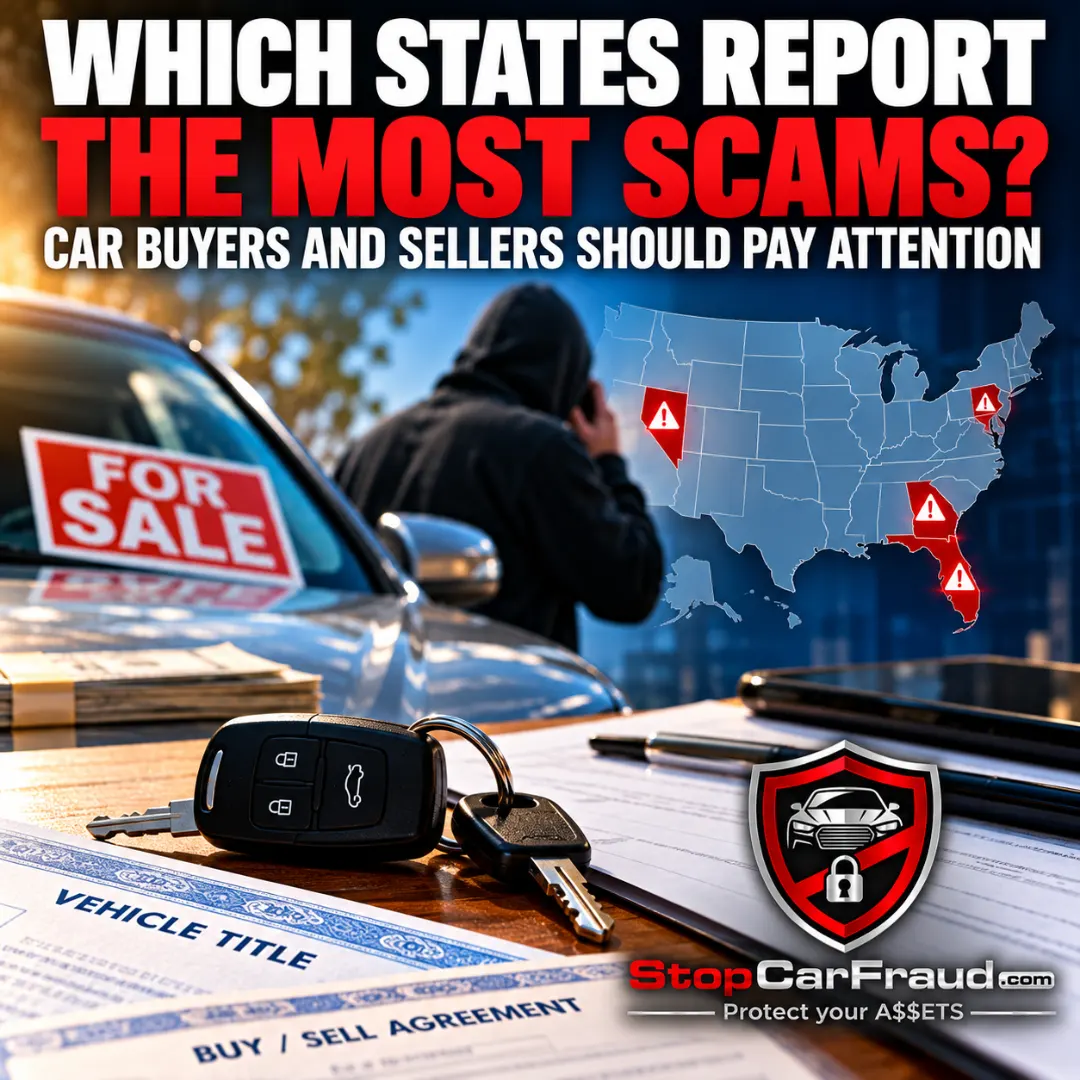
Car Buyers and Sellers Should Pay Attention Scammers don't care whether you're in Florida, Nevada, Georgia or South Dakota. But new fraud data makes one thing painfully clear: some states are reporting consumer fraud and other problems at dramatically higher rates than others. And when a vehicle is involved, getting scammed can mean a lot more than losing a few hundred dollars. A fraudulent vehicle transaction can leave someone dealing with a stolen identity, a loan they never authorized, a vehicle with a questionable title, thousands of dollars gone, or even a car that legally belongs to someone else. According...
Read More
Imagine checking your credit and finding a vehicle loan for a car you've never seen, from a dealership you've never visited, with a monthly payment you certainly never agreed to. Unfortunately, auto identity theft can go much further than someone stealing a credit card number. A criminal with enough of your personal information may be able to impersonate you, apply for vehicle financing and drive away in a car while the debt lands under your name. The Consumer Financial Protection Bureau has received complaints from consumers who discovered unfamiliar auto accounts on their credit reports. Some reported that their names...
Read More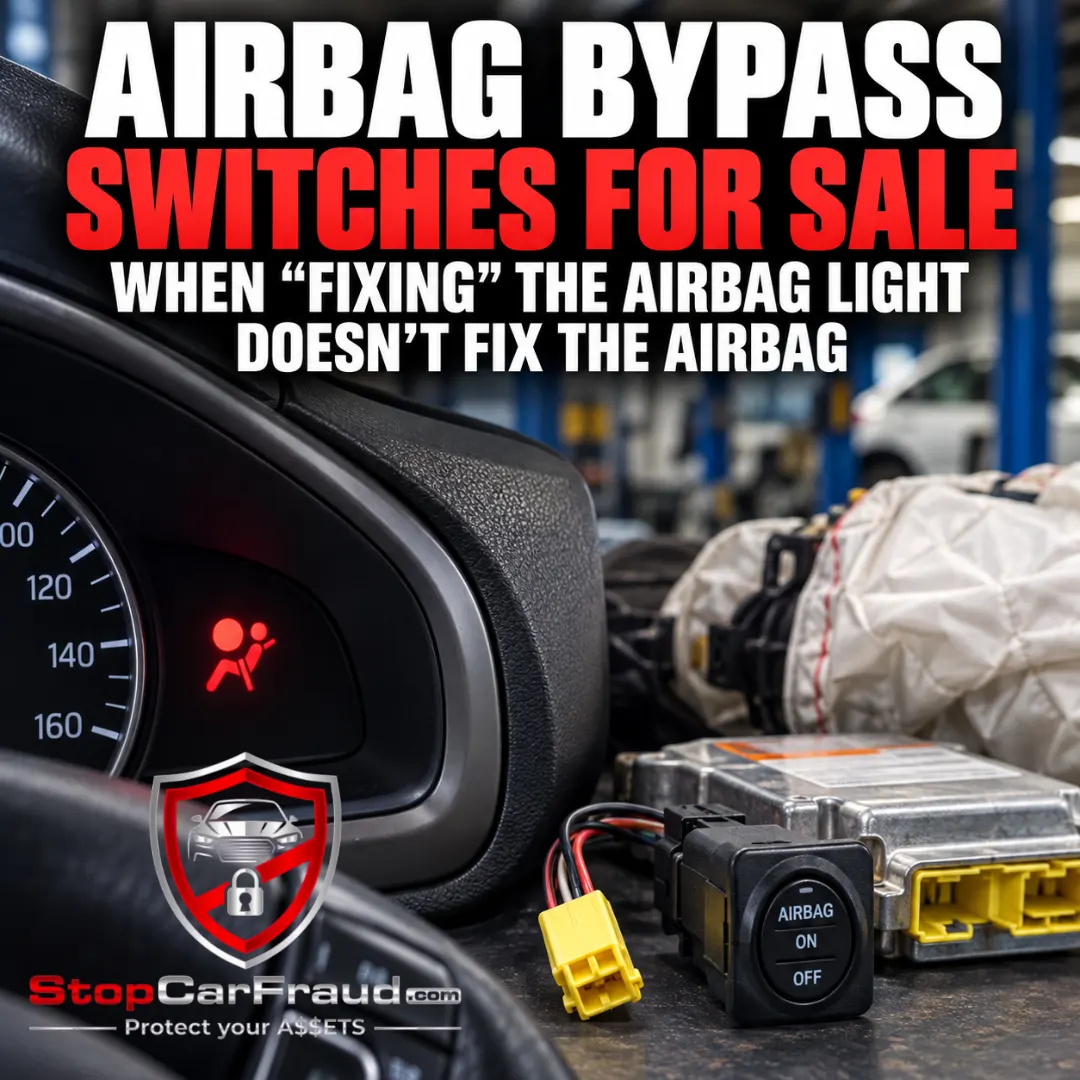
Turning off a warning is not the same thing as repairing the safety system behind it. There are automotive shortcuts that save money. Then there are shortcuts that can leave the next owner believing a critical safety system is functioning when the actual problem may still be hiding behind the dashboard. Airbag bypass devices, simulators and emulators deserve attention for exactly that reason. Depending on the vehicle and device, these products may be associated with components monitored by the Supplemental Restraint System (SRS), including airbag circuits, seat occupancy systems and other restraint-related equipment. For used-car buyers, the concern is straightforward:...
Read More
THE CREDIT REPORT LOOKS CLEAN. THE FIRST LOAN LOOKS FINE. THEN THE OTHER CARS START DISAPPEARING. PART 2 OF OUR STOPCARFRAUD AUTO-FINANCE FRAUD SERIES In Part 1 of this StopCarFraud series, we examined the massive Tricolor case and the federal allegations that the same auto-loan collateral was pledged more than once. Prosecutors alleged that approximately $2.2 billion in collateral had been pledged against roughly $1.4 billion in actual collateral—an approximately $800 million difference that demonstrated just how enormous auto-finance fraud can become when verification breaks down. Now we're looking at a completely different weakness in the auto-finance system. This time,...
Read More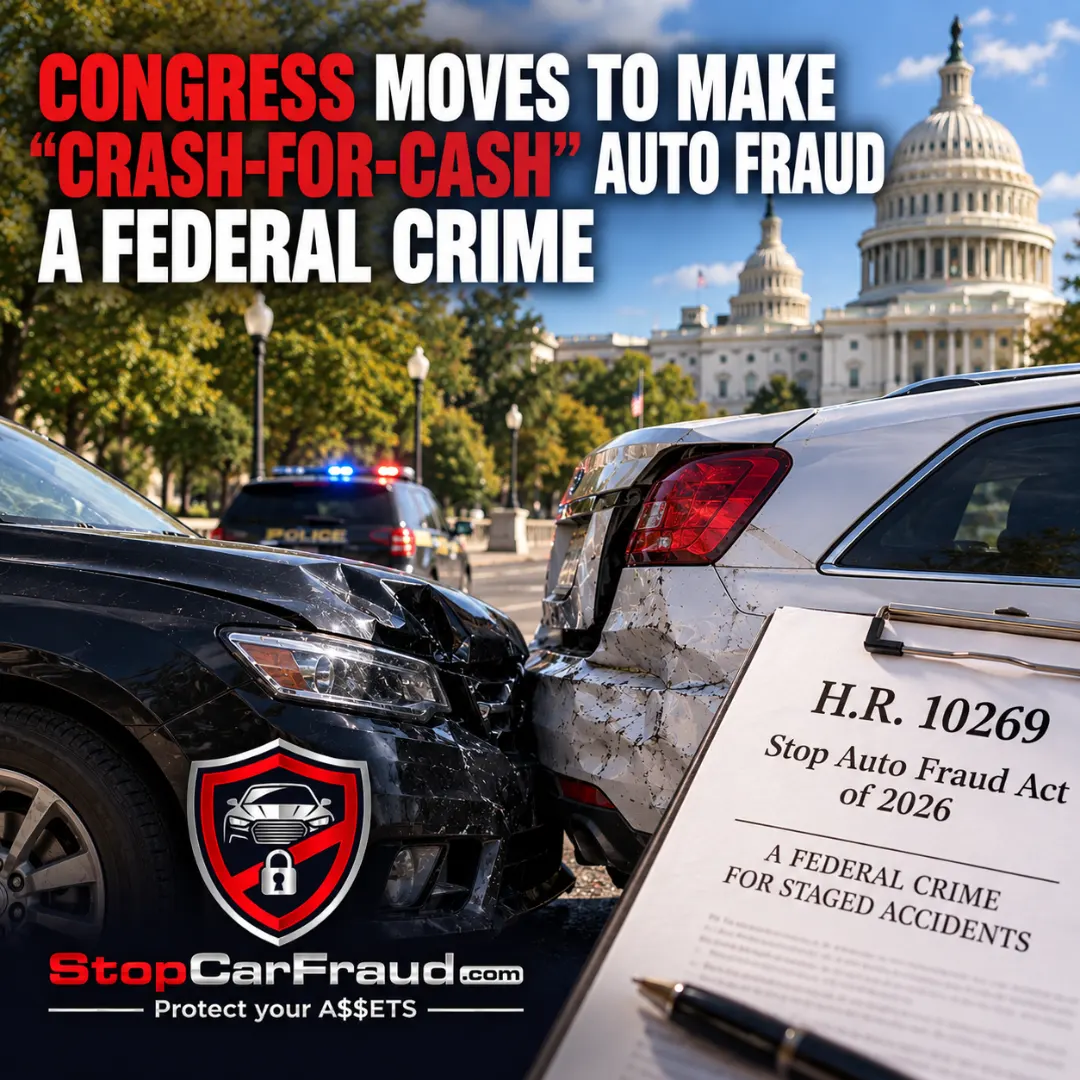
Staging a Car Crash for an Insurance Payday Could Come With a Federal Prison Sentence Intentionally causing a car accident to collect insurance money is already a dangerous form of fraud. Now, members of Congress are proposing federal criminal penalties aimed specifically at people who stage, fabricate or deliberately cause crashes and then submit fraudulent insurance claims. On September 3, 2026, a bipartisan group of House members introduced the Stop Auto Fraud Act of 2026, H.R. 10269. The legislation would create a federal offense for motor vehicle collision fraud. As of this writing, the bill has been introduced and referred...
Read More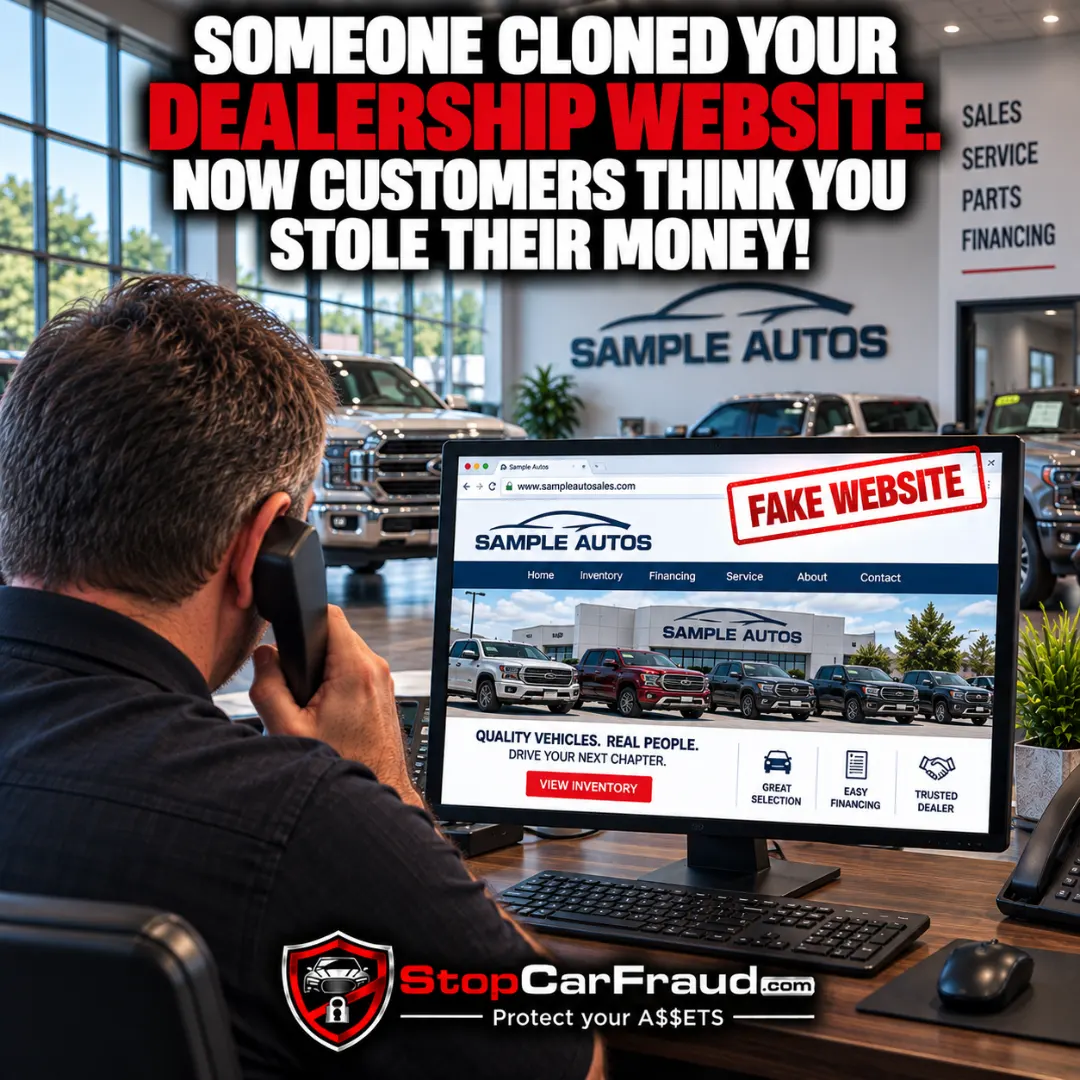
Your Name. Your Logo. Your Inventory. Your Reputation. Their Scam. And When the Money Disappears, Guess Who the Victim Calls? PART 6 — THE FINAL CHAPTER OF THE STOPCARFRAUD FAKE DEALERSHIP SERIES Imagine opening your dealership on Monday morning and receiving a furious phone call from someone demanding to know where their vehicle is. They wired $38,000. They have emails, a purchase agreement, vehicle photos and payment instructions. They dealt with someone using your dealership's name. They saw your inventory. They may even have researched your physical address and confirmed that your business exists. There's only one problem. You've never...
Read More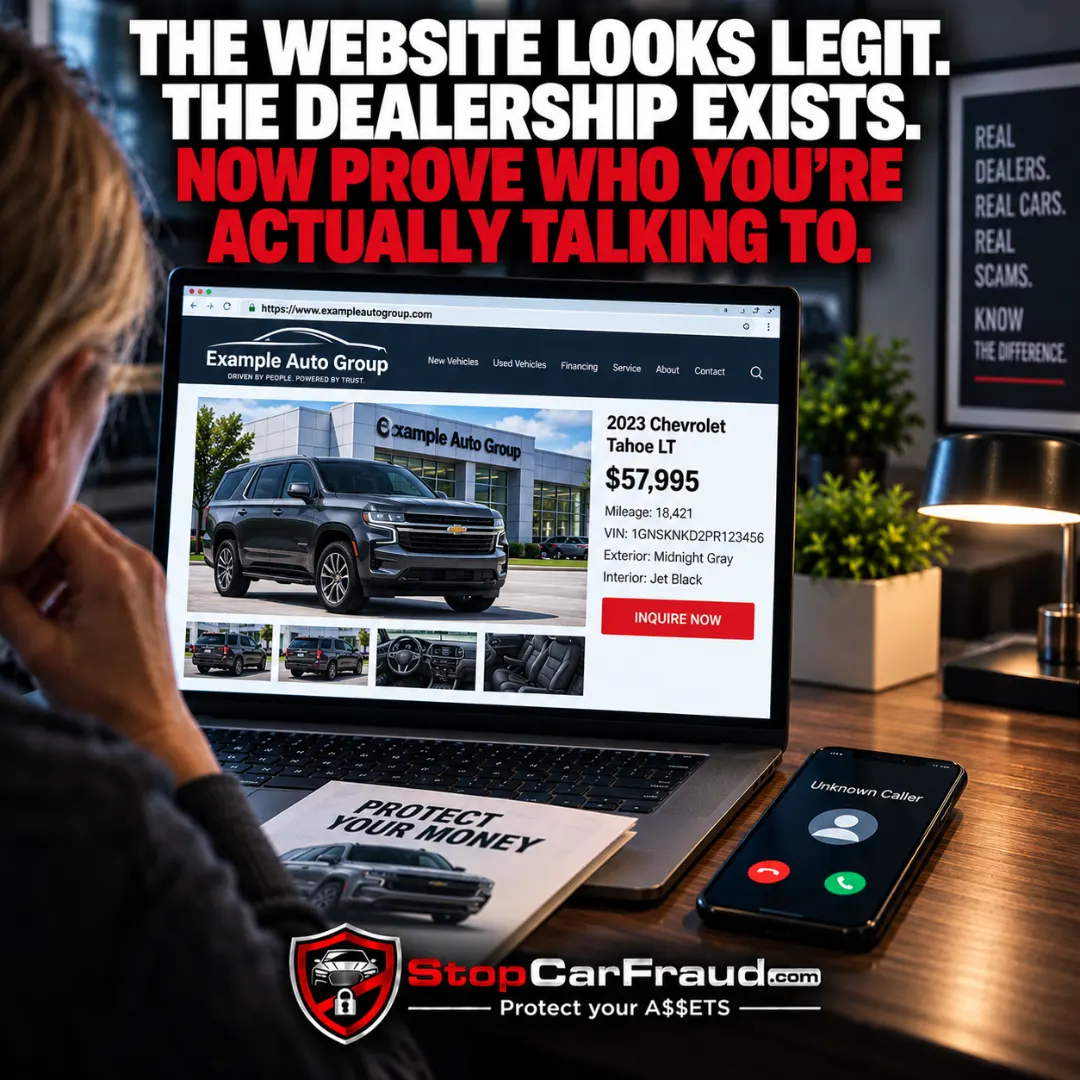
Part 4 of The StopCarFraud Fake Dealership Series If You're Using the Scammer's Phone Number, Email or Website to Verify the Scammer, You Haven't Verified Anything. You've found the vehicle. You've researched the dealership. The business exists, the address is legitimate, the inventory looks professional and the person you're dealing with sounds like someone who sells cars every day. So you decide to be extra careful and verify everything before sending money...you call the number on the website. There's your first problem. What if the website you're looking at belongs to the scammer? In the first three parts of this...
Read More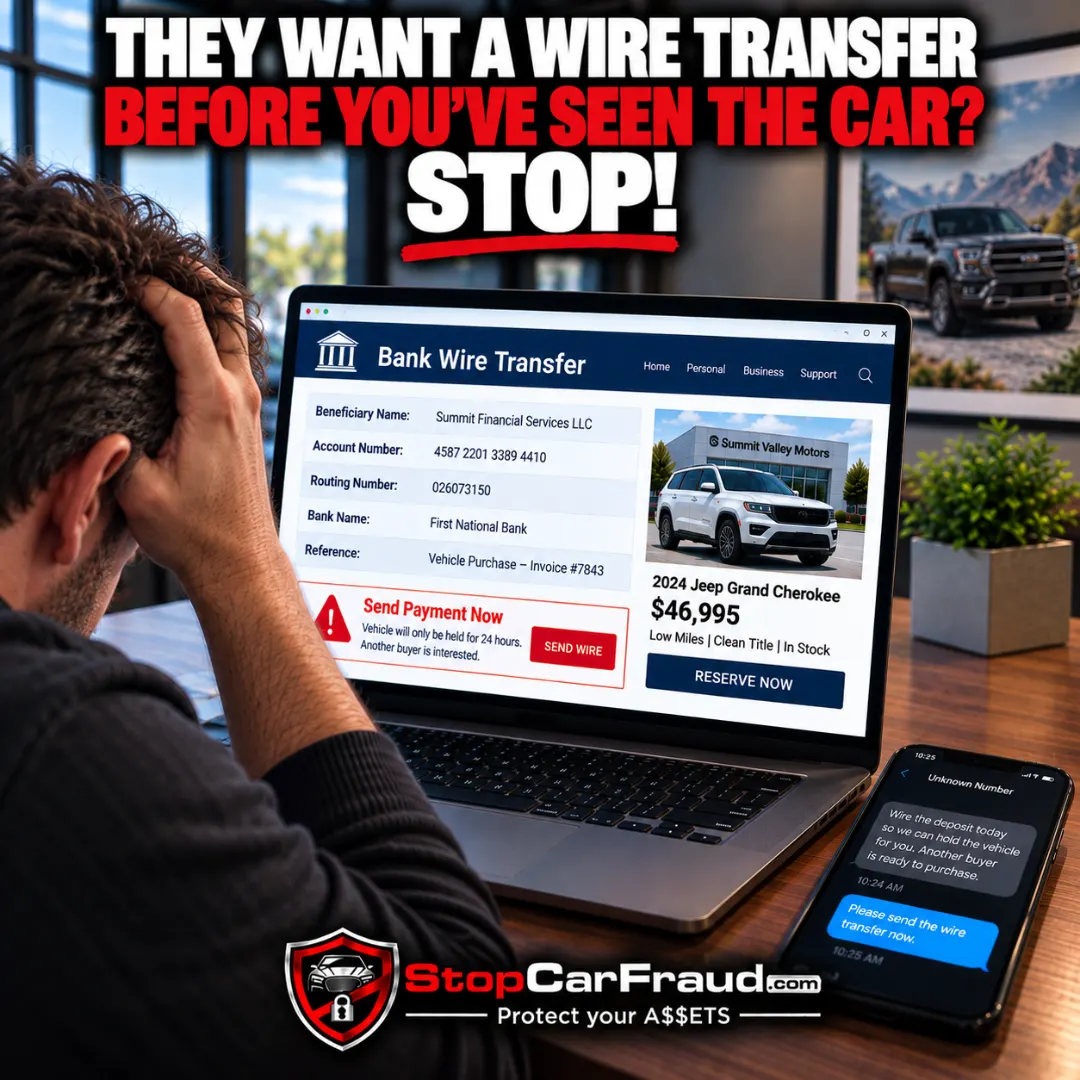
The Fake Website Got Your Attention. The Real Vehicle Earned Your Trust. Now the Scammer Wants the Only Thing This Entire Scheme Was Built to Get — Your Money. PART 5 OF THE STOPCARFRAUD FAKE DEALERSHIP SERIES You've researched the dealership. You've looked at the vehicle photos, checked the VIN, communicated with someone claiming to be a salesperson and maybe even received professional-looking paperwork. Everything seems to be moving toward a legitimate vehicle purchase. Then the payment instructions arrive. Wire $5,000 to hold the vehicle. Wire the balance today because another buyer is waiting. Send the money now and they'll...
Read More