

Car Buyers and Sellers Should Pay Attention
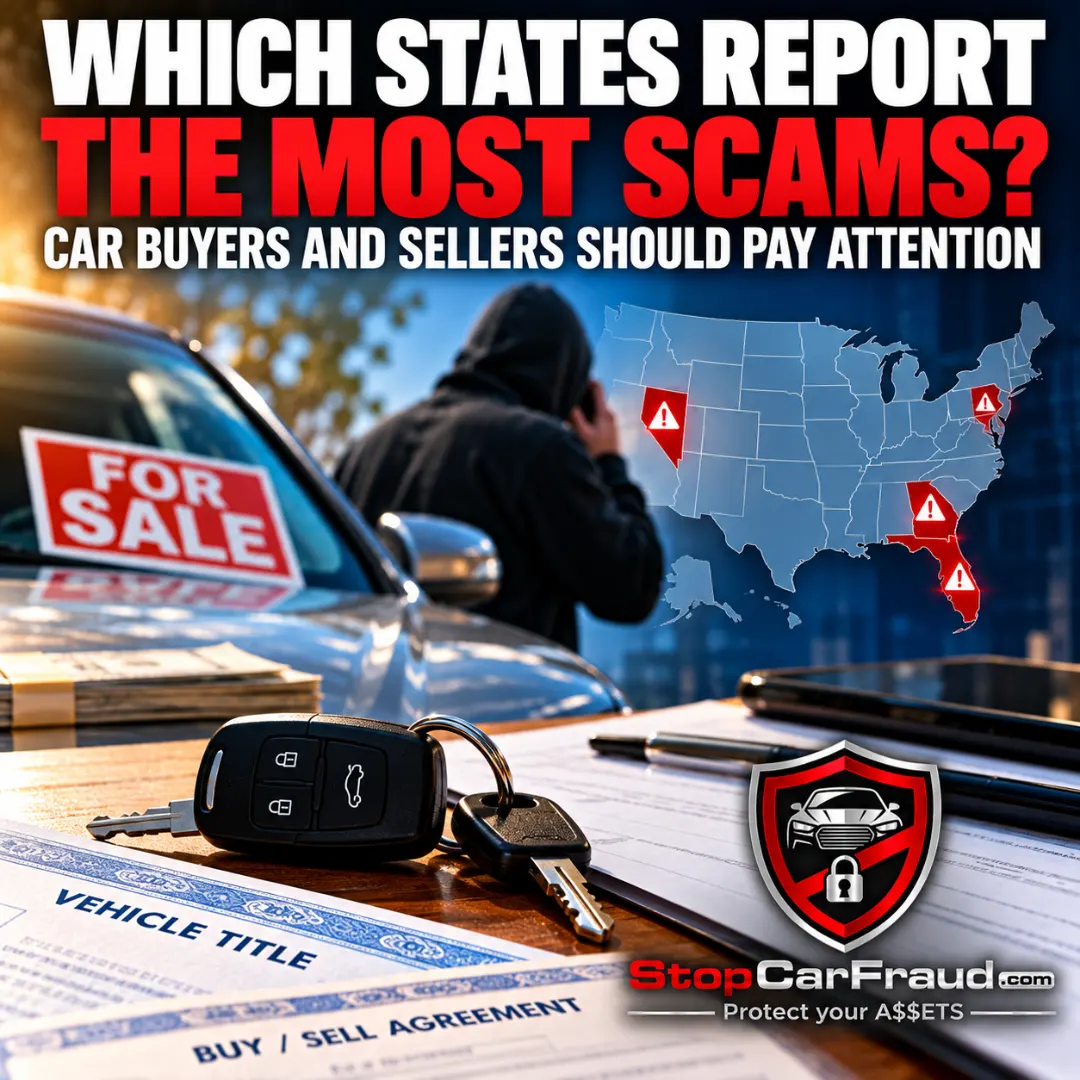
Scammers don't care whether you're in Florida, Nevada, Georgia or South Dakota. But new fraud data makes one thing painfully clear: some states are reporting consumer fraud and other problems at dramatically higher rates than others.
And when a vehicle is involved, getting scammed can mean a lot more than losing a few hundred dollars. A fraudulent vehicle transaction can leave someone dealing with a stolen identity, a loan they never authorized, a vehicle with a questionable title, thousands of dollars gone, or even a car that legally belongs to someone else.
According to Federal Trade Commission Consumer Sentinel data, Florida ranked first among states in 2024 for fraud and other consumer reports per capita, with 2,163 reports per 100,000 residents. Georgia followed at 2,108, Delaware at 1,876, Nevada at 1,867 and Maryland at 1,799.[1]
At the opposite end were South Dakota with 676 reports per 100,000 residents, North Dakota with 696 and Iowa with 715.[1] That doesn't necessarily mean you're "safe" in South Dakota and surrounded by scammers in Florida. The FTC numbers represent reports submitted by consumers and other data contributors, and reporting behavior can differ between states, but the numbers should get your attention.
Auto Fraud Has Plenty of Places to Hide
Buying or selling a vehicle involves a nearly perfect combination for fraud: high-dollar transactions, personal information, titles, identification documents, financing, electronic payments and increasingly, strangers meeting through the internet.
A fake vehicle listing can advertise a car the supposed seller doesn't even own. A dishonest seller can conceal title problems or misrepresent a vehicle's history. Criminals can steal someone's personal information and use it to obtain financing. VIN information can be manipulated or cloned. Fraudulent buyers can produce fake payments. Sellers can be targeted with bogus checks, payment confirmations or elaborate stories designed to get possession of the vehicle before legitimate funds ever arrive.
Then there's impersonation. The FTC reported that consumers filed more than one million imposter scam reports in 2025, with reported losses exceeding $3.5 billion. Overall reported fraud losses reached approximately $15.9 billion, up substantially from the previous year.[2]
That should destroy the idea that scams are mostly badly written emails asking you to wire money overseas. Today's fraudster may have a professional-looking website, realistic documents, convincing identification, a legitimate-looking social media profile and enough information about you or your transaction to sound completely credible.
When Cars Are Involved, Verify Everything
Whether you're buying or selling, don't let urgency override common sense.
| Before Money or a Vehicle Changes Hands | Why It Matters |
|---|---|
| Verify the person's identity | Names and online profiles can be fabricated |
| Examine the title carefully | Ownership and title problems can become your problem |
| Confirm the VIN | Vehicle identity fraud can involve altered or cloned VINs |
| Independently verify payment | Screenshots and payment notices can be faked |
| Protect personal documents | IDs and financial information can fuel identity theft |
| Question unexpected urgency | Pressure can be used to prevent proper verification |
If you're selling privately, don't hand over your vehicle because someone shows you a payment screen on their phone. Don't send verification codes to strangers. Don't provide unnecessary personal or financial information just because someone claims they need it to buy your car. If you're buying, be equally skeptical. A gorgeous vehicle offered thousands below market value isn't automatically the deal of the century. Sometimes the "deal" is the bait.
Fraud Doesn't Have a State Line
Even the state with the lowest reporting rate isn't scam-free. The internet erased many of the geographic boundaries criminals once faced. A scammer doesn't have to live in your city—or even your state—to advertise a vehicle, impersonate a buyer, steal identifying information or convince someone to send money.
And the national numbers are moving in the wrong direction. If something about a vehicle transaction doesn't add up, stop before the money moves or the paperwork gets signed.
Ask questions. Verify independently. Save messages, advertisements, documents and payment records. And if you believe you've encountered vehicle-related fraud, don't ignore that nagging feeling that something isn't right.
StopCarFraud.com exists to help consumers understand automotive fraud, recognize warning signs and figure out what to do when a vehicle transaction goes wrong.
When thousands of dollars, your identity and potentially your credit are riding on a transaction, being suspicious for another ten minutes is a whole lot cheaper than discovering the truth ten days later.
Footnotes
[1] Federal Trade Commission, Consumer Sentinel Network Data Book 2024, State Rankings: Fraud and Other Reports. FTC Consumer Sentinel Network Data Book 2024
[2] Federal Trade Commission, 2026 testimony and Consumer Sentinel reporting on 2025 fraud: approximately 3 million fraud reports, $15.9 billion in reported losses, and more than one million imposter-scam reports totaling more than $3.5 billion in reported losses. FTC fraud data and testimony