

A Florida Couple's Facebook Marketplace Purchase Exposes a Devastating
VIN-Cloning Scam
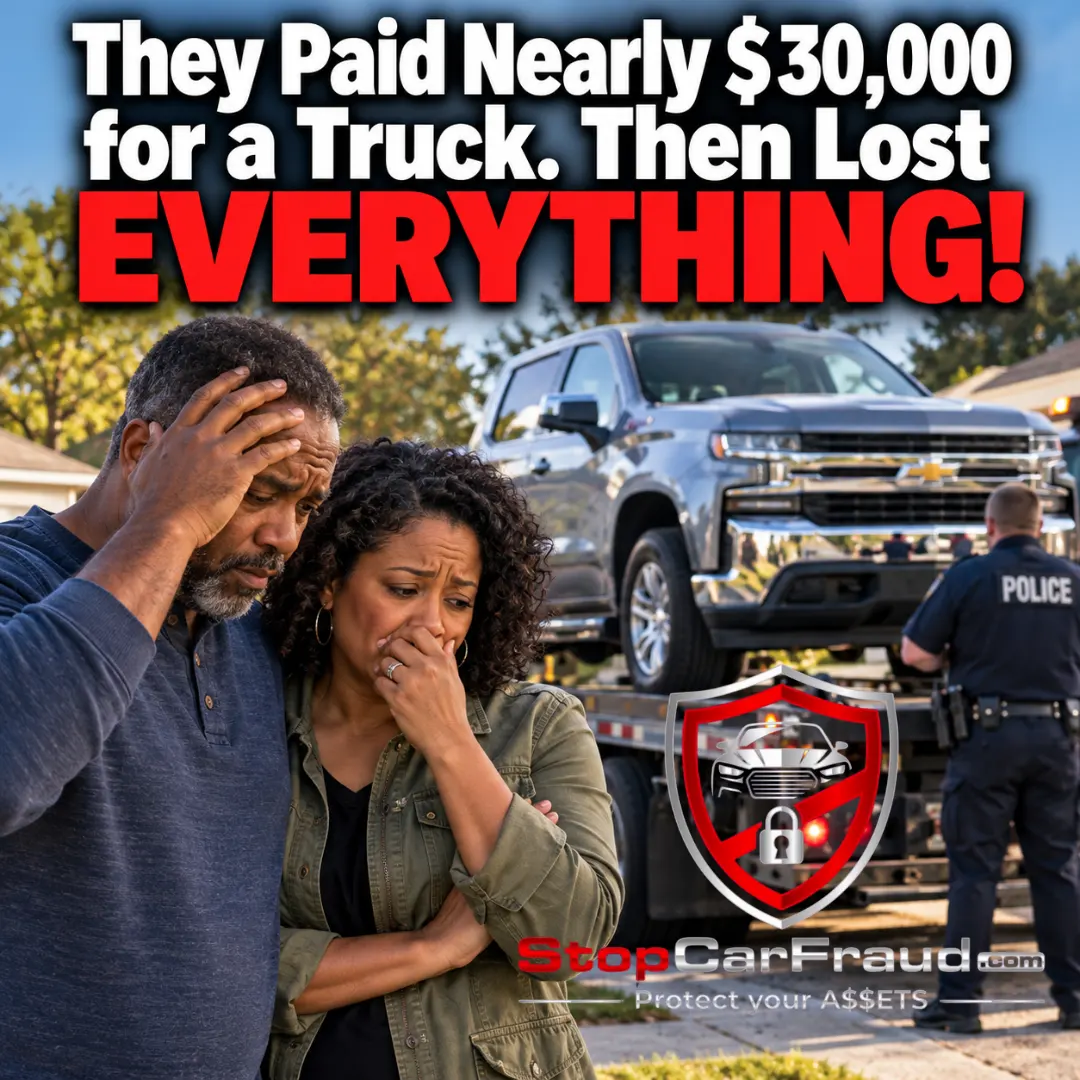
Imagine handing over nearly $30,000 for a beautiful Chevrolet Silverado, confident that you've checked the paperwork, examined the identification numbers, and completed a legitimate purchase. You finally have the truck you've been looking for, and everything seems to have worked out perfectly.
Then authorities discover the truck is stolen, the title is fraudulent, and the identification numbers belong to another vehicle. Suddenly, your expensive purchase becomes evidence in a criminal investigation, and the truck you thought you owned is taken away.
That's what happened to a Florida couple whose experience was reported in March 2026. Their story exposes how sophisticated vehicle fraud can fool even buyers who believe they've taken the proper precautions.
Nearly $30,000 Gone. No Truck. No Refund.
Alexus Macblain and her husband, from Marion County, Florida, purchased a 2022 Chevrolet Silverado advertised through Facebook Marketplace. The couple had experience purchasing vehicles privately, so they understood the importance of examining a vehicle before exchanging money.
A family member inspected the pickup, and the couple checked the VIN information against the ownership documents. The seller presented identification and signed the title in their presence. With everything appearing legitimate, they paid nearly $30,000 in cash.[1]
The trouble surfaced when they attempted to register the Silverado. Motor vehicle officials identified an outstanding lien associated with the vehicle's paperwork, prompting the couple to contact the seller.
Instead of providing an explanation, he blocked their attempts to reach him.
The couple contacted law enforcement, and investigators uncovered a much larger deception. The Silverado had been reported stolen in Texas, while the VIN displayed on the truck had been copied from another vehicle registered in Virginia. Authorities confiscated the pickup, leaving the couple without their vehicle and without the money they had paid.
The Scam That Makes a Stolen Truck Look Legitimate
This type of fraud is known as VIN cloning, and it can be remarkably difficult for ordinary consumers to recognize. Every vehicle receives a unique Vehicle Identification Number that connects it to its manufacturing details, registration history, and ownership records. Criminals exploit that system by copying the VIN of a legitimate vehicle and using it to disguise a stolen one.
They may replace identification labels, manufacture counterfeit documents, and present a convincing ownership history. When the buyer compares the altered VIN with the fraudulent title, everything can appear to match.
The National Insurance Crime Bureau warns that cloned vehicles can look legitimate even though their identities have been deliberately falsified.[2]
Five Warning Signs That Deserve a Closer Look
| What Appears Legitimate | What Could Be Wrong |
|---|---|
| VIN matches the title | Both may contain a stolen identity |
| Seller presents identification | ID doesn't necessarily prove ownership |
| Truck looks well-maintained | Appearance doesn't establish legal ownership |
| Title appears official | Document could be counterfeit |
| Vehicle history seems clean | Records may belong to the vehicle whose VIN was copied |
Even multiple matching VIN labels cannot guarantee authenticity if the identification information has been duplicated.
Facebook Marketplace: Is the Risk Worth It?
Facebook Marketplace makes it easy to locate vehicles advertised by private individuals, but an attractive listing and friendly conversation offer little assurance that a seller is legitimate.
The Florida couple didn't simply hand money to a stranger without looking at the truck. They inspected the vehicle, examined documentation, and watched the seller complete the paperwork. Despite those precautions, they reportedly lost nearly $30,000.
StopCarFraud.com strongly encourages consumers to avoid Facebook Marketplace vehicle transactions. A tempting price is never worth the possibility of losing your savings to someone hiding behind a fraudulent vehicle identity.
What Should Victims Do After Discovering Vehicle Fraud?
If you've purchased a vehicle and suspect its identification numbers or ownership documents are fraudulent, preserve everything connected to the transaction. Screenshots of the advertisement, messages, payment records, photographs, and copies of documents may help investigators reconstruct what happened.
Report the suspected fraud to law enforcement and your state's motor vehicle agency. You can also report vehicle-related fraud to the National Insurance Crime Bureau. Depending on the circumstances, an attorney may help you understand whether financial recovery is possible.
Don't attempt to alter suspicious documents or confront someone you believe may be involved in criminal activity.
StopCarFraud: Helping Victims Recognize the Warning Signs
For victims of automotive fraud, the financial loss is only part of the damage. Discovering that you've unknowingly purchased a stolen vehicle can bring overwhelming uncertainty about ownership, legal responsibilities, and the possibility of recovering your money.
Our team is dedicated to exposing automotive deception, explaining how these schemes operate, and helping consumers understand what steps to consider when fraud strikes.
If you've encountered a suspicious title, questionable VIN, or fraudulent vehicle transaction, visit StopCarFraud.com for information and guidance on recognizing and reporting automotive fraud.
The Florida couple's experience delivers a warning every vehicle buyer should remember: A matching VIN, convincing paperwork, and a friendly seller do not necessarily mean the vehicle is legitimate.
Footnotes & Sources
[1] WKMG News 6 / ClickOrlando — March 12, 2026
Marion County Couple Loses Nearly $30,000 After Buying Stolen Truck on Facebook Marketplace
Investigative reporting by Louis Bolden documenting the Silverado purchase, fraudulent identification,
stolen-vehicle discovery, and confiscation.
[2] National Insurance Crime Bureau (NICB)
Buying a Used Vehicle: VIN Cloning, Fraud Prevention, and VINCheck
Consumer guidance explaining VIN-cloning techniques, counterfeit ownership documents, and vehicle
theft identification.