

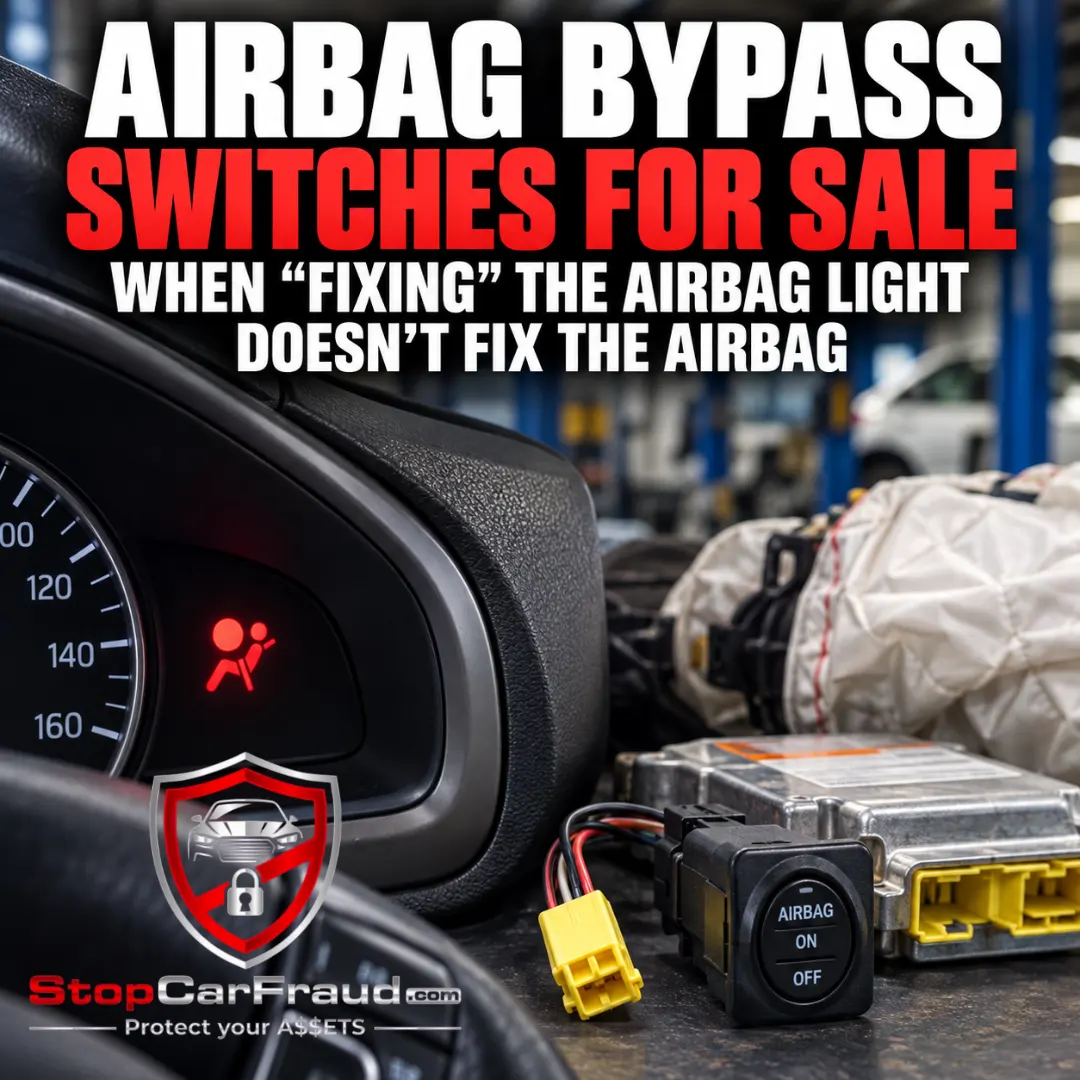
Turning off a warning is not the same thing as repairing the safety system behind it.
There are automotive shortcuts that save money. Then there are shortcuts that can leave the next owner believing a critical safety system is functioning when the actual problem may still be hiding behind the dashboard.
Airbag bypass devices, simulators and emulators deserve attention for exactly that reason. Depending on the vehicle and device, these products may be associated with components monitored by the Supplemental Restraint System (SRS), including airbag circuits, seat occupancy systems and other restraint-related equipment. For used-car buyers, the concern is straightforward: interfering with what the vehicle's system detects can potentially create the appearance that a problem has been addressed when the underlying issue has not been properly repaired.
Making an airbag warning disappear is not the same thing as fixing the airbag system.
THAT LITTLE AIRBAG LIGHT MATTERS
The SRS warning light isn't dashboard decoration. It exists to alert occupants when the vehicle detects certain problems involving the restraint system.
Imagine buying a used vehicle with a spotless interior and no obvious dashboard warnings. Everything appears normal. Later, you discover the vehicle was previously wrecked, airbags deployed or restraint- system components were damaged. Suddenly, the fact that the airbag light wasn't illuminated doesn't seem nearly as reassuring.
A warning light can indicate that the vehicle has detected a problem. Its absence, however, cannot provide a complete repair history or prove that every damaged component was properly restored after a collision.
NOT EVERY AIRBAG SWITCH IS A SHADY BYPASS
This distinction matters. Legitimate airbag ON-OFF switches exist, and NHTSA allows qualifying retrofit switches under limited circumstances involving specific risk categories and established authorization procedures.
That is very different from using a bypass, simulator or other modification as a substitute for repairing a damaged or malfunctioning restraint system.
Federal law also prohibits certain commercial entities, including manufacturers, distributors, dealers and motor-vehicle repair businesses, from knowingly making federally required safety equipment inoperative, subject to applicable exceptions. State laws may impose additional requirements.
So the existence of a device doesn't tell the entire story. What matters is what was installed, why it was installed, who performed the work and what the next buyer was told.
THE USED-CAR FRAUD QUESTION IS DISCLOSURE
This is where the issue becomes especially serious. A previous collision may have deployed airbags, damaged sensors, affected seat-belt pretensioners or created other SRS problems. Properly restoring that vehicle can require considerably more than repairing visible damage and getting the warning light to disappear.
Were deployed airbags properly replaced? Were affected sensors, wiring, modules and restraint components inspected and repaired? Was the system correctly diagnosed afterward, or was some type of bypass or emulator installed instead?
The buyer may have no obvious reason to suspect a problem. The vehicle can look beautiful, the interior can appear untouched and the dashboard may show no persistent warning. None of that proves a previously damaged SRS system was correctly restored.
For a vehicle with significant accident history, previous airbag deployment or unexplained SRS work, don't stop at asking whether the warning light is off. Find out why it's off and what repairs were actually performed.
If someone deliberately concealed an unresolved airbag or SRS problem before selling the vehicle, the buyer could be driving away believing an essential safety system is operational when the reality may be very different.
WHEN SOMETHING DOESN'T ADD UP, START DIGGING
If you discover questionable airbag repairs, undisclosed collision damage or suspicious SRS modifications after purchasing a vehicle, preserve what you find. Keep advertisements, repair records, vehicle-history information, diagnostic reports and communications with the seller, and have questionable safety equipment evaluated by a qualified professional.
A vehicle can be detailed, cosmetically repaired and made to look fantastic for an advertisement. That doesn't tell you what happened behind the dashboard. If something about your vehicle's accident history, airbags or SRS system doesn't add up, contact StopCarFraud.com for information and guidance: info@stopcarfraud.com.
RESEARCH SOURCES / FOOTNOTES
1. National Highway Traffic Safety Administration — Air Bags
https://www.nhtsa.gov/vehicle-safety/air-bags
2. U.S. Code, Title 49, Section 30122 — Making Safety Devices and Elements Inoperative
https://www.govinfo.gov/link/uscode/49/30122
3. National Highway Traffic Safety Administration — Interpretation Regarding Airbag Readiness Indicators and Used Vehicles
https://www.nhtsa.gov/interpretations/phillipsjeg
4. National Highway Traffic Safety Administration — Interpretation of Federal “Make Inoperative” Requirements