

Staging a Car Crash for an Insurance Payday Could Come With a Federal Prison Sentence
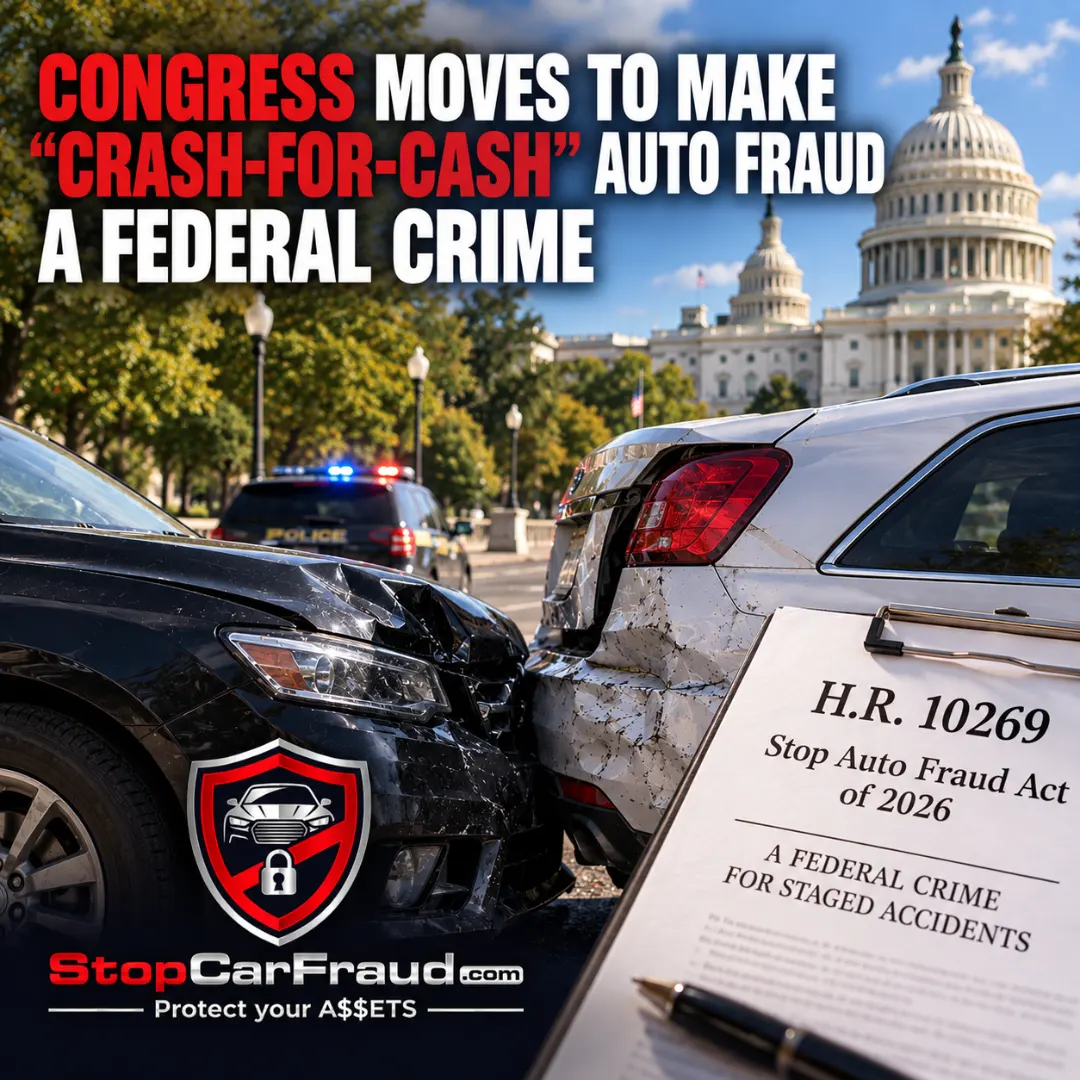
Intentionally causing a car accident to collect insurance money is already a dangerous form of fraud.
Now, members of Congress are proposing federal criminal penalties aimed specifically at people who stage, fabricate or deliberately cause crashes and then submit fraudulent insurance claims. On September 3, 2026, a bipartisan group of House members introduced the Stop Auto Fraud Act of 2026, H.R. 10269. The legislation would create a federal offense for motor vehicle collision fraud. As of this writing, the bill has been introduced and referred to the House Judiciary Committee. It is proposed legislation — not current federal law. And the proposed penalties are anything but minor.
What Exactly Is “Crash-for-Cash” Fraud?
A staged accident does not necessarily mean two people park their cars, smash them together and invent a story afterward. Some schemes can be far more dangerous.
Fraudsters may deliberately maneuver another driver into a collision, suddenly brake to cause a rear-end crash, intentionally strike another vehicle or fabricate an accident that never occurred. Fraudulent claims can then involve vehicle damage, medical treatment, lost wages or other supposed losses.
The proposed law specifically targets someone who knowingly executes or attempts a scheme to cause, stage, fabricate or simulate a motor vehicle accident and submits a false or fraudulent insurance claim connected to it.
That distinction matters. This legislation isn't aimed at someone who simply makes a driving mistake and causes an ordinary accident. It targets deliberate collision schemes tied to insurance fraud.
The Proposed Penalties Get Serious Fast
Under H.R. 10269, a standard violation could carry a fine, imprisonment for up to 10 years, or both. If the staged-crash scheme results in serious bodily injury, imprisonment could reach 20 years.
If someone dies as a result, the punishment could include any term of years or life imprisonment. The legislation also directs fines collected under the proposed offense into the Highway Trust Fund. In other words, Congress is considering treating staged collisions as more than an insurance-company problem. When someone deliberately creates a crash, innocent motorists, passengers and pedestrians can be put directly in harm's way.
Think Someone Just Staged Your Accident? Start Protecting Yourself Immediately
If something about a collision feels wrong, don't confront the other driver or start making accusations at the scene. Protect yourself and preserve information.
Call law enforcement. Photograph the vehicles, damage, roadway, traffic signals, skid marks and surrounding area. Get the names and contact information of legitimate witnesses. Save dashcam footage immediately if you have it. Write down what happened while the details are fresh, and report suspicious circumstances to your insurer.
Be especially cautious when the crash itself doesn't seem to match the story being presented afterward.
StopCarFraud Is Here to Help
Staged crashes are another reminder that automotive fraud doesn't always begin in a dealership, on a fake website or during a vehicle sale. Sometimes the fraud can happen right in front of you on the road.
If you believe you've encountered suspicious automotive activity, fraudulent documentation, a questionable transaction or another potential vehicle-related scam, contact StopCarFraud.com for guidance. Don't ignore the warning signs simply because you're unsure what you're looking at. Start asking questions before someone else's scheme becomes your financial nightmare.
Contact StopCarFraud: info@stopcarfraud.com
Research Sources / Footnotes
U.S. Government Publishing Office — H.R. 10269, Stop Auto Fraud Act of 2026
https://www.govinfo.gov/app/details/BILLS-119hr10269ih
Congress.gov — H.R. 10269, Stop Auto Fraud Act of 2026
https://www.congress.gov/bill/119th-congress/house-bill/10269
Office of Representative Laura Gillen — Bipartisan Stop Auto Fraud Act Announcement, September 3, 2026
Office of Representative Troy E. Nehls — Stop Auto Fraud Act of 2026 Announcement, September 3, 2026