

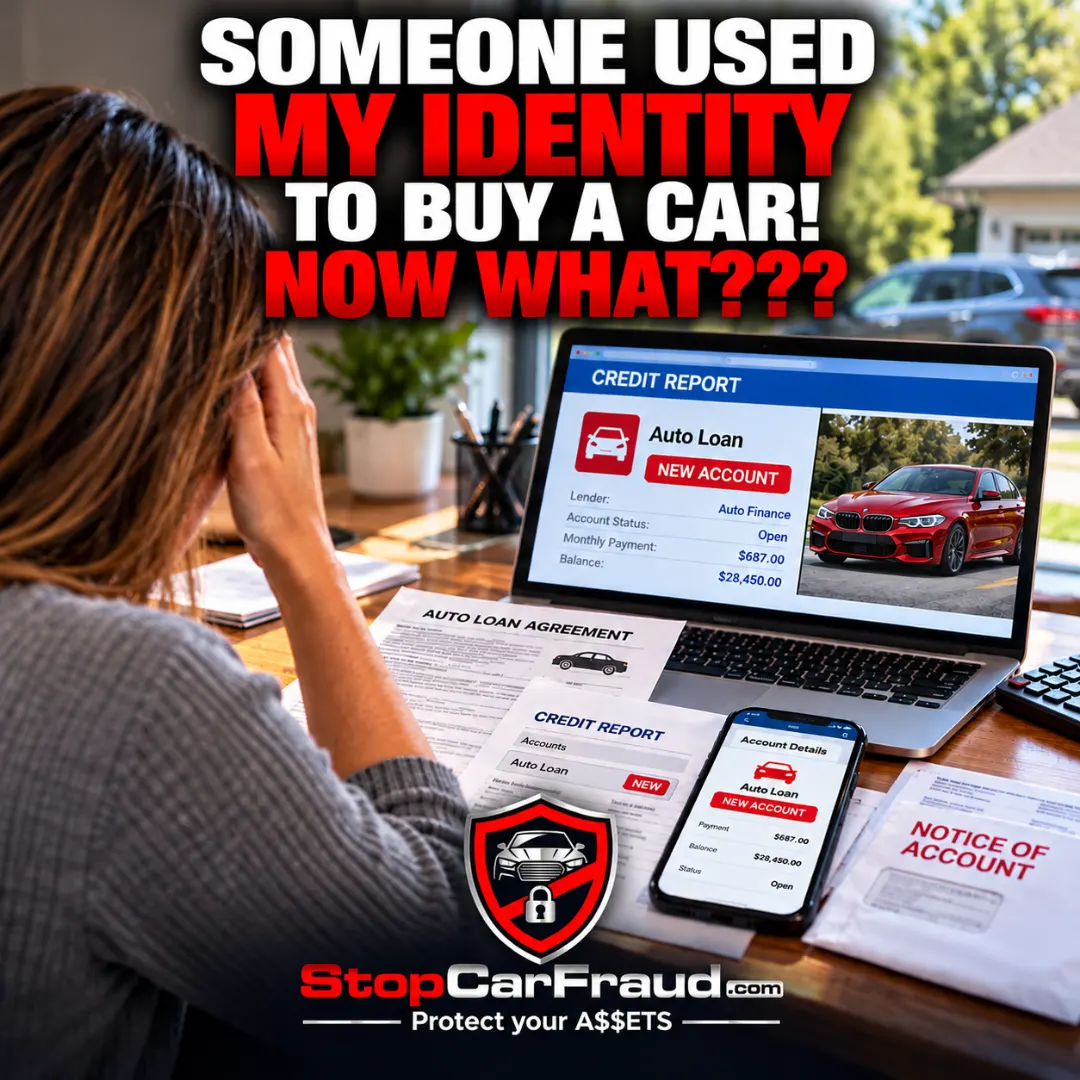
Imagine checking your credit and finding a vehicle loan for a car you've never seen, from a dealership you've never visited, with a monthly payment you certainly never agreed to.
Unfortunately, auto identity theft can go much further than someone stealing a credit card number. A criminal with enough of your personal information may be able to impersonate you, apply for vehicle financing and drive away in a car while the debt lands under your name.
The Consumer Financial Protection Bureau has received complaints from consumers who discovered unfamiliar auto accounts on their credit reports. Some reported that their names had allegedly been forged on loan documents and their identities used to obtain auto financing without permission.[1]
So what happens when someone else gets the car — and you get the loan?
Don't Assume One Phone Call Will Fix It
Your first instinct may be to call the lender and say, "That's not my car." Make that call, but don't stop there.
Identity theft involving an auto loan can potentially affect your credit history, trigger collection activity and create an enormous paper trail connecting you to a transaction you didn't make. Treat it as an identity- theft case from the beginning and document everything. Write down when you discovered the account, the lender's name, account number, balance, dealership information if available and every person you speak with. Save letters, emails, screenshots and copies of your credit reports.
Most importantly, don't ignore the account because you know it isn't yours. The companies receiving information about the loan don't automatically know that.
What Should You Do?
| Action | WHY IT MATTERS |
|---|---|
Contact the auto lender's fraud
department |
Tell them immediately that you dispute the account as identity
theft |
Report the identity theft |
IdentityTheft.gov can provide an Identity Theft Report and
recovery plan |
Consider filing a police report |
A lender or investigator may request supporting documentation |
Review all three credit reports |
The auto loan may not be the only fraudulent account |
Freeze your credit |
This can make it harder for someone to open additional credit in
your name |
Add a fraud alert |
This tells prospective lenders to take additional steps to verify
identity |
Dispute fraudulent information |
Contact the credit bureaus and the company furnishing the
incorrect information |
Keep copies of everything |
Your documentation may become extremely important if the
dispute continues |
Check For More Than The Car
Finding one fraudulent auto loan should raise another question:
What else did this person do with my identity?
Review your credit reports carefully for credit cards, personal loans, unfamiliar addresses, inquiries or other accounts you don't recognize. If someone possessed enough information to obtain vehicle financing, don't assume that was the only place your information was used.
A credit freeze can be particularly important after identity theft. A freeze restricts access to your credit file and can make it considerably more difficult for someone to open another credit account using your identity. Freezes are free and must be placed separately with Equifax, Experian and TransUnion.[2]
"We Have Your Information" Doesn't Mean You Bought The Car
This may be one of the most frustrating parts for a victim. The lender may have an application containing your name, Social Security number, address or other identifying information. There may even be paperwork that appears to carry your signature.
That doesn't mean you should simply accept responsibility for a transaction you didn't authorize.
The CFPB advises consumers disputing inaccurate credit information to contact both the credit reporting company and the business that supplied the information. Supporting documentation can be critical, particularly when the dispute involves identity theft.[3] And keep responding.
The CFPB has reported instances in which consumers said identity-theft investigations involving auto loans were closed because requested supporting documents were not received.[1] If a lender, credit bureau or investigator asks for documentation, pay attention to deadlines and retain proof of what you submitted and when.
Don't Let Someone Else's Car Become Your Financial Disaster
Discovering a vehicle loan you never authorized can be frightening, but ignoring it can make the situation harder to untangle. Move quickly. Document the fraud. Protect your credit. Challenge information that isn't yours and continue following the paper trail until you understand exactly what happened.
And if something about an automobile transaction doesn't add up — whether you're dealing with suspected identity theft, questionable financing, suspicious paperwork or another form of vehicle-related fraud — StopCarFraud.com can help you understand the warning signs, organize what happened and determine where to turn next.
- You may never have driven the car.
- You may never have seen the car.
- You may not even know where the car is.
But if someone used your identity to buy it, it's time to start fighting the fraud attached to your name.
[1] Consumer Financial Protection Bureau — 2025 Consumer Response Annual Report
Published March 31, 2026. The report discusses consumer complaints involving auto lending, including consumers reporting unfamiliar auto accounts, identity theft and allegedly forged loan documentation.
CFPB — 2025 Consumer Response Annual Report
[2] Federal Trade Commission — Credit Freezes and Fraud Alerts
FTC consumer guidance explains how credit freezes and fraud alerts work, how they differ and how they can help prevent someone from opening additional credit accounts using a stolen identity.
FTC — Credit Freezes and Fraud Alerts
[3] Consumer Financial Protection Bureau — How Do I Dispute an Error on My Credit Report?
Last reviewed September 2, 2026. The CFPB explains how consumers can dispute inaccurate information with both credit reporting companies and the businesses that furnished the information.
CFPB — Disputing an Error on Your Credit Report
[4] Consumer Financial Protection Bureau — What Do I Do If I Am a Victim of Identity Theft?
Last reviewed July 30, 2026. The CFPB recommends reporting identity theft, protecting affected accounts, reviewing credit information and taking steps such as fraud alerts or security freezes.