

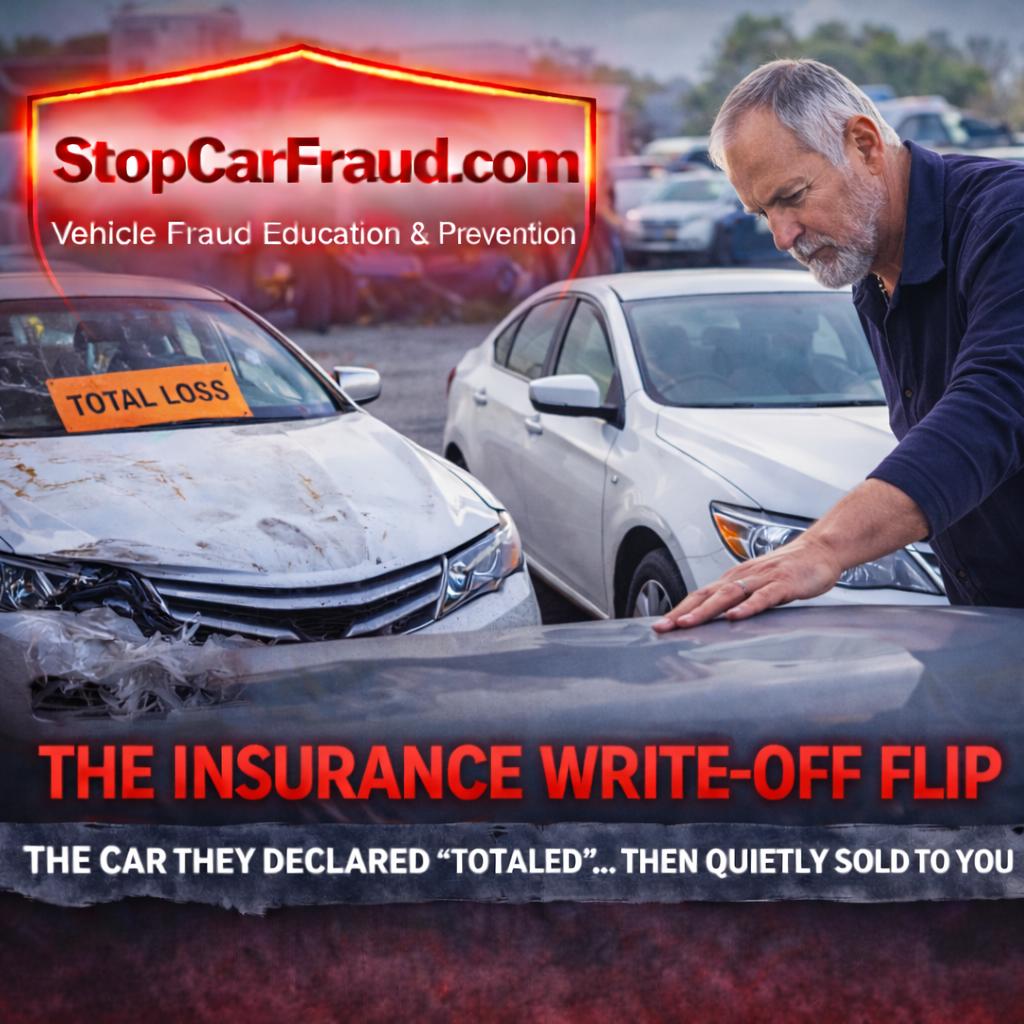
The Car They Declared “Totaled”... Then Quietly Sold to You There’s a moment when an insurance company looks at a damaged vehicle and makes a decision: “This car is a total loss.” That means the damage is too severe, too expensive, or too risky to repair properly. The vehicle is written off, paid out, and on paper should never return to the road without being clearly labeled as salvage. But here’s where things take a turn. Some of those vehicles don’t stay labeled...they get flipped. This is the Insurance Write-Off Flip scam—a quiet, calculated move where a totaled vehicle is...
Read More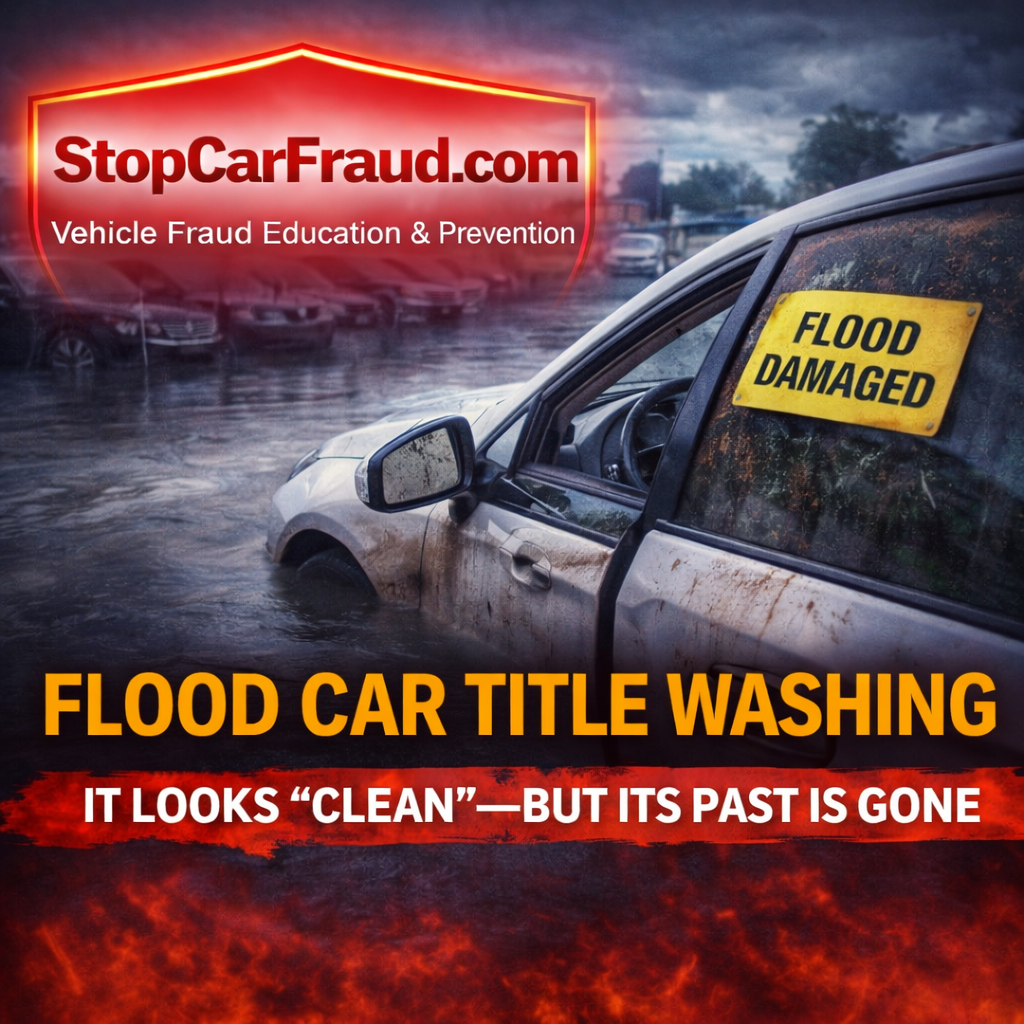
The Scam That Erases a Car’s Past—and Hands You the Risk After every major storm, whether it’s hurricanes tearing through Florida or flooding across Texas, insurance companies write off thousands of vehicles as total losses. These are flood cars, and the damage goes far beyond what you can see. Water gets into everything: electrical systems, safety components, engine parts, wiring, and sensors. On paper, these cars are supposed to be clearly marked so buyers know exactly what they’re dealing with. But that’s not what always happens. Instead, many of these vehicles get a second life through a process known as...
Read More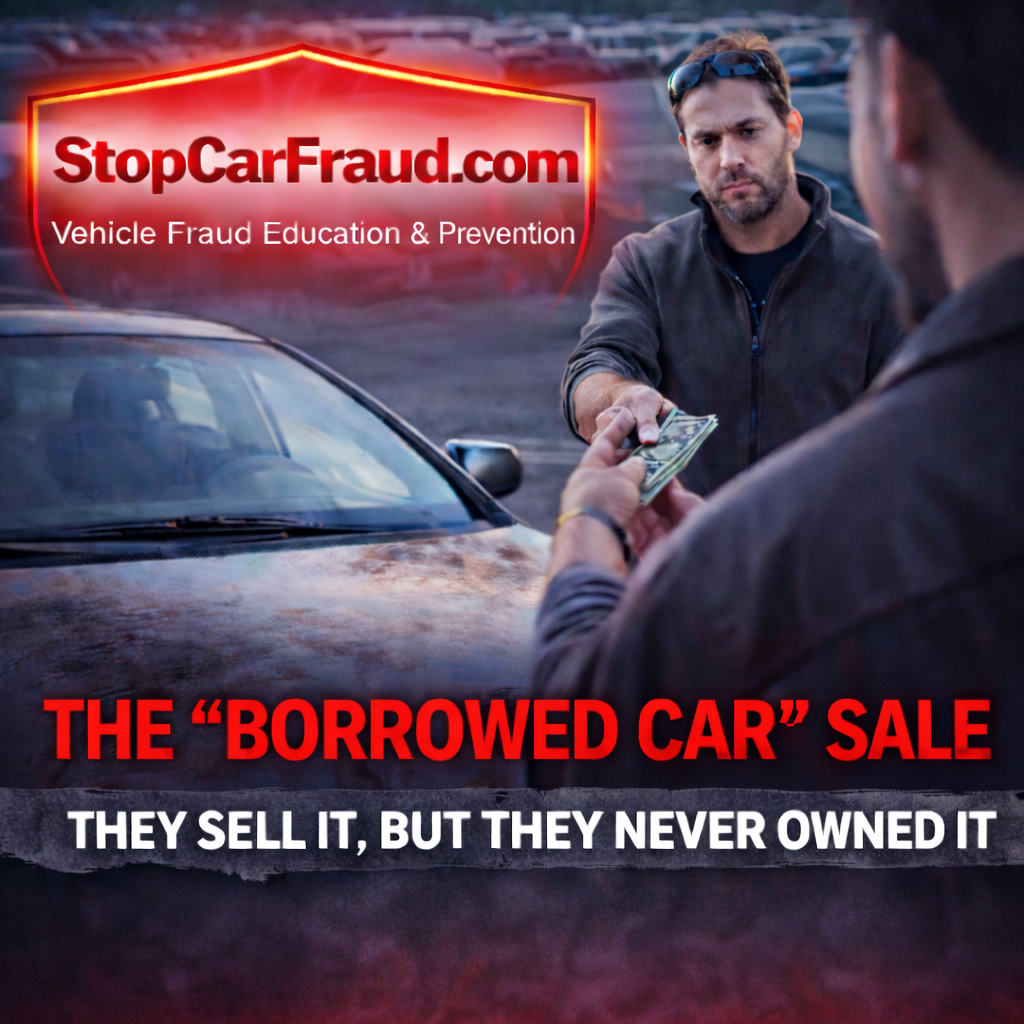
When the Seller Never Owned the Vehicle to Begin With You meet the seller. The car looks good. The price makes sense. The story sounds normal, maybe they’re “selling for a friend,” “helping a family member,” or “just need to get rid of it quickly.” You don’t think much of it. You hand over the money, get the keys, and drive off. And just like that... you’ve bought a car from someone who never had the legal right to sell it. This is the “Borrowed Car” scam, and it’s more common than most people realize. At its core, it’s simple....
Read More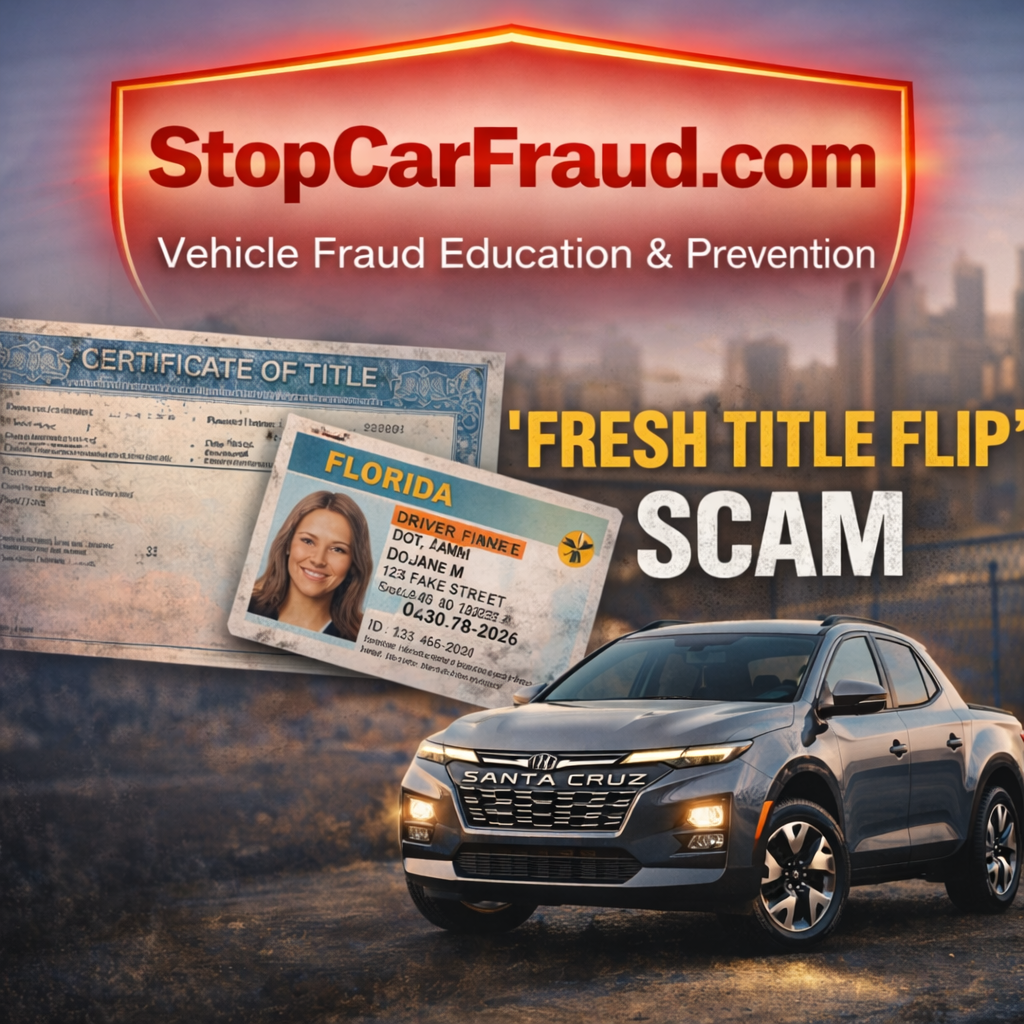
How Fraudsters Move Fast Before You Catch On The Illusion of a Clean Deal Let’s get something straight! This isn’t sloppy paperwork, and it’s not someone making an honest mistake. This is calculated, deliberate, and hitting the market harder than ever. The scam is designed to look clean. A seller shows up with a freshly issued title, a matching driver’s license, and a vehicle that appears ready to sell. Everything lines up just enough to feel legitimate. That’s the trap. The goal isn’t perfection, it’s speed and believability long enough to get your money. The Pressure Play Then comes the...
Read More
Then It Disappears Months Later It Starts Like Any Normal Deal It starts like any normal car purchase. You find a vehicle that looks right, the price makes sense, and the seller appears legitimate. You check the title, verify the VIN, and maybe even glance at a vehicle history report. Nothing raises concern, so you move forward with confidence. For months, everything seems fine, you register the car, insure it, and drive it daily without issue. It becomes part of your routine, just another vehicle in your driveway. Then one day, without warning, it’s gone. Not stolen—but seized, impounded, and...
Read More
The Scam That Leaves You With a Car You Can’t Legally Drive Temporary tags are supposed to be simple. You buy a car, you get a short-term tag, and you drive legally while the paperwork gets finalized. That’s how it should work. But in today’s market, temporary tags have become one of the most abused tools in car fraud, and unsuspecting buyers are the ones getting burned. Temporary tag fraud is exploding because it’s easy to fake and hard for the average buyer to verify. Scammers know this. They use counterfeit tags, expired tags, or tags issued under completely different...
Read More
You Think You Own the Car... Until You Don’t You did everything you thought was right. You found the car, met the seller, looked over the title, paid the money, and drove away feeling like the deal was done. But here’s the truth most people don’t realize until it’s too late...You might not actually own that car. If there’s an undisclosed lien tied to the vehicle, the lender, not you, still has legal rights to it. And when that lender comes looking, they’re not going after the person who sold it to you... they’re coming for the car. This is...
Read More
How Buyers and Sellers Lose Thousands in Minutes Car fraud isn’t always loud, messy, or obvious. Some of the worst scams are clean, polite, and professional-looking, and by the time victims realize what happened, the money is already gone. Fake lienholder, wire fraud, and deposit scams are exploding across private-party car sales, and they’re hitting both buyers and sellers hard. If you don’t understand exactly how these scams work, you’re vulnerable. How the Scam Actually Works (Step-by-Step) Most fake lienholder scams follow a predictable script. First, the fraudster lists a vehicle slightly below market value to trigger urgency and emotional...
Read More
When the Paperwork Is Real... But the Car Isn’t Everything checks out, the title is clean, the VIN matches, and the seller seems completely legit. You go through the process feeling confident, like you did everything right... until weeks later, when the truth finally hits. 👉 The title was real. 👉 The car was not. This is exactly the type of scam StopCarFraud is built to expose the deals that look perfect on paper but fall apart in the real world. This Scam Is Built on One Simple Trick Scammers don’t always fake documents, sometimes... they borrow them. Here’s how...
Read More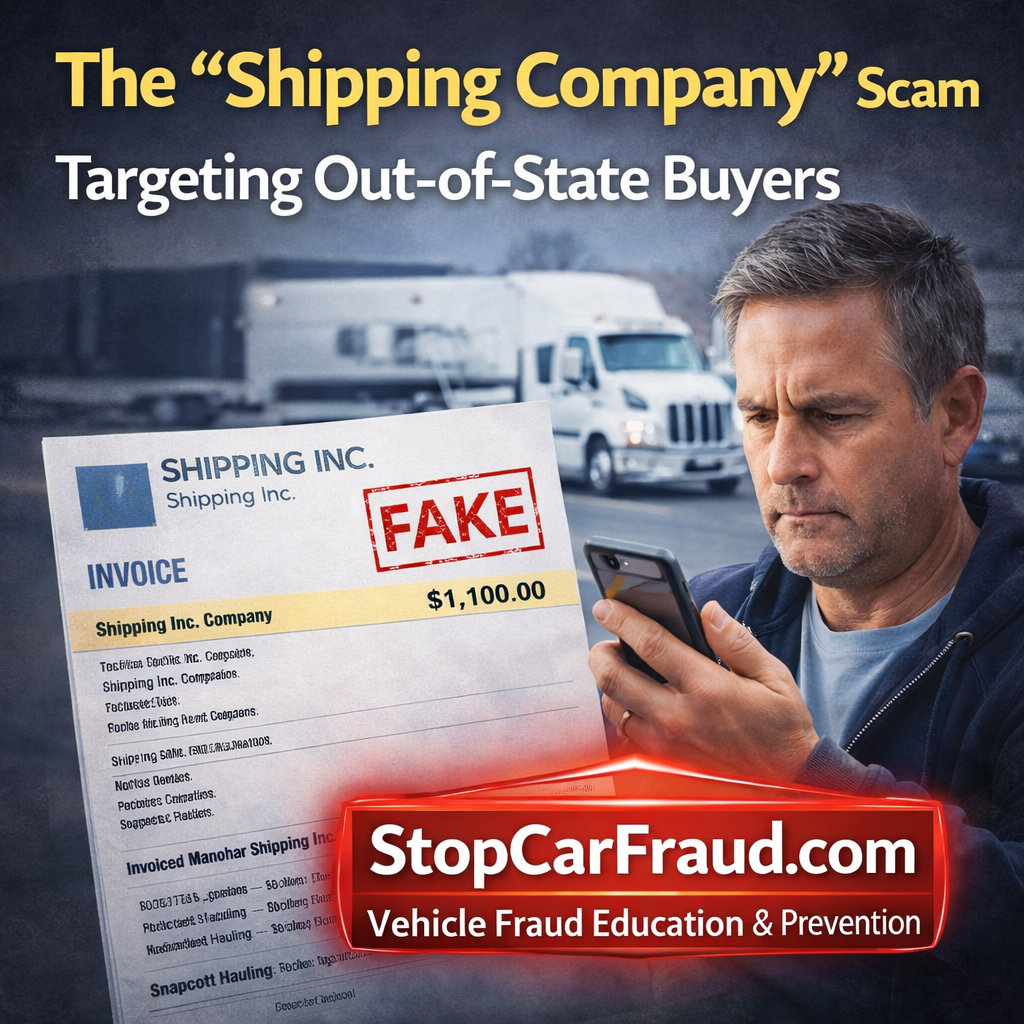
Fake Carriers. Fake Invoices. Fake Tracking. Real Money Gone. Let’s say it straight: if you’re buying a vehicle out of state and trusting a “shipping company” you’ve never verified, you are exactly who scammers are hunting. The shipping company scam is one of the fastest-growing vehicle fraud plays right now because it feels logical. You find a car online. Price looks fair. Seller sounds normal. Photos check out. Then comes the hook: “We’ll ship it to you.” That’s where the trap starts. How the Scam Actually Works Here’s the playbook. The seller claims they’re out of state, relocating, deployed, or...
Read More