

When the Paperwork Is Real... But the Car Isn’t
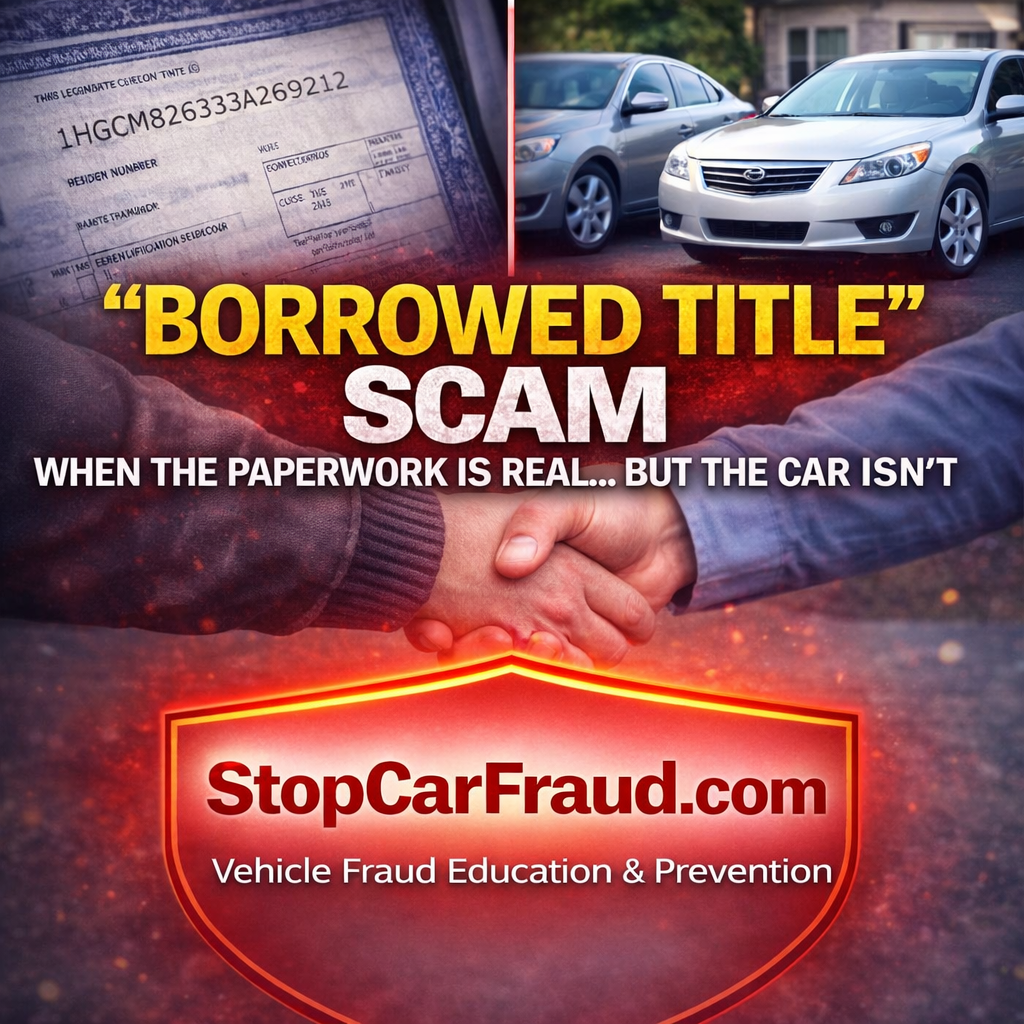
Everything checks out, the title is clean, the VIN matches, and the seller seems completely legit. You go through the process feeling confident, like you did everything right... until weeks later, when the truth finally hits.
👉 The title was real. 👉 The car was not.
This is exactly the type of scam StopCarFraud is built to expose the deals that look perfect on paper but fall apart in the real world.
This Scam Is Built on One Simple Trick
Scammers don’t always fake documents, sometimes... they borrow them.
Here’s how it works:
They get their hands on a real, legitimate title from a vehicle that’s:
- Junked
- Salvaged
- Exported
- Or sitting somewhere you’ll never see
Then they find a different car that looks almost identical:
- Same make
- Same model
- Same color
- Close year
And they sell THAT car using the real title.
👉 No fake paperwork. Just the wrong car tied to a real identity.
Why It Slips Past Buyers So Easily
Because on the surface? Everything checks out.
- Title looks authentic ✔
- VIN on paper is valid ✔
- Seller has a story ✔
Most buyers stop there.
They never think to ask the one question that matters:
👉 “Does THIS car actually belong to THAT title?”
That’s where buyers get caught, and where StopCarFraud focuses, breaking down scams that pass basic checks but fail under deeper inspection.
Where the Scam Falls Apart
| What You Check | What You Expect | What’s Actually Happening |
|---|---|---|
| Title VIN | Matches paperwork | It’s real—but tied to another car |
| Dashboard VIN | Looks correct at a glance | May be altered or swapped |
| Door jamb sticker | Seems normal | Subtle differences, wrong font or wear |
| Vehicle details | “Close enough” match | Trim, engine, or features don’t line up |
👉 “Close enough” is where people lose thousands.
The Setup Is Smarter Than You Think
These scammers don’t pick random cars.
They choose vehicles that:
- Blend in easily
- Have common colors (black, white, silver)
- Are hard to differentiate without expertise
To you, it looks identical. To them, it’s just similar enough to pass. And by the time questions start getting asked, they’re already gone.
When Reality Hits
You don’t find out right away.
You find out when:
- The DMV flags inconsistencies
- You try to resell it
- A deeper VIN inspection is done
- Or law enforcement connects the dots
That’s when everything collapses.
👉 The title doesn’t belong to the car
👉 Ownership becomes invalid
👉 The vehicle can be seized
And you? You’re stuck holding paperwork for a car you can’t legally prove you own.
This is one of the most common real-world cases reported across StopCarFraud, because victims don’t realize anything is wrong until it’s far too late.
Why This Scam Keeps Growing
Because buyers put too much faith in paperwork. The documents look official, and a printed VIN feels like proof, even when it isn’t. But here’s the truth:
👉 Titles don’t prove identity—VINs on the vehicle do.
And if you’re not checking the car itself? You’re guessing.
How to Protect Yourself (Real-World Rules)
If you want to avoid this scam, you have to slow down and verify:
- Match the VIN in multiple locations (dash, door, hidden areas)
- Compare vehicle specs (engine, trim, features) to the title
- Watch for anything that feels “almost right”
- Never rely on paperwork alone
If something feels off—even slightly—you walk.
No deal is worth the risk.
👉 These are the exact verification steps emphasized by StopCarFraud.com to help buyers avoid high- level fraud traps like this.
The Hard Truth
This scam works because it looks completely normal—no pressure, no shady behavior, no obvious red flags... just a clean title tied to the wrong car. The “Borrowed Title” scam doesn’t outright break the rules, it bends them just enough to trap you.
And by the time you realize what happened...
👉 The seller is gone
👉 The money is gone
👉And the car might be next