

Don’t Get Beat With A Fake One!
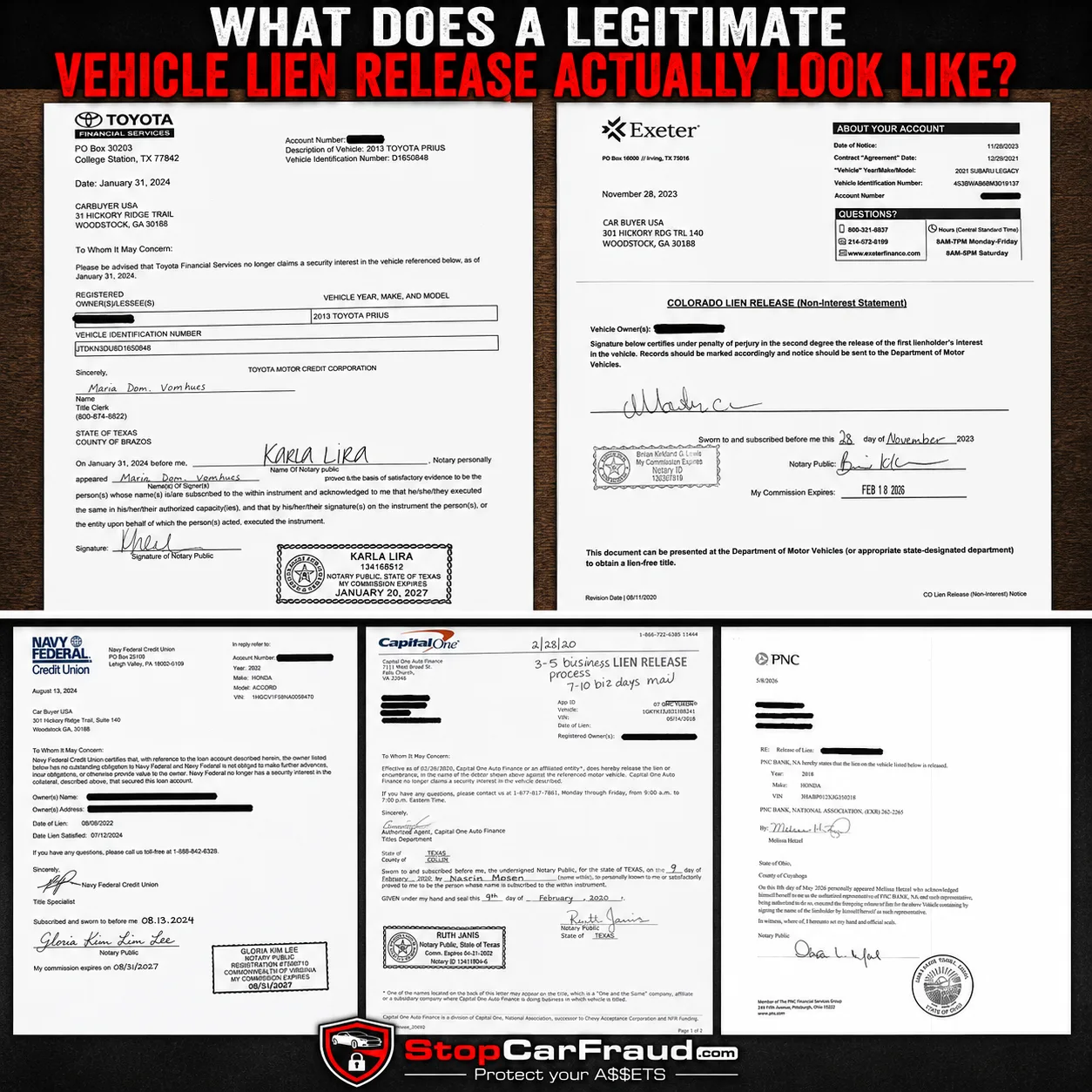
Buying a used vehicle that once had a loan against it isn't unusual. Most vehicles on the road were financed at some point. The problem begins when a buyer is handed a piece of paper claiming the loan was paid and assumes that document settles the matter. It doesn't.
A seller may confidently tell you the vehicle was paid off months ago. They may produce an impressive- looking letter bearing a lender's name, account information, a VIN, signatures and perhaps a notary section. Everything can look completely legitimate. But when thousands of dollars and legal ownership of a vehicle are at stake, "it looks real" isn't verification.
What Is a Vehicle Lien Release?
When a vehicle is financed, the lender generally maintains a security interest in that vehicle until the financial obligation has been satisfied. Once that obligation is satisfied, the lienholder can release its interest in the vehicle.
The document used to establish that release isn't necessarily going to look the same from one lender to another. Some lien releases resemble formal letters. Others look more like government or financial forms. The wording, layout and authentication methods can also vary. That's precisely why buyers shouldn't decide whether a lien release is legitimate based solely on how professional it looks.
What Information Should You Look For?
A lien release should contain enough identifying information to connect the release to the correct lender, borrower and vehicle. Depending on the circumstances, that can include the lienholder's name, registered owner's name, complete VIN, vehicle year, make and model, account information, lien or loan information, release or satisfaction date and authorized lender information.
The VIN deserves particular attention. Don't compare the first five characters, glance at the last four and assume everything is fine. Compare the entire VIN character by character against the title and the VIN physically displayed on the vehicle.
LIEN RELEASE CHECK: WHAT SHOULD YOU LOOK FOR?
Before going any further with the purchase, use this basic check:
| CHECK THIS | WHY IT MATTERS |
|---|---|
| Lienholder Name | Identifies the lender supposedly releasing its interest in the vehicle. |
| Complete VIN | Should match the vehicle and title exactly—character for character. |
| Year / Make / Model | Helps confirm the release corresponds to the vehicle being purchased. |
| Registered Owner | Should make sense when compared with the vehicle's ownership records. |
| Release / Satisfaction Date | Identifies when the lender says its interest was released or the obligation satisfied. |
| Authorized Lender Information | Helps identify who issued or authorized the release. |
| Signature / Authentication | Requirements vary, but the document should contain the appropriate authorization for that particular release. |
| Independent Verification | Most important. Confirm the lien was actually released instead of trusting the document alone. |
Official-Looking Doesn't Mean Official
This is where a bad vehicle transaction can become a financial nightmare. Logos can be copied. Documents can be altered. Signatures can be reproduced. Information from a legitimate document can potentially be changed and placed onto another. Today's technology makes creating professional-looking paperwork easier than ever.
A bank logo doesn't prove a loan was paid...a signature doesn't magically erase a lien...and a seller repeatedly telling you, "It's paid off, don't worry about it," certainly doesn't make it true.
Even notarization shouldn't be misunderstood. Depending on the state, lender and type of lien release, authentication requirements can differ. A notary's involvement should not automatically be interpreted as independent confirmation that the underlying vehicle loan has a zero balance.
We'll Show You Without Exposing Anyone's Information
Throughout this StopCarFraud.com series, we can use completely fictional lien-release examples to demonstrate what consumers may encounter without publishing anyone's private information. Fake lender. Fake borrower. Fake account number. Fake vehicle. Fake VIN.
The purpose isn't to turn consumers into forensic document examiners. It's to make them skeptical enough to ask the right questions before the money changes hands.
If you're buying a vehicle and lien paperwork enters the transaction, slow down. Match the VIN. Examine the names and dates. Question inconsistencies. Most importantly, independently verify that the lienholder actually released its interest in that specific vehicle.
DON’T GUESS. VERIFY BEFORE YOU BUY.
If you are unsure whether a lien release is legitimate, do not hand over your money and hope for the best. Stop the transaction and get answers first!
Contact StopCarFraud now:
info@stopcarfraud.com
Protect your money. Protect your vehicle. Protect your A$$ETS.