

How Flood, Salvage, and Total Loss Vehicles Get “Cleaned
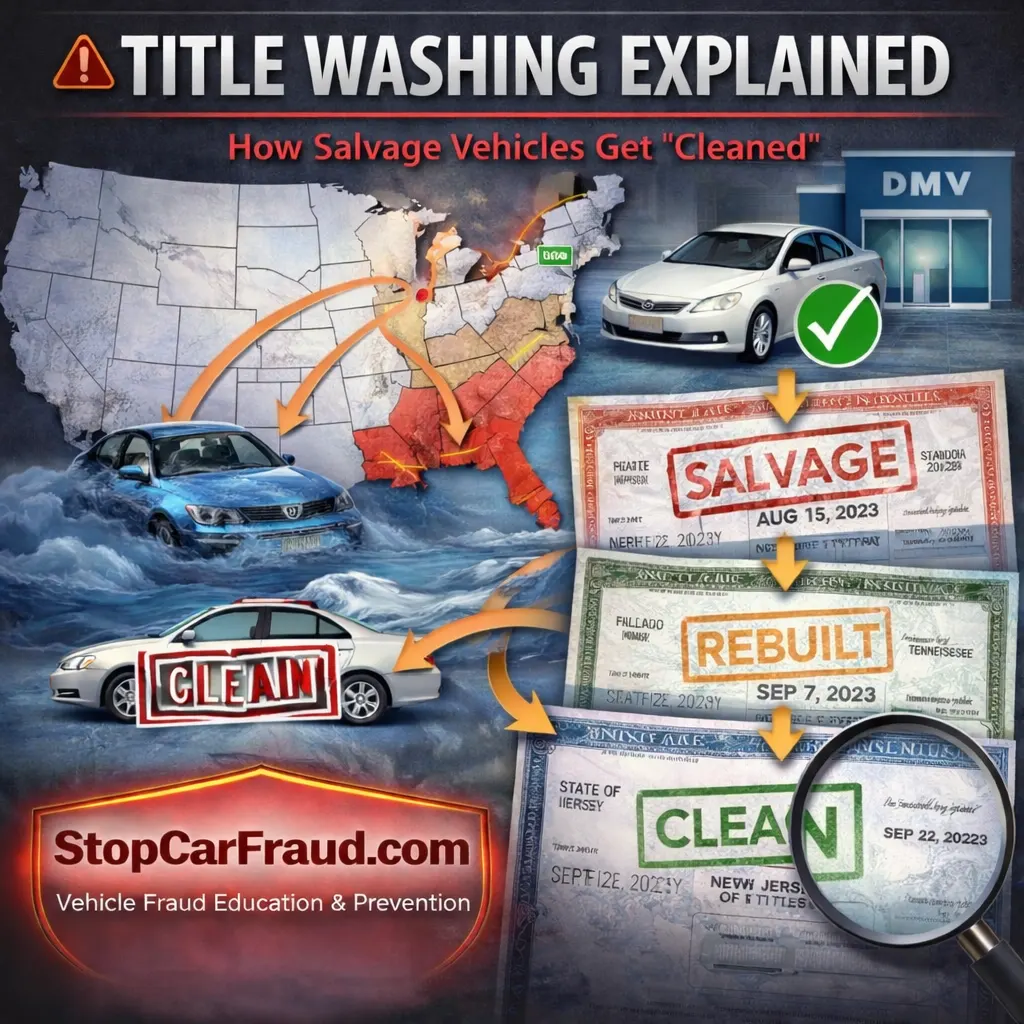
Title washing is one of the most misunderstood, and most dangerous forms of vehicle fraud in the U.S. It doesn’t involve fake VIN plates or stolen parts. Instead, it manipulates paperwork. A vehicle declared flood-damaged, salvage, or total loss in one state can legally reappear somewhere else with far fewer warnings attached. Most buyers don’t see it coming until it’s too late. Understanding how title washing actually works, step by step, is the best protection you have.
How Title Washing Really Happens (Step-by-Step)
Step 1: The Loss Event
The process begins with a serious incident — flood damage, collision, fire, or theft recovery. Insurance companies declare the vehicle a total loss and assign a branded title (usually salvage). That record enters national reporting systems, but not every database updates equally or instantly.
Step 2: Interstate Movement
Next, the vehicle is moved across state lines. This is the core of title washing. Different states apply branding differently, interpret paperwork differently, and update systems at different speeds. Fraudsters understand these variations and use them strategically.
Step 3: Paper Reclassification
In certain jurisdictions, the vehicle may qualify for inspection and reclassification as “rebuilt.” In others, inconsistent data matching can allow branding to weaken or disappear entirely during re-titling.
Step 4: Clean Market Reentry
Once paperwork looks cleaner, the vehicle is resold — often privately or through fast-moving wholesale channels — before deeper checks reveal the truth.
Why Certain States Get Used in Washing Pipelines
Title washing isn’t about blaming individual states — it’s about understanding regulatory differences criminals exploit:
- High-volume DMV systems: Fast processing environments create opportunities for oversight gaps.
- Rebuilt-friendly inspection frameworks: Some states rely more on documentation than deep structural inspections.
- Post-disaster movement patterns: Flood vehicles often travel far inland before resale.
- System lag windows: Variations in reporting timelines create exploitable delays.
Fraud rings frequently move vehicles through multiple jurisdictions to blur the paper trail even further.
Real Paperwork Red Flags Buyers Miss
Washed titles usually leave clues:
Short Ownership Chains Across States
Multiple transfers in a short period often signal concealment activity.
Branding Timeline Mismatches
A vehicle labeled “clean” despite recent out-of-state movement should raise questions.
Odometer vs Condition Conflicts
Interior wear, corrosion, and undercarriage damage often contradict mileage records.
Suspicious Title Issue Dates
Recently issued titles tied to older vehicles deserve closer scrutiny.
Insurance vs DMV Gaps Criminals Exploit
Even modern systems aren’t fully synchronized:
- Insurance loss records often appear faster than DMV updates.
- State databases don’t always cross-check instantly.
- Paper title processing still creates verification delays.
- Auction-to-resale timing windows help fraud slip through unnoticed.
These gaps are where most washed titles originate.
Buyer Checklist: Spot Washed Titles Fast
Before buying any used vehicle:
✔ Compare title issue dates with ownership history
✔ Watch for quick multi-state transfers
✔ Run full history checks across multiple sources
✔ Inspect closely for flood damage signs
✔ Question unusually low pricing
✔ Verify seller identity and documentation consistency
If anything feels unclear, STOP & VERIFY!
Protect Yourself Before You Buy
Title washing is evolving fast, and traditional history checks alone aren’t enough anymore. The safest move is using layered verification, combining paperwork review, physical inspection, and risk analysis before you commit.
Before you buy any vehicle, run it through StopCarFraud.com for guidance, verification tools, and expert-backed education designed to catch what others miss. Because once a washed title becomes your problem, undoing the damage is extremely difficult, and often impossible.