

Looks Like a Glitch. It Isn’t!
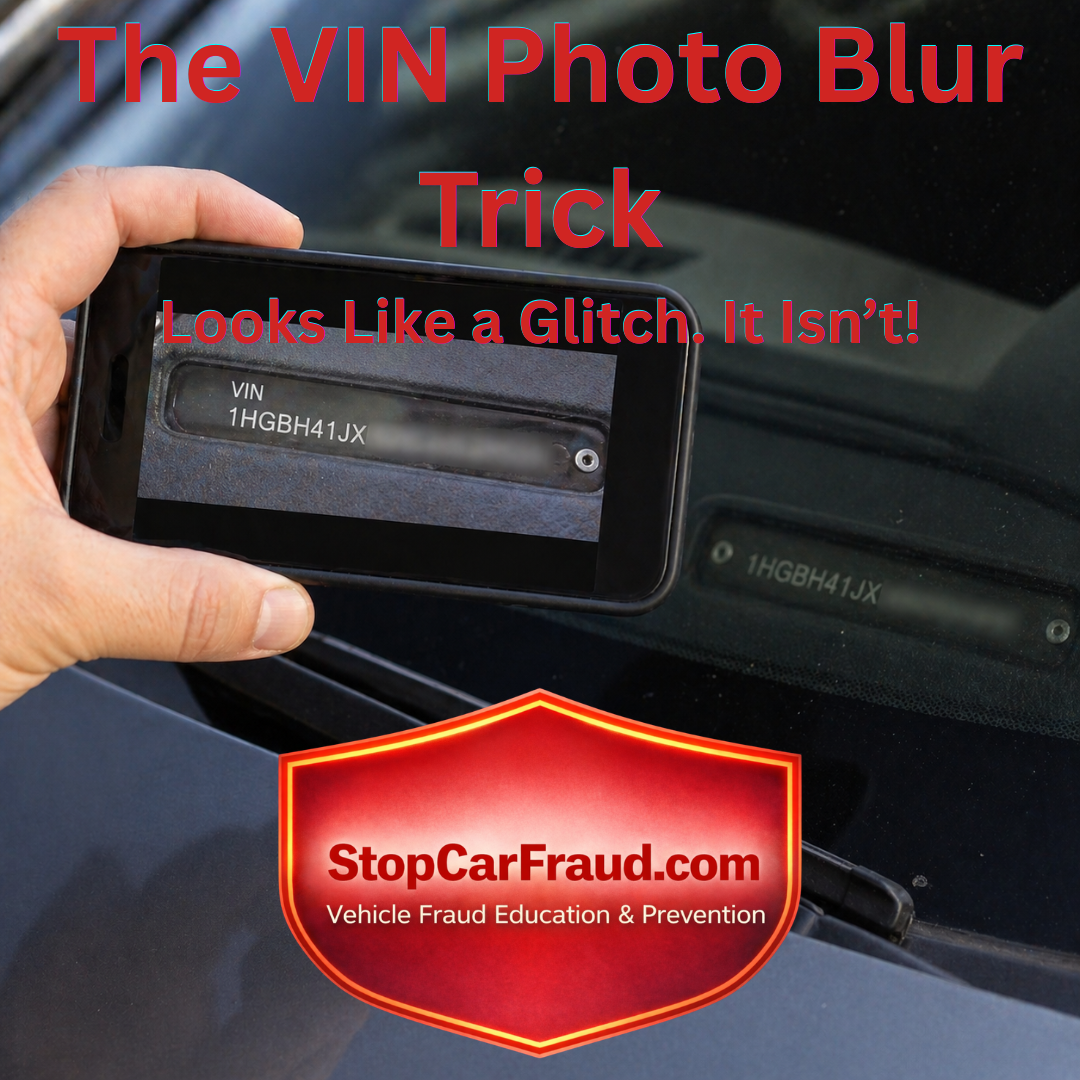
You ask for the VIN, and suddenly things get a little... fuzzy. The seller sends a photo, but part of the VIN is blurred, cropped, or conveniently out of focus. Maybe they say the lighting was bad. Maybe they blame the camera. Maybe they tell you they will send a clearer one later. It feels minor, easy to overlook, and not worth slowing the deal down. That is exactly why this trick works.
Why the VIN Matters More Than Anything
The VIN is not just a number. It is the identity of the vehicle. It connects the car to its history, its title status, its accident records, and any liens attached to it. Without a clear and complete VIN, you cannot verify what you are actually buying. You are being asked to trust words instead of facts, and in this space, that is where problems begin.
What They Are Trying to Hide
When a VIN is intentionally blurred or partially hidden, there is usually a reason. The vehicle could have a salvage or rebuilt title that the seller does not want you to see. It could have been in a serious accident, flood, or theft situation. There could be open recalls, mileage inconsistencies, or even a mismatch between the VIN on the car and the paperwork. In some cases, the VIN may not even belong to that vehicle at all.
The Photo Trick That Buys Them Time
Blurring the VIN is not always about completely hiding it. Sometimes it is about delaying you. The seller keeps you engaged, answers your questions, and builds trust while avoiding giving you the one piece of information that lets you verify everything independently. By the time you realize something is off, you may already be emotionally or financially invested in the deal.
Why People Fall for It
It feels like a small issue. A blurry photo does not trigger the same alarm as missing paperwork or a bad title. Buyers assume it is accidental, or they do not want to seem difficult by pushing for a clearer image. That hesitation is what scammers rely on. They count on you moving forward without ever confirming the vehicle’s true history.
What a Legitimate Seller Does
A legitimate seller has no reason to hide the VIN. They will provide it clearly, completely, and without hesitation. In fact, most honest sellers expect you to check it. They understand that verifying the VIN protects both sides and helps the deal move forward with confidence.
The Line You Do Not Cross
If the VIN is not clear, the deal stops. Not slows down. Not continues with promises. Stops. You do not move forward until you have the full, readable VIN and have had the chance to verify it yourself. Anything less puts you in a position where you are guessing instead of confirming.
What You Should Do
Ask for a clear photo of the VIN plate, usually located on the dashboard near the windshield or inside the driver’s door. Match it to the title and any documents provided. Run your own history check. If the seller avoids, delays, or keeps sending unclear images, that is your answer.
Know the Signs Before It Costs You
If something as basic as the VIN is being hidden or obscured, it is not a small issue. It is a warning. And if you are not sure what you are seeing or what it means, that is where StopCarFraud.com steps in. We break down these tactics so you can spot them instantly and protect yourself before the deal goes any further.
Final Reality
If you cannot clearly see the VIN, you cannot clearly see the truth.