

How AI is Making Fraudulent Auto Documents Harder to Spot
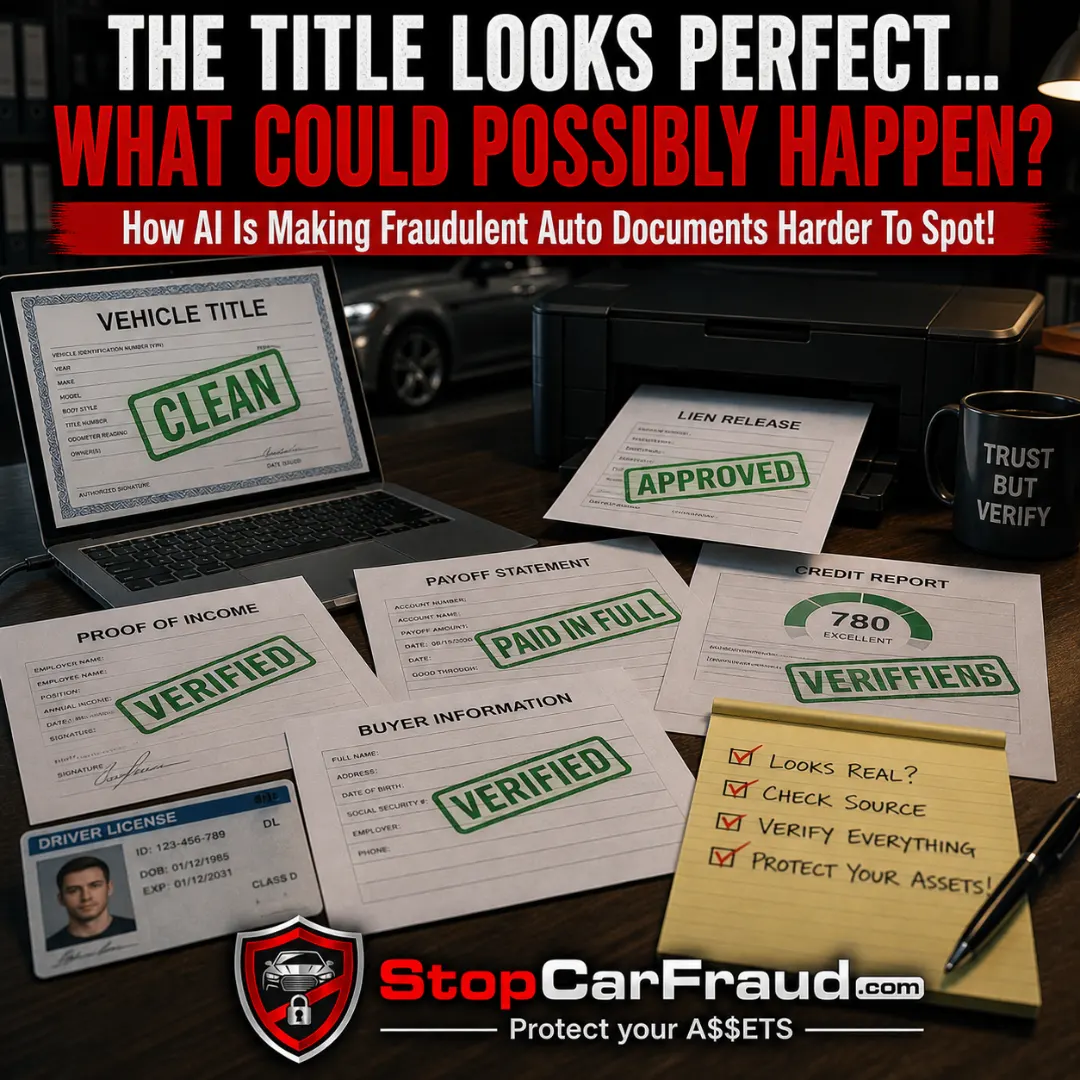
In Part 1 of our StopCarFraud series, we compared old-school auto fraud with the far more sophisticated scams appearing in 2026. In Part 2, we explored synthetic identities and how a buyer can appear legitimate even when the identity supporting the transaction may have been manufactured.
Part 3 comes with another piece of the same problem: the paperwork.
For years, spotting a questionable automotive document often meant looking for something that seemed wrong. A crooked logo, strange font, misspelled lender name, inconsistent address, suspicious signature or numbers that didn't match. Those clues still matter, but there's a problem.
The fake documents are getting better.
Modern editing software and AI-assisted technology can make it easier to create, alter and manipulate documents that appear professional at first glance. That means a document doesn't have to look like somebody created it in their basement at 2:00 a.m. to be fraudulent.
It can look polished. It can look official. It can even contain information that appears to match everything else you've been given. And that's exactly why buyers and sellers need to stop confusing appearance with verification.
One Fake Document Can Support Another
Consider a private vehicle transaction. A buyer provides identification, proof of employment and financial information. Everything seems consistent, so the seller becomes comfortable. But consistency alone doesn't prove authenticity.
If false information is repeated across several documents, those documents can appear to confirm one another. The same name, address, employer and other details appearing everywhere may create a convincing paper trail even though the underlying information hasn't been independently verified.
For a buyer, the danger works in the opposite direction. A seller may present paperwork concerning ownership, financing, a lien, payoff or vehicle history that looks perfectly legitimate. The buyer sees official-looking formatting and assumes someone else has already done the verification.
That's a very expensive assumption.
WHAT LOOKS OFFICIAL VS. WHAT ACTUALLY MATTERS
WHAT YOU'RE LOOKING |
WHAT YOU SHOULD BE ASKING |
|---|---|
| Professional lender logo | Did this document actually come from that lender? |
| Matching names and addresses | Have those details been independently verified? |
| Proof-of-income document | Is the employment and income legitimate? |
| Financing or payoff paperwork | Can the financial institution confirm it? |
| Vehicle information and VIN | Does it match the actual vehicle and official records? |
| Signature or official-looking stamp | Is the document itself authentic? |
| Screenshot showing payment | Is the money actually received, cleared and secure? |
Screenshots Are Not Money
This deserves its own warning because sellers can become so focused on paperwork that they overlook the most important part of the transaction: getting paid. A screenshot, confirmation page, email or message saying money was transferred isn't the same as independently confirming that the funds are safely available.
Don't allow a buyer to rush you because they have somewhere to be, a transporter is supposedly waiting or they insist the transfer has already been completed. A legitimate transaction doesn't become safer because somebody is pressuring you to finish it faster. The vehicle doesn't leave until the transaction checks out.
Don't Become an Amateur Document Examiner
StopCarFraud doesn't want consumers staring at fonts and logos trying to determine whether they're looking at an expertly produced fake. That's precisely the problem with sophisticated fraud. Instead of asking “Does this document look real?”, start asking “Can I independently verify what this document claims?”
That is a completely different mindset. A lender can be independently contacted. Ownership can be investigated. Vehicle information can be compared. Payment can be confirmed. Identities and transaction details can be scrutinized before thousands of dollars, or the vehicle itself changes hands.
In 2026, beautiful paperwork should never be the final word. Verification should be.
COMING IN PART 4:
THE MONEY LOOKS REAL. IS IT?
How Payment Scams Can Leave Sellers Without the Car OR the Cash
If you're buying or selling a vehicle and you're unsure about the identity, title, lien, ownership, payment or documentation, don't gamble because the paperwork looks convincing.
CONTACT STOPCARFRAUD.com BEFORE YOU COMPLETE THE TRANSACTION.
Don't trust the document. Verify the transaction. Protect your A$$ETS.