

Convenient on the Surface. Risky Underneath.
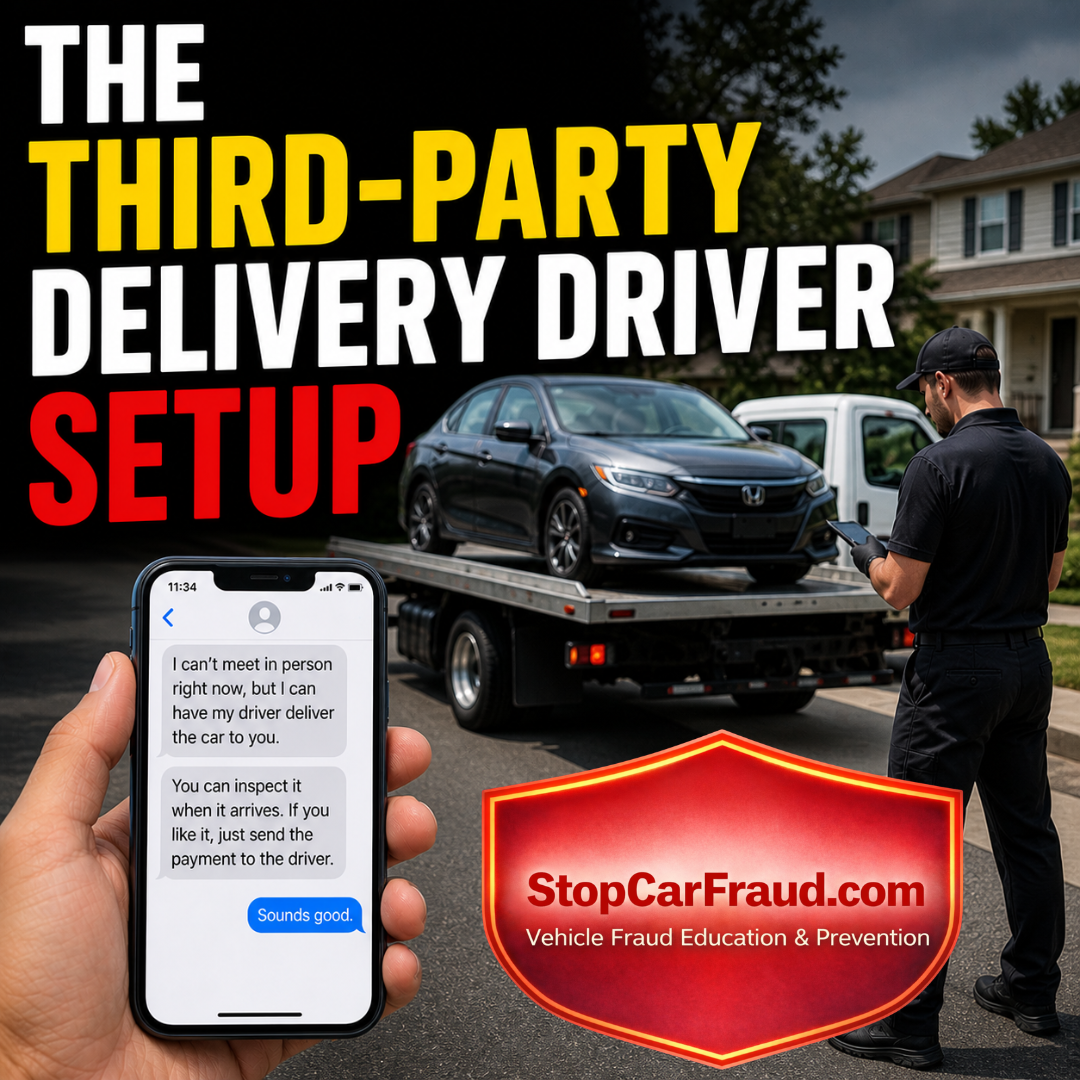
“I can have it delivered to you.” That line sounds like a win, especially if the seller claims they are out of town or too busy to meet. Then comes the added layer. A third-party driver will handle everything. They will drop off the vehicle, you can inspect it, and if you like it, you pay. It feels modern, efficient, and safe. In reality, this setup is one of the easiest ways to separate you from your money without ever facing you directly.
Why They Insert a Third Party
The moment a “driver” enters the deal, the seller creates distance and removes accountability. You are no longer dealing directly with the person who owns or claims to own the vehicle. Instead, communication gets split. The seller controls the story, and the driver becomes a prop in that story. If anything feels off, the seller can deflect. If something goes wrong, the driver is just following instructions. You are left with no clear point of responsibility.
How the Setup Usually Plays Out
It often starts with a reason the seller cannot meet. They might say they relocated, are traveling, or are handling a family situation. Then they offer delivery as a solution. The driver is described as professional, insured, and trustworthy. Sometimes they will even reference a known shipping company to make it feel legitimate.
Then comes the catch. You are asked for a deposit, a delivery fee, or full payment through a method that cannot be easily reversed. The promise is simple. The car arrives, you inspect it, and everything is finalized. But once the money is sent, the situation changes. The delivery gets delayed, communication slows down, and the driver becomes harder to reach. In many cases, the vehicle never shows up at all.
What Makes This Trick Effective
It removes the face-to-face element that naturally protects buyers. When you meet in person, you can verify the vehicle, check the title, and confirm the seller’s identity. This setup replaces all of that with convenience and trust. It feels safer because it is structured, but that structure is controlled entirely by the person you cannot see.
It also plays into urgency. The seller may claim multiple buyers are interested and that delivery is the fastest way to secure the vehicle. That pressure pushes you toward sending money before verifying anything.
What You Are Not Being Shown
In many of these cases, the vehicle is not available in the way it is being presented. It may not exist, it may not belong to the seller, or it may have serious issues that would be obvious in person. The third- party setup is designed to prevent you from discovering that before money is involved.
Even when a vehicle does exist, the paperwork may not be ready, the title may not be clean, or the seller may not have the legal authority to complete the transaction. The delivery story keeps you focused on logistics instead of verification.
What a Legitimate Delivery Looks Like
Real vehicle delivery services exist, but they operate very differently. Payment is structured, contracts are clear, and you are not asked to send money blindly to secure a vehicle you have not verified. The seller remains accountable, and the paperwork is handled properly. There is no confusion about who owns the vehicle or who is responsible for the sale.
What You Should Do
Keep the deal direct. Meet the seller. See the vehicle. Verify the VIN and the title before any money changes hands. If delivery is involved, make sure it comes after the sale is properly documented, not before. If a seller insists on payment tied to a third-party driver before you can verify the basics, that is your signal to walk away.
Know the Setup Before It Costs You
If you are unsure whether a delivery arrangement is legitimate or a setup, this is where StopCarFraud.com comes in. We break down these layered tactics so you can see exactly where the risk is hiding before it turns into a loss.
Final Reality
If the deal depends on someone you have never met handling everything, you are not in control of the deal.