

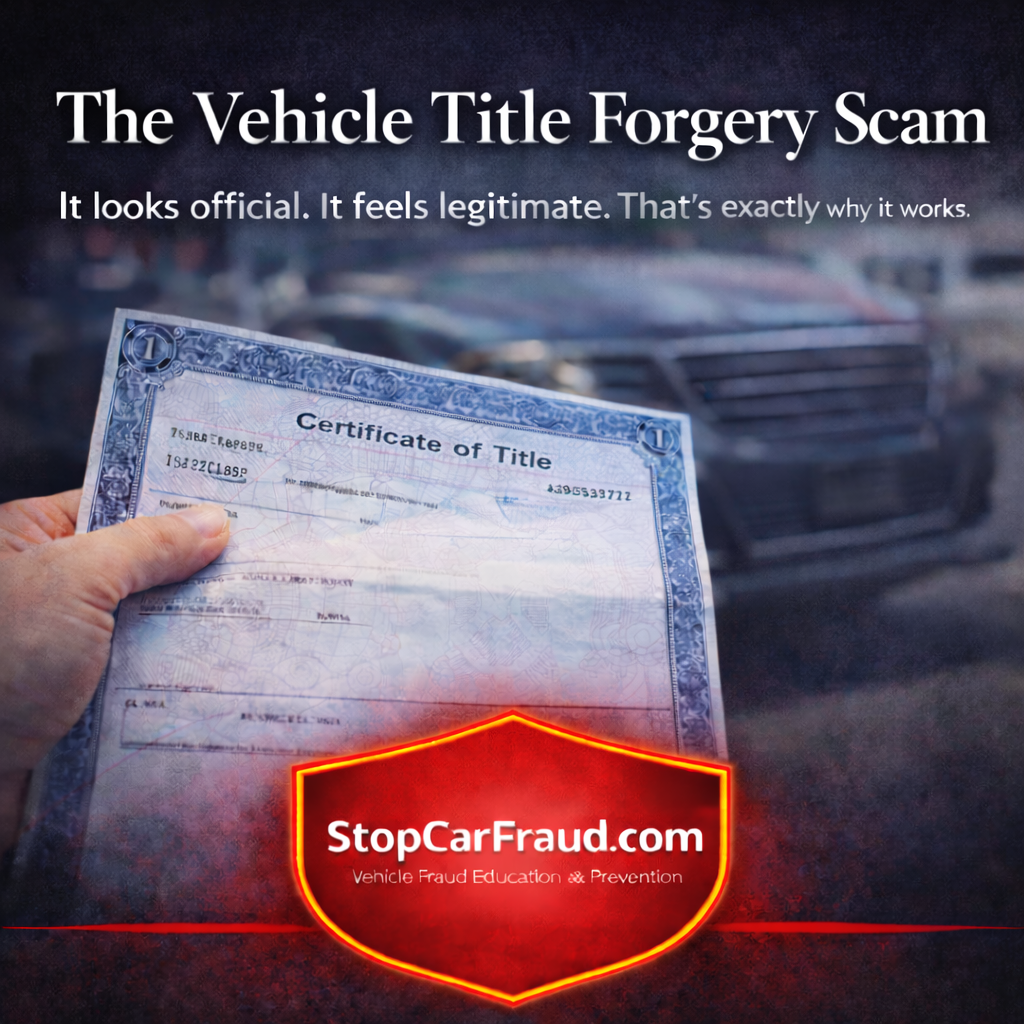
It looks official. It feels legitimate. That’s exactly why it works.
When the Document Becomes the Weapon
Most buyers operate under one core assumption: if the title looks legitimate, the deal must be clean. That belief is deeply ingrained, and it’s exactly what this scam exploits. In a paper title forgery situation, the document itself becomes the weapon, not proof of ownership, but a carefully constructed illusion designed to move the transaction forward without resistance. What you’re trusting isn’t verification, it’s presentation.
How a Fake Title Passes as Real
Paper titles are far easier to replicate than most people realize. With access to templates, decent printing, and a basic understanding of formatting, a forged title can appear completely legitimate to the untrained eye. The layout looks correct, the information appears aligned, and even small details like seals or markings can be imitated well enough to avoid immediate suspicion. The goal isn’t perfection, it’s credibility just long enough to complete the sale.
Where the Story Starts to Break
The seller typically presents the title with confidence, reinforcing the illusion that everything is in order. The vehicle matches the paperwork at a glance, and nothing seems out of place during a casual review. But what you’re seeing is surface-level alignment, not actual validation. A forged title doesn’t need to withstand deep scrutiny, it only needs to survive long enough for you to accept it as real.
The Details Most People Don’t Verify
In a legitimate transaction, the title connects the vehicle to a verifiable ownership chain, linking the VIN, the registered owner, and the history of the car. In a forgery, those connections are only visual, not real. The VIN may be subtly altered, the name may not match official records, and the document itself may not exist in any database. Without independent verification, you’re relying entirely on what’s been handed to you, and that’s where the vulnerability lies.
When the Truth Shows Up
The breakdown doesn’t happen during the sale, It happens when you attempt to make the car legally yours. That’s when the system catches what you couldn’t see. The DMV flags the title, the VIN fails to match official records, or the document simply doesn’t exist in their system. At that moment, the paper you trusted becomes useless, and the person who provided it is no longer part of the equation.
Why This Scam Works So Well
This scam succeeds because it targets trust at a fundamental level. People trust documents, especially when they look official and are presented with confidence. When the car is physically present, the seller appears legitimate, and the paperwork is in hand, everything feels real enough to move forward. That combination lowers skepticism and replaces verification with assumption and that’s exactly what the scam relies on.
The Red Flags That Get Missed
Even well-executed forgeries leave behind inconsistencies, but they’re often subtle enough to be dismissed in the moment. Titles that appear unusually clean or freshly printed, sellers who resist close inspection, mismatches between the seller’s ID and the name on the title, or small inconsistencies in VIN formatting are all indicators that something may be wrong. On their own, they might seem explainable, but together they point to a much larger issue.
The Truth About “Having the Title”
Possessing a title does not automatically mean the seller has the legal right to sell the vehicle. In a forgery scenario, the document is simply a prop, designed to create confidence and close the deal. Once payment is made, the responsibility shifts entirely to the buyer, and resolving a forged title situation is often complicated, time- consuming, and far from guaranteed.
Why People Turn to StopCarFraud
When something feels off but isn’t immediately provable, that’s where mistakes happen. At StopCarFraud.com, the focus is on breaking down the illusion before it turns into a loss. By examining the document, the details, and the structure of the transaction, we help determine whether what you’re being shown actually holds up, not just visually, but legally.
This Is Where It Gets Real
If the title hasn’t been verified beyond what’s physically in your hand, then it isn’t proof, it’s exposure. The moment you complete a purchase based on a forged document, you’re no longer closing a deal. You're stepping into a situation that doesn’t end when the seller disappears, and one that can follow you long after the transaction is over.