

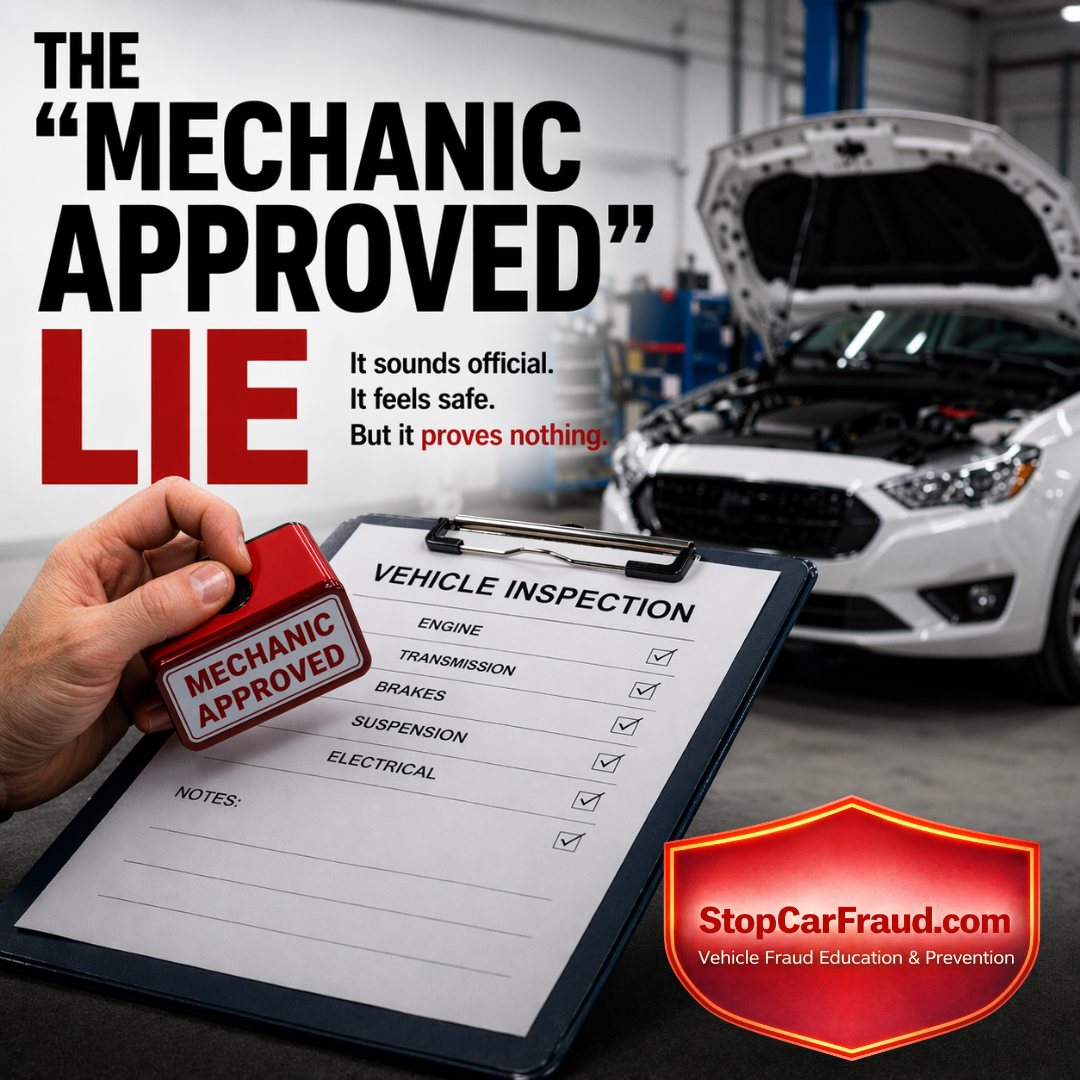
The Phrase That Lowers Your Guard
“Mechanic approved.” It sounds official, reassuring. Almost like a stamp of safety placed on a car you’re about to trust with your money. But here’s the reality: it’s one of the most abused phrases in the private sale world, and it’s designed to make you relax at exactly the wrong moment. Sellers use it to create instant credibility without offering real proof, knowing most buyers will hear it and stop digging. That’s where mistakes get expensive, and why understanding this tactic matters before you commit to anything.
Who’s the Mechanic, Exactly?
The moment you ask for details, things usually get vague. No shop name, no invoice, no inspection report, just “a mechanic looked at it.” That could mean anything from a certified technician performing a full diagnostic to a friend in a driveway giving it a quick once-over. Without documentation, “mechanic approved” isn’t verification, it’s a claim. And claims don’t protect you when something fails a week after you buy the car. This is exactly the type of situation where a professional is needed. StopCarFraud can help you understand what’s real, what’s missing, and what questions you should be asking before money changes hands.
Approval Doesn’t Mean Clean
Even if a real mechanic did inspect the vehicle, “approved” doesn’t mean problem-free. It doesn’t mean the engine won’t fail next month, the transmission isn’t on borrowed time, or hidden damage isn’t waiting to surface. It simply means that at one point in time, nothing obvious stood out under limited inspection. Sellers rely on buyers misunderstanding that distinction, letting the word “approved” carry far more weight than it should. We exist to break down these exact misconceptions, so you’re not relying on feel- good language instead of facts.
Timing Is Everything—and It’s Usually Missing
Another detail that rarely gets clarified is when this so-called approval happened. Last week? Six months ago? Before or after an issue started developing? Cars change fast, and an outdated inspection is almost useless. Sellers often leave this part out on purpose, letting buyers assume the approval is recent and still valid. It’s not. If you don’t verify the timeline, you’re trusting outdated information, and that’s a risk you don’t need to take.
No Paperwork, No Proof
A real inspection leaves a trail: written reports, repair notes, maybe even photos or diagnostic results. If none of that exists, then there was no meaningful inspection, just a statement meant to move the sale forward. This is one of the biggest red flags StopCarFraud teaches buyers to recognize. If it can’t be documented, it shouldn’t be trusted. Period.
When the Phrase Replaces Transparency
The biggest problem with “mechanic approved” is how often it replaces real conversation. Buyers hear it and stop asking about service history, prior accidents, warning lights, or upcoming repairs. The phrase becomes a shortcut, a way to avoid deeper questions. That’s exactly why it’s used. It’s not there to inform you. It’s there to close you.
What Smart Buyers Do Instead
Instead of trusting the phrase, smart buyers slow the process down. They ask for documentation. They verify who inspected the car and when. And most importantly, they get their own independent inspection from someone who has zero connection to the seller. If you’re unsure what to look for or feel like something isn’t adding up, StopCarFraud is built for exactly that moment! Helping you spot the gaps, understand the risks, and avoid getting pulled into a deal that isn’t what it seems.
The Reality Behind the Words
“Mechanic approved” isn’t protection, it’s positioning. It’s a carefully chosen phrase that sounds like certainty while delivering none. And if you take it at face value, you’re not making an informed decision, you’re taking someone’s word for it. Before you do that, take a step back, verify everything, and use resources like StopCarFraud.com to make sure what you’re buying is real, because once the deal is done, the consequences are yours to deal with.