

How Towed Cars End Up in Scams
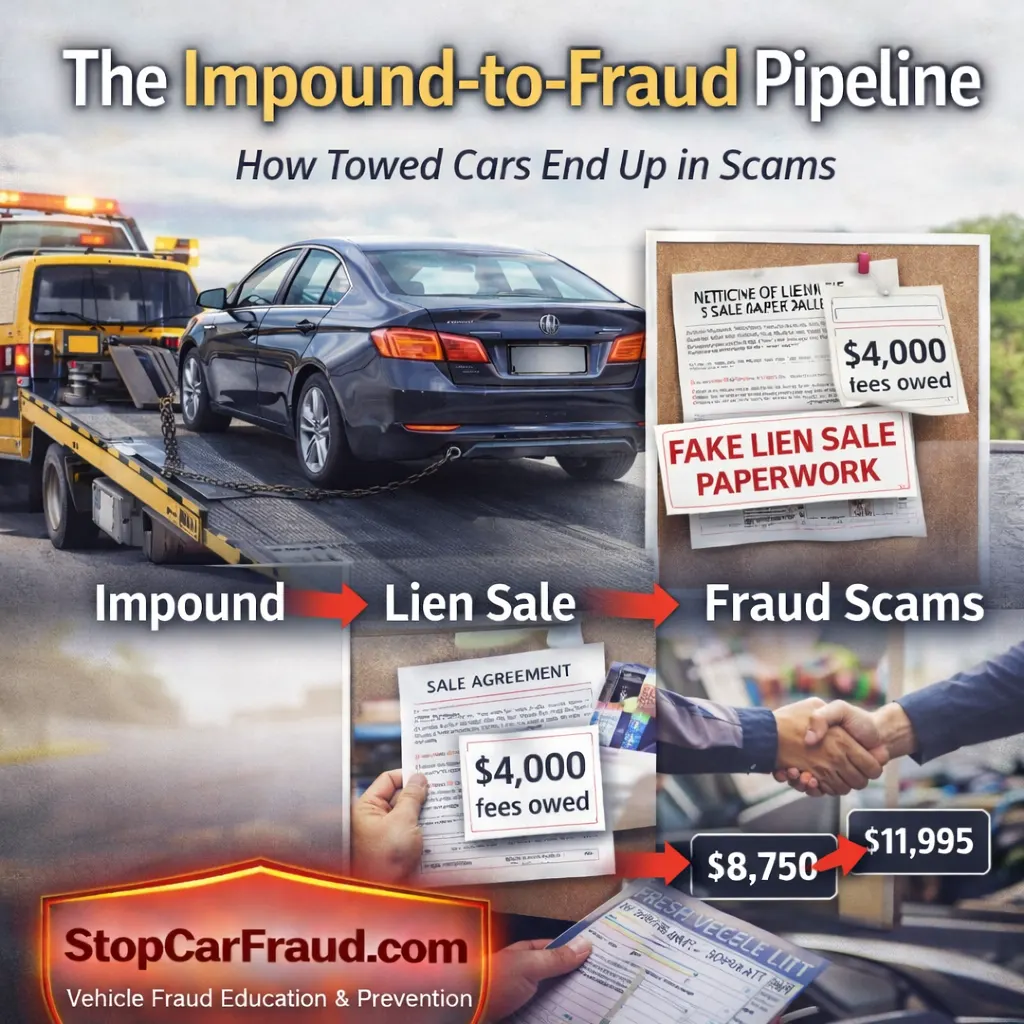
Most people assume impounded vehicles either get reclaimed or legally auctioned with full transparency. p>In reality, thousands of towed cars quietly move through a fast-moving resale pipeline every year, abandoned, processed through lien systems, and resold quickly with little scrutiny. Many buyers never realize the vehicle they’re purchasing was recently impounded, and many original owners don’t discover what happened until long after the sale. p>Understanding how the impound-to-fraud pipeline works is critical for protecting yourself, whether you’re buying or trying to recover a vehicle.
How Impounded Vehicles Enter the Fraud Pipeline (Step-by-Step)
Step 1: Tow + Storage Begins
Vehicles are commonly impounded for:
- Parking violations
- Arrest or investigation holds
- Registration or insurance issues
- Accidents and breakdown removals
- Private property tows
Daily storage fees accumulate quickly, often outpacing an owner’s ability to respond.
Step 2: The Abandonment Window
Many owners simply cannot afford retrieval costs. Between towing, storage, administrative charges, and penalties, reclaiming a vehicle can become financially unrealistic within days. When deadlines pass, the vehicle becomes eligible for lien processing and resale.
Step 3: Lien Sale Processing
Tow yards typically file lien paperwork allowing them to sell vehicles to recover unpaid fees. While many follow legal procedures, fraud risks appear through:
- Missed or delayed notifications
- Address errors on mailed notices
- Tight statutory timelines
- Fast resale scheduling
These weak points create opportunity for abuse and confusion.
Where Fraud Enters the Pipeline
Title Transfer Loopholes
Once sold, vehicles often move quickly between buyers before records fully update. During this window:
- Impound history may be hidden
- Mechanical or collision damage may go undisclosed
- Paperwork gaps become harder to trace
Fast turnover helps conceal risk.
Fake Lien Paperwork Scams (Step-by-Step)
Some operations go further by producing fraudulent lien documents:
Step 1: Recently impounded vehicles are identified.
Step 2: Fake lien notices are created using altered data.
Step 3: Vehicles are sold privately before verification catches up.
Step 4: Buyers discover issues during DMV transfer.
These scams move quickly and often target first-time buyers.
Real Victim Scenarios
Buyers
- Purchase vehicles with hidden damage
- Discover title complications after payment
- Face delayed or denied registration
- Lose money fixing paperwork problems
Original Owners
- Never receive lien notifications
- Learn their vehicle was sold unexpectedly
- Struggle reversing improper sales
- Face legal or credit complications
Both sides often feel blindsided.
Buyer Checklist: Spot Impound-Linked Fraud Fast
Before buying:
✔ Ask directly about tow or impound history
✔ Compare title issue dates carefully
✔ Review ownership timeline gaps
✔ Inspect closely for storage damage
✔ Avoid rushed private-party deals
✔ Verify all paperwork before payment
If anything feels unclear, STOP & VERIFY!
Protect Yourself Before It Becomes a Problem
The impound-to-fraud pipeline moves fast, and once paperwork progresses, reversing mistakes becomes difficult. The safest move is verifying everything early.
StopCarFraud.com is here for education, verification tools, and step-by-step guidance designed to help buyers and owners avoid costly mistakes. Because once a fraudulent transfer happens, fixing it is far harder than preventing it.