

How Emotional Manipulation Is Used to Lower Your Guard
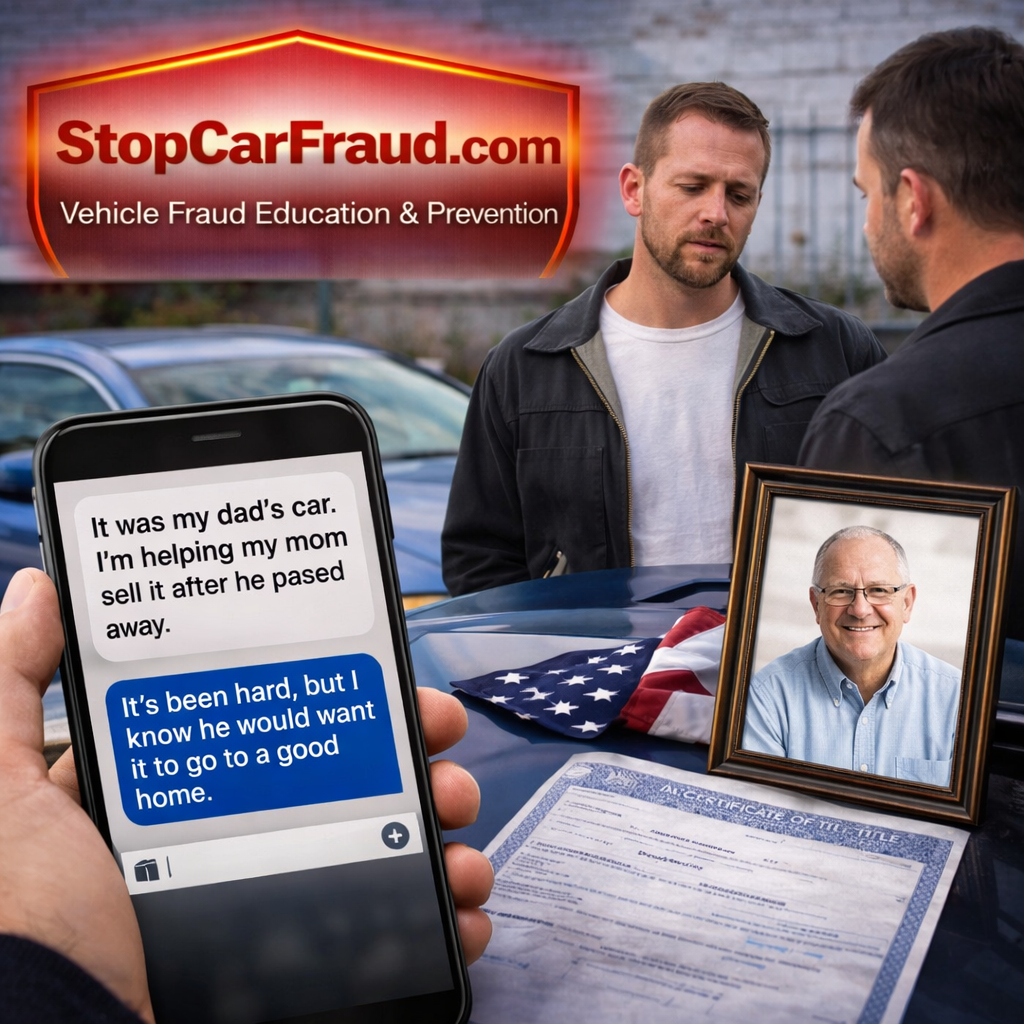
Not every car scam starts with pressure. Some start with a story, such as: “My dad passed away and I’m helping sell his car”, “My sister moved out of state and asked me to handle this”, or “It was my brother’s car—I just need to get rid of it.”
At first, it feels human. Personal. Even a little uncomfortable to question. That’s exactly why it works. The “family member sale” angle is one of the most subtle and effective tactics in the car market because it doesn’t rely on urgency, it relies on emotion. It creates a situation where buyers instinctively lower their guard, avoid asking hard questions, and move forward out of empathy instead of caution. And scammers know that.
When a seller introduces a personal story tied to a family member, it immediately shifts the tone of the transaction. You’re no longer just dealing with a seller, you’re dealing with someone who appears to be helping, grieving, or managing a situation that feels sensitive. That emotional framing changes behavior.
Buyers become less likely to challenge details. They hesitate to ask for documentation. They avoid pressing for verification because they don’t want to seem insensitive. Instead of scrutinizing the deal, they give the benefit of the doubt. That’s where the risk begins.
In legitimate situations, people do sell vehicles on behalf of family members. It happens every day. But those sales come with structure—clear documentation, proper authorization, and verifiable ownership. In fraudulent setups, those elements are either missing or intentionally vague.
The seller may not have the title. Or they may present a title that doesn’t match their identity. They might avoid direct answers about ownership, claiming they’re “just helping out.” Questions about paperwork are deflected. Requests to meet the actual owner are brushed off. Everything stays just clear enough to feel possible, but not solid enough to verify. And because the story feels real, many buyers don’t push further.
That’s the mistake.
This tactic is often used alongside other scams—fake listings, deposit requests, or even ghost seller setups. The emotional layer simply makes those scams easier to execute by reducing resistance early in the conversation. It’s not about the story being believable. It’s about the story making you less skeptical.
The safest way to approach any “family member” sale is to remove emotion from the equation entirely. Treat it like any other transaction. Verify ownership. Confirm that the person selling the vehicle has the legal right to do so. Ensure the title is valid, matches the seller, and is ready to transfer. If those elements aren’t in place, the story doesn’t matter. A legitimate seller will understand the need for verification. A fraudulent one will rely on the story to avoid it.
At StopCarFraud.com, we highlight scams like this because they don’t look aggressive—they look reasonable. And that’s what makes them dangerous. The absence of pressure creates a false sense of security, allowing buyers to move forward without asking the questions that actually protect them.
In the end, the risk isn’t the story itself...It’s what the story convinces you not to check.