

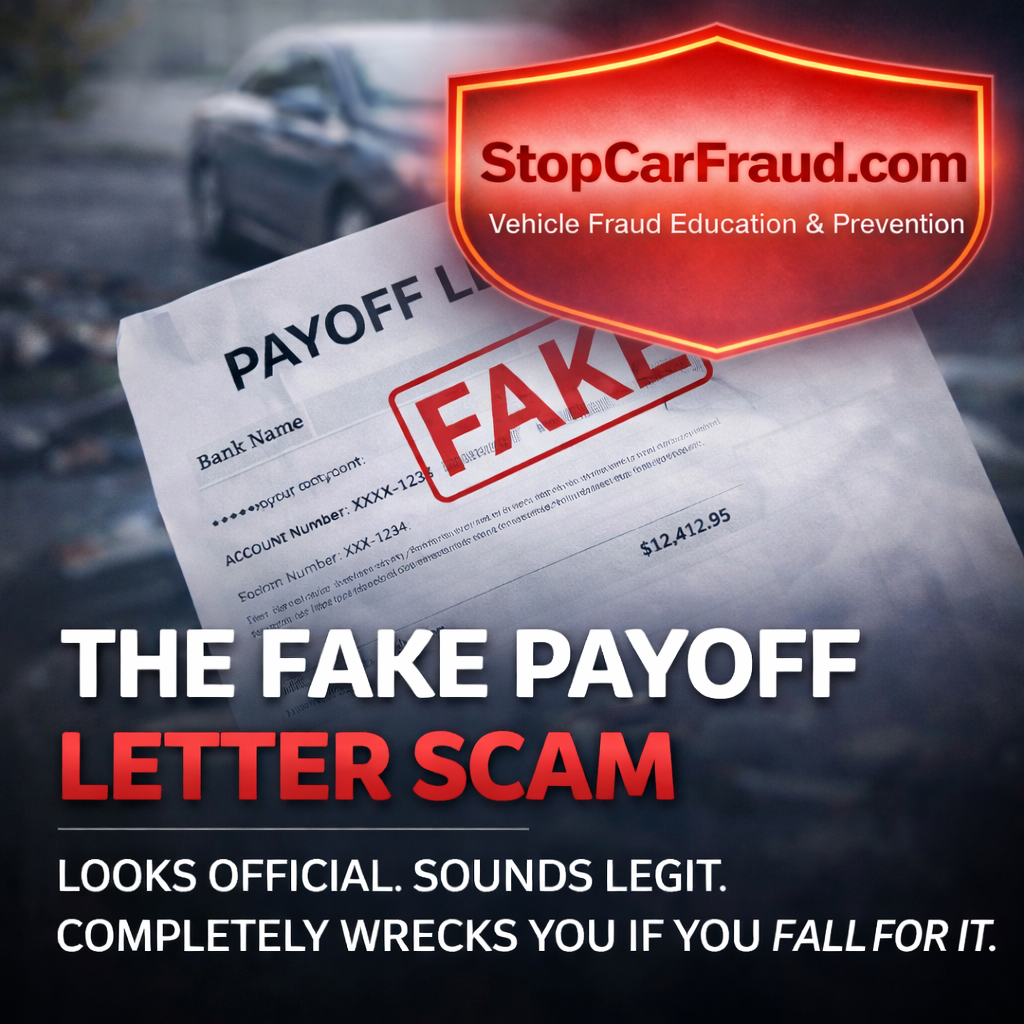
Looks official. Sounds legit. Completely Wrecks You If You Fall For It!
The Paper That Disarms You
There’s something about a document that makes people relax. Clean formatting, a lender’s name, a neat payoff number, it all signals “this is handled.” And that’s exactly why this scam works so well. It doesn’t come at you aggressively. It doesn’t feel chaotic. It feels organized, almost professional.
The seller hands over a payoff letter like it’s the final piece of reassurance, and just like that, your instincts quiet down. You stop questioning the deal and start focusing on completing it. The shift from cautious to comfortable, is where everything starts to go wrong.
When “Official” Means Absolutely Nothing
Here’s the uncomfortable reality: a payoff letter means nothing if you didn’t verify it yourself with the lender. Nothing. It can be outdated. It can be altered. It can belong to a completely different account. And in some cases, it’s just flat-out fake. But visually? It looks good enough to pass. Good enough to convince. Good enough to close the deal.
And that’s all the scammer needs. Because they’re not trying to fool an expert, they’re trying to move fast enough that you don’t slow the process down with real verification.
The Calm, Controlled Setup
What makes this scam dangerous isn’t pressure, it’s the lack of it. The seller isn’t frantic. They’re smooth. They walk you through everything like it’s routine. Maybe they suggest how to handle the payment. Maybe they explain the payoff process like they’ve done it before. Of course they have.
Because the goal isn’t to rush you, it’s to guide you. To make the transaction feel normal, predictable, and easy to follow. And when something feels easy, people rarely stop to question it. That’s how money moves without resistance.
The Moment It All Turns
The shift doesn’t happen when you buy the car. It happens after. That’s when reality starts breaking through the story you were sold. You try to handle the title and realize it’s still tied up. You speak to the lender and hear numbers that don’t match what you were given. You start asking questions, and suddenly, there are no answers.
The seller disappears, and you’re left holding a vehicle that isn’t legally yours. And here’s the part most people don’t see coming: the lender doesn’t care how you got the car. Their agreement wasn’t with you. Their claim is still valid. Which means if they act, they’re not chasing the scammer. They’re coming for the vehicle.
The Subtle Red Flags People Ignore
This scam doesn’t scream at you, it whispers. It lives in the small details people brush off:
A document that looks fine but isn’t verified...A seller who keeps control of the payoff process...A transaction that feels just a little too smooth...A quiet sense that something might be off—but not enough to stop. That last one is where most people lose. Because the scam is designed to sit right below your threshold of concern.
The Reality No One Wants to Admit
If you didn’t speak directly to the lender, confirm the payoff, and control where the money went, you didn’t complete a secure transaction. You participated in a gamble, and in this game, the odds are stacked in one direction.
Why People Turn to StopCarFraud
Because once doubt creeps in, you don’t need reassurance, you need clarity.
At StopCarFraud.com, we don’t look at what a deal seems like. We look at what it actually is. The paperwork, the structure, the behavior, everything gets broken down so you can see where the risk really sits. Before money moves. Before mistakes get locked in.
Because once you’re on the wrong side of a deal like this, fixing it isn’t simple, and sometimes, it isn’t possible.
Final Reality Check
A legitimate payoff process doesn’t require trust—it requires verification.
You confirm everything directly with the lender. You pay the lender. The lien gets released. That’s it. Anything outside of that isn’t a shortcut...It’s a setup!