

It runs smooth. It sounds right. That’s exactly how it slips past you.
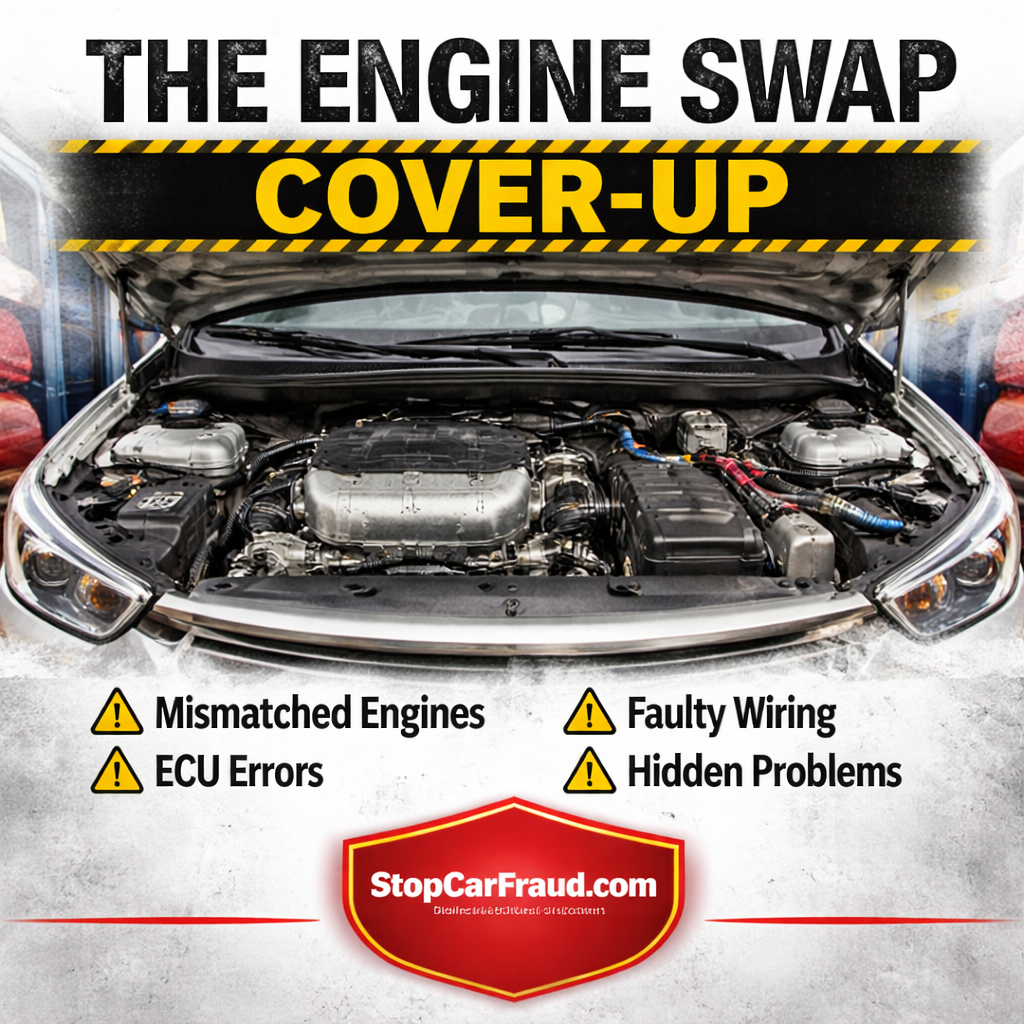
When the Heart of the Car Isn’t the Same
Most buyers focus on what they can see, the paint, the interior, the way the car drives during a short test. But the most important part of the vehicle isn’t visible at a glance. It’s under the hood. And in this scam, that’s exactly where the story gets rewritten. Because the engine in the car you’re looking at... may not be the one it was built with.
When “Replacement” Becomes a Problem
Engine swaps aren’t automatically bad. Engines fail, get replaced, and cars go back on the road all the time. The issue isn’t the swap, it’s the lack of transparency around it. What gets presented as “rebuilt,” “refreshed,” or “recently serviced” is often something very different: a mismatched engine, a salvage pull, or a quick install done just well enough to make the car run. Not to restore it. Just to sell it.
The Gap Between Running and Reliable
A swapped engine can run perfectly... for now. That’s what makes this so deceptive. The car starts, idles, and drives well enough to pass a casual inspection, giving the impression that everything is solid.
But running isn’t the same as being right, because beneath that smooth performance could be the wrong engine type, incorrect wiring adaptations, mismatched ECU programming, or improvised mounts and connections that were never meant to work together long-term.
These aren’t things you notice in a quick drive—they’re things that show up later, when performance drops, warning lights appear, or systems start failing in ways that don’t make sense.
How the Story Gets Cleaned Up
Sellers rarely come out and say the engine was swapped in a questionable way, instead, they reshape the narrative into something easier to accept: “new engine,” “recently replaced,” “runs like a dream.” All technically possible statements, but none of them telling you what actually matters.
What you need to know is where the engine came from, whether it was truly compatible with the vehicle, if it was installed correctly, and whether any of it was properly documented—and those are the questions that don’t get answered unless you ask directly... and even then, you may not get the truth.
When the Problems Start Showing
The real issues don’t show up during the sale—they surface later, once the car has been driven long enough for inconsistencies to reveal themselves. That’s when you start noticing electrical glitches that don’t trace cleanly, performance issues that feel unpredictable, and check engine lights tied to systems that don’t seem to match.
And when you try to diagnose it, you hit a wall—because what’s under the hood doesn’t match what the car is supposed to have. At that point, it’s no longer a simple repair—it’s a layered problem that takes time, money, and guesswork to unravel.
The Red Flags That Get Overlooked
Engine swap cover-ups don’t advertise themselves, but they leave clues:
- Engine bay that looks cleaner—or newer—than the rest of the car
- Missing or mismatched VIN tags on engine components
- Vague descriptions like “new motor” with no documentation
- Seller unable or unwilling to explain where the engine came from
- Subtle inconsistencies in performance or sound
Individually, they’re easy to dismiss. Together, they tell you something isn’t aligned.
The Truth About What You’re Buying
When an engine swap isn’t properly disclosed or documented, you’re not buying a straightforward vehicle, you’re buying a configuration that may not be fully understood, even by the person selling it.
And once it’s yours, so are the consequences. Because fixing something that was never done correctly in the first place is rarely simple and never cheap.
Why People Turn to StopCarFraud
Because sometimes the car feels right, but something doesn’t fully add up.
At StopCarFraud.com, we look beyond surface-level impressions and focus on what’s actually there. We help identify inconsistencies, ask the questions most buyers don’t think to ask, and break down whether the vehicle matches the story being told.
Before you commit to something that doesn’t fully make sense.
This Is Where It Gets Real
If the engine has been replaced and you don’t know exactly what was done, where it came from, and how it was installed, you’re not buying clarity, you’re buying uncertainty.
And in a situation like that, the smoother it feels at first...the more expensive it can become later.