

Sounds Like an Upgrade. It Usually Isn’t.
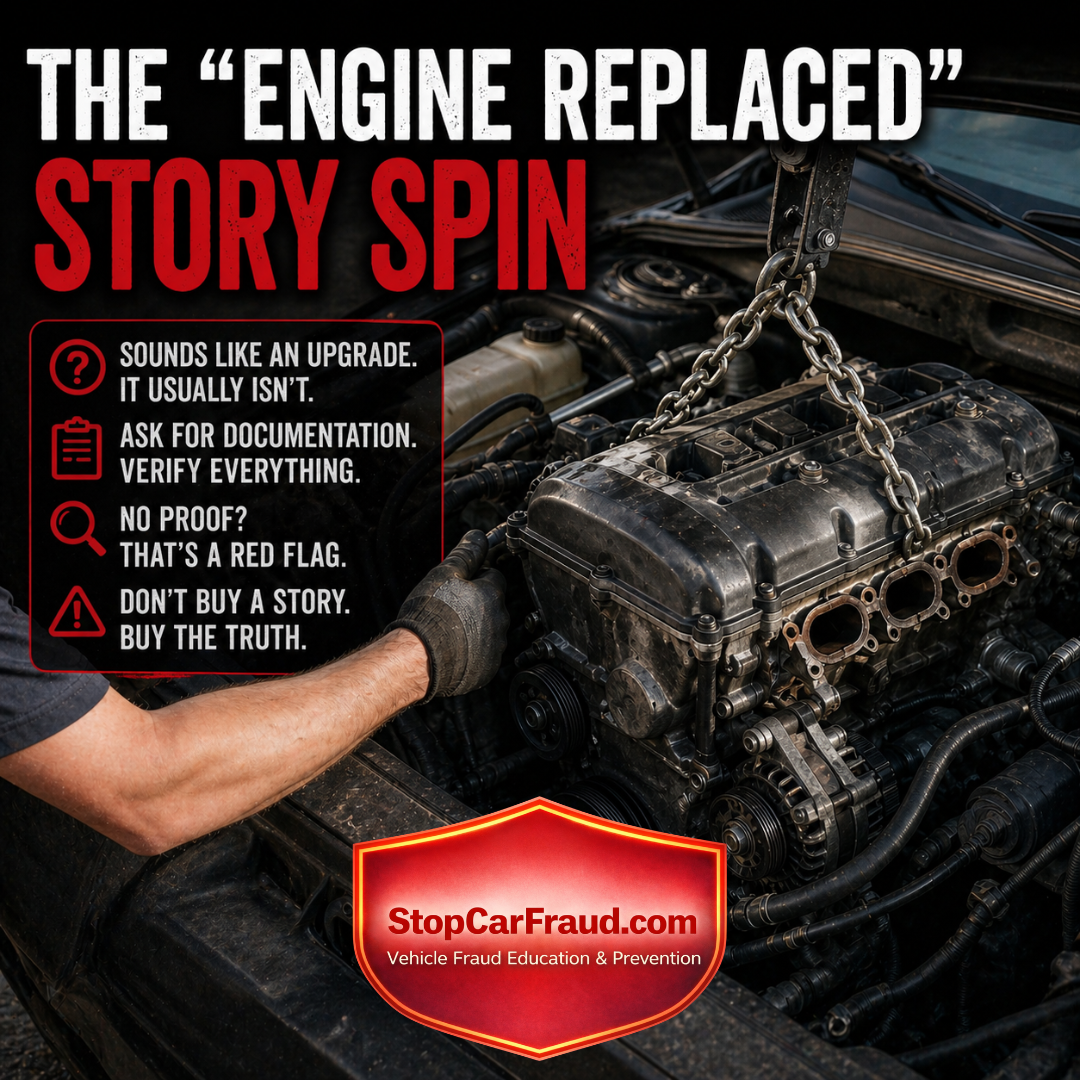
“Engine was replaced.” On the surface, that sounds like a bonus. A newer engine, more life left, maybe even better performance. Sellers know exactly how that phrase lands, and they use it to flip what should be a serious red flag into something that feels like a selling point. But in reality, an engine replacement is not automatically a positive. In many cases, it is the beginning of a much bigger story they are hoping you never dig into.
Why Engine Replacements Raise Questions
An engine does not just get replaced for fun. Something went wrong. It could have been neglect, overheating, internal failure, or even damage from an accident or flood. The replacement itself is not the issue. The lack of clear, verifiable information around it is where the risk starts to build. When a seller leans on the phrase “engine replaced” without details, what they are really doing is skipping over the part that matters most.
What They Are Not Telling You
If the engine was replaced, you need to know who did the work, when it was done, and what engine was installed. Was it new, rebuilt, or pulled from another vehicle? Does it match the original specifications? Was the installation done professionally or pieced together in someone’s garage? Without documentation, you are being asked to trust a story instead of facts. And stories can be shaped to hide a lot.
There is also the issue of compatibility. A poorly matched or improperly installed engine can create ongoing problems that do not show up immediately. Electrical issues, transmission strain, cooling system problems, and emissions failures are all possibilities. These are not small fixes. They are expensive, time consuming, and often difficult to trace back once the deal is done.
The Paper Trail That Should Exist
A legitimate engine replacement comes with records. There should be invoices, parts information, and details about the work performed. In some cases, there may even be a warranty tied to the replacement. If the seller cannot provide documentation, that is not a minor inconvenience. That is a major gap in the vehicle’s history.
And it does not stop there. The VIN history should reflect major service events, especially something as significant as an engine replacement. If the paperwork and the history do not line up, you are not looking at a clean situation.
Why This Trick Works
This tactic works because it reframes a potential problem as a benefit. Buyers hear “new engine” and assume value, without asking the deeper questions. Sellers rely on that assumption. They keep the explanation simple, avoid specifics, and move the conversation forward before you start digging. By the time questions come up, you may already be invested in the idea that you are getting a better deal.
What You Should Do
Slow the conversation down and ask direct questions. Request documentation. Verify where the work was done. Confirm exactly what engine is in the vehicle and whether it matches factory specifications. If the answers are vague or the paperwork is missing, that is your signal to step back. A real upgrade comes with proof. A story without proof is a risk.
Know the Difference Before It Costs You
If you are unsure whether an engine replacement adds value or hides a problem, that is where StopCarFraud.com comes in. We break down what sellers say and what it actually means, so you can separate legitimate upgrades from costly surprises before you commit.
Final Reality
“Engine replaced” is not a benefit until it is proven. Until then, it is just a story.