

One Identity, Multiple Fake Cars
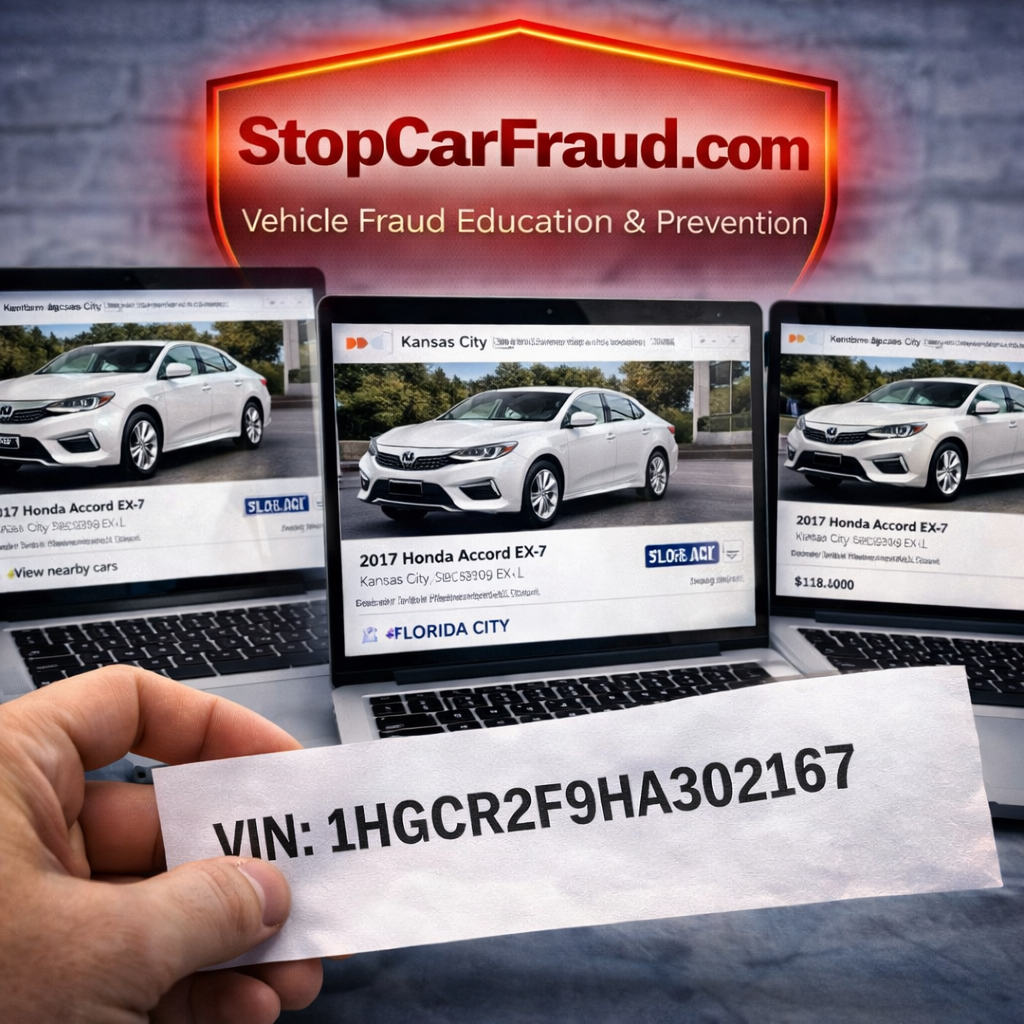
At first glance, everything checks out. You find a vehicle online! There are clean photos, fair price, detailed description. You run the VIN, and it comes back valid. The car exists. The history looks reasonable. Nothing immediately raises concern. That’s exactly why this scam works. Because in the duplicate VIN listing scam, the VIN is real—but the listing isn’t. This is where things take a more calculated turn.
Scammers take a legitimate vehicle identity, usually pulled from a real listing, auction site, or dealer inventory, and duplicate it across multiple fake listings in different cities, states, or even platforms. Same VIN. Same photos. Same specs. But none of those listings actually belong to the person posting them. What you’re looking at is a cloned identity being used to bait multiple buyers at the same time.
From your perspective, everything feels verifiable. The VIN checks out. The vehicle appears consistent. You may even find similar listings and assume it’s the same seller reaching a wider audience. It’s not, it’s multiple traps built around one real vehicle.
Once you reach out, the process feels normal. The seller responds, answers questions, and reinforces legitimacy by leaning on the VIN itself. They know you’re going to check it—so they make sure it passes. That’s part of the strategy and because when the VIN is real, buyers assume the seller is too. But this scam isn’t about the car! It’s about the reach!
By duplicating one VIN across multiple listings, scammers can interact with several buyers at once. Each buyer believes they’re dealing with a legitimate seller. Each conversation is tailored just enough to feel personal. And each one is guided toward the same goal: payment.
That payment might be a deposit. It might be a full purchase under the promise of delivery. It might be framed as a holding fee while “paperwork is finalized.” The structure can vary—but the outcome is the same. Money goes out, but nothing comes back. Meanwhile, the real vehicle tied to that VIN is sitting somewhere else entirely—often owned by someone who has no idea their car is being used in multiple scams at once.
By the time buyers start comparing notes, or realizing something is off, the listings are gone, the seller has vanished, and the VIN continues to circulate in new posts under new identities. What makes this scam especially dangerous is how convincing it feels. Buyers are taught to rely on VIN verification as a key step in the process. And that’s still true, but only when the VIN is tied to a legitimate seller. A real VIN does not guarantee a real transaction.
Protecting yourself requires going beyond the number. You need to verify the connection between the VIN, the seller, and the actual vehicle in front of you. If the car can’t be seen in person, if the seller can’t prove ownership, or if the listing appears in multiple locations with different contact information, that’s not coincidence—it’s a warning.
At StopCarFraud.com, we focus on scams like this because they exploit the very tools buyers are told to trust. The VIN becomes a shield that hides the fraud instead of exposing it.
And that’s what makes it so effective. Because in the duplicate VIN listing scam, the identity is real...It’s just not theirs to use.