

Test-Drive Theft & Identity Harvesting
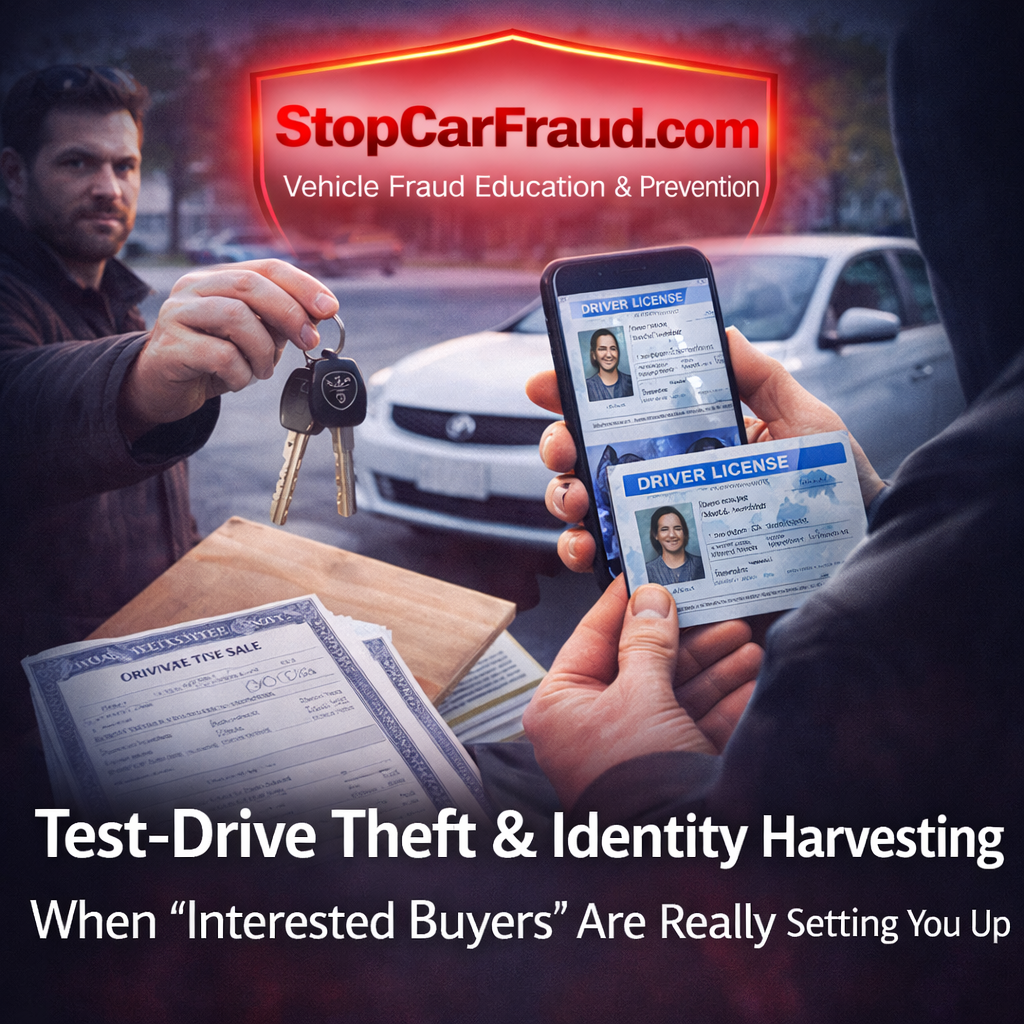
If you’re selling your car privately, the test drive feels like a normal, necessary step. It’s also one of the most dangerous moments in the entire transaction. Because today’s scammers aren’t just trying to talk you down on price—they’re using test drives to steal vehicles outright or quietly collect your personal information for fraud later.
And most sellers never see it coming.
The Setup: A Serious Buyer Appears
It starts exactly how you’d expect.
A buyer reaches out. They ask normal questions. They sound legitimate. They want to meet in person and test drive the vehicle.
No red flags. No weird behavior.
In fact, they often go out of their way to seem trustworthy:
- Well-dressed
- Calm and confident
- Knowledgeable about cars
That’s intentional. Because the entire goal is to lower your guard.
The Test Drive That Turns Into Theft
Here’s one version of the scam, and it happens fast.
The buyer asks to test drive the car. Maybe they want to go alone, or they suggest a quick loop around the block. If you hand over the keys without control, you may never see that vehicle again.
In some cases:
- They simply drive off and don’t return
- A second vehicle follows and blocks you from reacting
- They distract you long enough to create an escape window
And just like that, your car is gone! No transaction! No payment! No way to reverse it!
The “I’ll Be Right Back” Trick
Another common tactic? They leave something behind—like a backpack or ID—to make you feel secure. It’s a prop. Fake IDs, burner items, or stolen belongings are often used to convince sellers that the buyer will return. They won’t!
Identity Harvesting: The Scam You Don’t Notice
The second version of this scam is quieter—and in some ways, more damaging. Instead of stealing the car, the scammer is collecting your information.
During the process, they may ask for:
- A photo of your driver’s license
- A copy of the vehicle title
- Your phone number and home address
- Additional “verification” details
They frame it as normal: “Just want to make sure everything is legit before I come out.” But what they’re really doing is building a profile. And you won’t even connect the dots until much later.
That information can later be used for:
- Identity theft
- Fake listings using your vehicle details
- Title fraud
- Financial scams in your name
Why Sellers Fall for It
Because it feels routine. Test drives are expected. Sharing basic info feels like part of the process. And most sellers assume they’re dealing with another regular person—not someone running a playbook. That assumption is exactly what scammers rely on.
The Non-Negotiables You Must Follow
If you’re selling your car, there are rules you don’t break:
- Never allow a solo test drive
- Always hold the keys until you’re inside the vehicle
- Verify the driver’s license in person—not through photos
- Never send personal documents before meeting
- Meet in a public, monitored location
- Trust hesitation over pressure—if something feels off, stop
Because once control is lost, whether it’s your car or your identity, you’re already behind.
The Real Risk
This isn’t just about losing a vehicle. And in many cases, recovery is difficult, slow, or incomplete.
It’s about:
- Financial loss
- Legal complications
- Identity exposure
- Long-term fraud tied back to you
Stay One Step Ahead
Scammers are evolving. They’re using normal parts of the selling process, like test drives, as entry points to commit theft and fraud. The only way to stay protected is to recognize the setup before it unfolds.
That’s exactly why StopCarFraud.com was created!
We break down scams like this in real-world terms, give you clear steps to protect yourself, and help you avoid becoming the next seller who thought, “It seemed like a normal buyer.”
Because in today’s market, the most dangerous deals...
...are the ones that look completely routine.