

Driving Illegally Without Knowing It
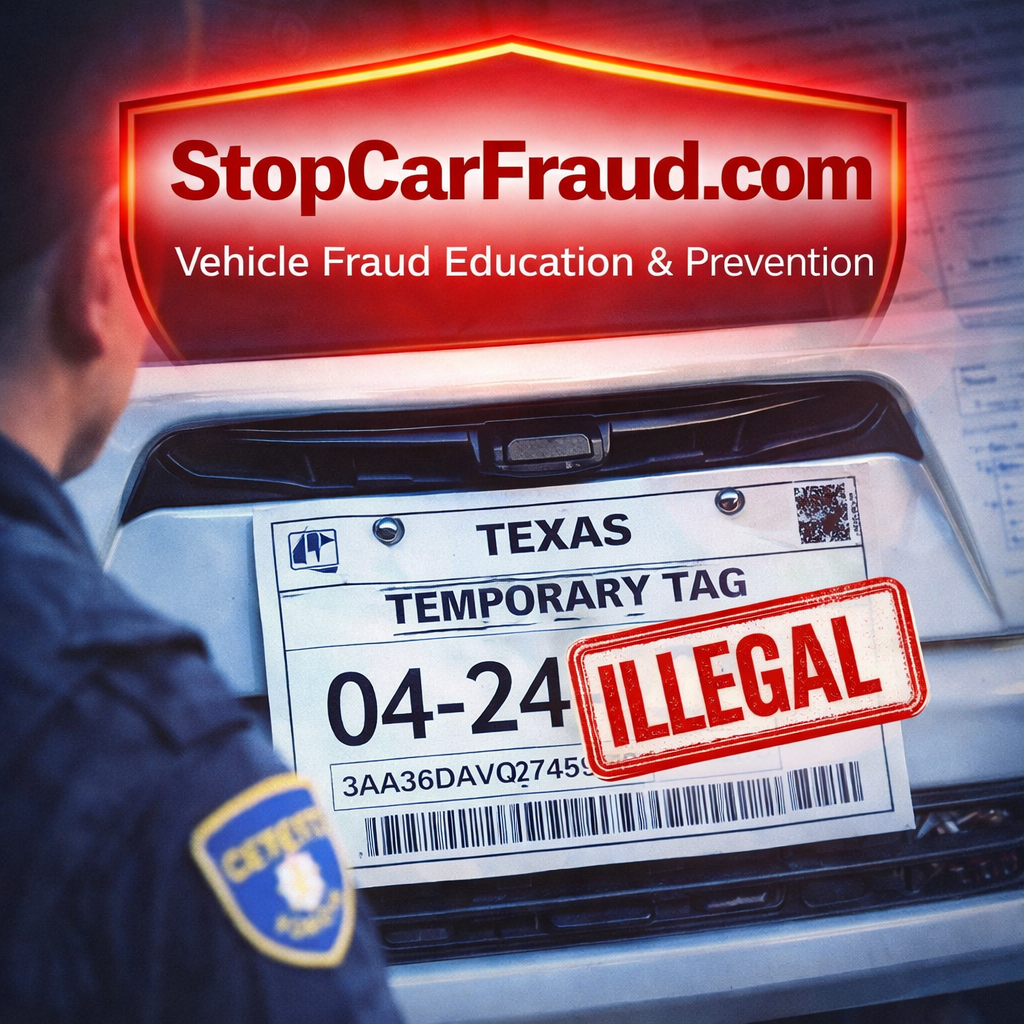
You finally bought the car. The deal felt smooth, the paperwork seemed in order, and there’s a temporary tag on the back, so everything must be legitimate, right? Not necessarily.
Across the country, temporary tag fraud is exploding, and it’s trapping everyday buyers in situations they never saw coming. What looks like a simple, legal placeholder for registration can actually be the first sign that something is very wrong. Temporary tags are meant to serve one purpose: to give a newly purchased vehicle a short window of legal operation while official registration is processed. When issued correctly, typically by a licensed dealer, they are traceable, tied to the vehicle, and connected to the buyer.
But scammers have learned how to mimic that system with alarming accuracy. Some produce completely fake temporary tags using readily available software and printers. Others recycle expired tags, duplicate legitimate ones, or assign tags that were issued for entirely different vehicles. In more advanced cases, individuals pose as dealers or operate under fabricated business identities to generate tags that appear authentic on the surface.
To the buyer, everything looks clean. The tag is printed, dated, and displayed exactly where it should be. There’s no immediate reason to question it. That’s exactly the point. The problem doesn’t show up until later—often when it matters most. A routine traffic stop. A parking enforcement scan. A registration check. That’s when the tag is run through the system and comes back invalid, expired, or tied to a different vehicle entirely.
At that moment, the situation shifts fast.
The vehicle may be flagged. Citations can be issued. In some cases, the car can be impounded on the spot until ownership and registration are verified. And while you may have purchased the car in good faith, you’re still the one driving it—and the one responsible for what’s on the vehicle.
Meanwhile, the seller is gone.
Disconnected number. Deleted listing. No legitimate business to return to. What you thought was a straightforward purchase becomes a complicated and frustrating problem that you now have to solve. What makes temporary tag fraud so effective is how normal it feels during the transaction. Buyers assume the seller handled everything correctly. They assume the tag is valid. They assume the process is underway.
Those assumptions are exactly what scammers rely on.
Protecting yourself starts with slowing the process down. If you’re buying from a dealer, verify that the dealership is licensed and operating legitimately. If you’re dealing with a private seller, understand that in most cases, they do not have the legal authority to issue temporary tags at all. Take a close look at the tag itself. Check for clear issuing information, accurate dates, and overall quality. If anything looks inconsistent or poorly produced, that’s a warning sign. More importantly, don’t wait to confirm the vehicle’s registration status. Follow through immediately to ensure the car is properly tied to you through official channels. Temporary tags are not proof that everything is legitimate. They are only as valid as the system behind them—and in fraudulent situations, there is no system at all.
At StopCarFraud.com, we focus on exposing scams like this because they’re affecting more buyers every day. If something about the deal, the paperwork, or the tag doesn’t feel right, trust that instinct and verify before moving forward.
Because once you’re on the road with a fraudulent tag, you’re not just driving a new car—
You’re driving a problem that hasn’t caught up to you yet.