

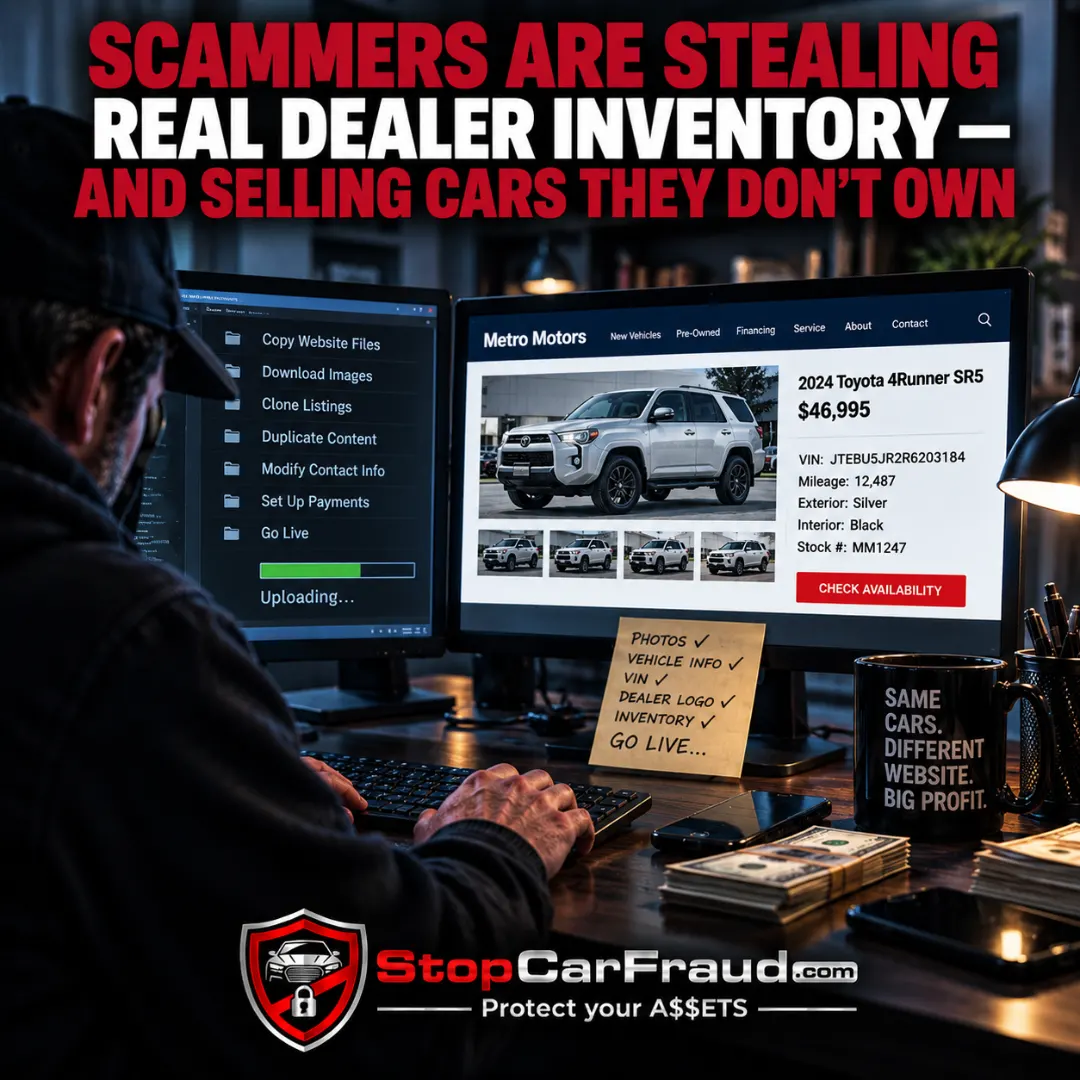
The Photos Are Real. The Listing Is Real. The Car May Be Real. The Person Taking Your Money Is the Problem.
PART 2 OF THE STOPCARFRAUD FAKE DEALERSHIP SERIES
Here's what makes the latest fake-dealership scam especially dangerous: the criminal doesn't necessarily need to invent a fake car, fake dealership or fake inventory. The Federal Trade Commission recently warned consumers about scammers impersonating legitimate automobile dealerships online. Fraudsters can copy information from an established dealer and use it to create a convincing imitation of the real business. That can include dealership branding, vehicle photographs, inventory information and other details a consumer would normally associate with a legitimate seller.
In other words, scammers don't have to manufacture credibility from scratch.
They can steal credibility that already exists.
THE CAR CAN BE REAL AND THE SALE CAN STILL BE FAKE
Imagine finding the exact truck or SUV you've been searching for. The photos are professional, the description is detailed and the dealership name is clearly displayed. You decide you're not going to get scammed, so you start researching.
The dealership exists. It has a physical location. It has reviews. You may even find the same vehicle, or information about it, through another search.
Everything you're finding seems to confirm that the advertisement is legitimate.
But you may only be confirming that the scammer stole legitimate information.
The actual dealership may have nothing whatsoever to do with the website, phone call, email or payment
instructions you've received. The vehicle could even be sitting on the legitimate dealer's lot while someone hundreds or thousands of miles away is pretending to sell it.
That's what makes this scam so effective. Truth is being used to support a lie.
YOU VERIFIED THE VEHICLE. DID YOU VERIFY THE PERSON SELLING IT?
Consumers are frequently told to research before making a major purchase, and that's still excellent advice. The problem is that this particular scam can survive basic research because so many of the details being checked may actually be legitimate.
A buyer might independently confirm:
- The dealership name and physical address are real.
- The dealership has an established online presence and legitimate reviews.
- The advertised vehicle or similar inventory actually exists.
- The photographs and vehicle descriptions appear authentic.
- The dealership branding matches the business the buyer found online.
Those are all useful checks, but none of them answers the most important question:
Is the person asking for your money actually authorized to sell that vehicle?
That's the verification scammers need buyers to skip.
A REAL VIN ISN'T A SECURITY CODE
Vehicle identification information can make an advertisement feel particularly convincing. But a VIN isn't secret information available only to the vehicle's owner. Vehicle details are routinely displayed in online inventory, advertisements, history reports and other automotive databases.
So finding legitimate information associated with a VIN can help establish that the vehicle exists. It does not automatically establish that the person who sent you the VIN owns the vehicle, represents the dealership or has any legal authority to collect payment for it.
That's an important distinction when thousands — or tens of thousands — of dollars are at stake.
VERIFY OUTSIDE THE CONVERSATION
If you've been communicating with someone through an advertisement, website, text message or email, don't use only the contact information that person provided to verify themselves. Independently locate the dealership's established contact information and contact the business directly. Confirm the vehicle is actually available, verify that the salesperson works there and confirm the payment instructions before transferring money.
If you're buying from another state and can't personally inspect the vehicle, consider arranging an independent inspection. And if you're being pressured to send a large deposit or full payment before independent verification can take place, the urgency itself should become part of your fraud assessment.
THE SCAMMER DOESN'T NEED THE CAR. THEY NEED YOU TO BELIEVE THEY HAVE IT.
That's the uncomfortable reality behind this scheme.
A beautiful vehicle photo proves someone photographed a vehicle. A legitimate VIN proves a vehicle was assigned that VIN. A real dealership name proves the dealership exists.
None of those things, by themselves, prove you're talking to the dealership.
When criminals can borrow the identity, inventory and reputation of a legitimate automotive business, buyers have to verify more than the vehicle.
They have to verify who is standing on the other side of the transaction.
COMING NEXT — PART 3
FOUND THAT RARE CAR ONLINE? THAT MAY BE EXACTLY WHY THE SCAMMER PICKED IT.
Next, StopCarFraud will examine why rare, specialty and difficult-to-find vehicles can create an ideal fraud opportunity — and how excitement, scarcity and the fear of losing the perfect vehicle can push otherwise cautious buyers into sending money too quickly.
If you're questioning a dealership, vehicle, paperwork, lien or automotive transaction, stop before sending money. Contact StopCarFraud at info@stopcarfraud.com and determine exactly who you're dealing with before your money leaves your account.
RESEARCH SOURCES / FOOTNOTES
1. Federal Trade Commission — Scammers Are Spoofing Car Dealership Websites: What You Need to Know — September 1, 2026
2. Car Dealership Guy News — FTC Issues Alert on Scammers Spoofing Dealers' Sites — September 1, 2026
https://news.dealershipguy.com/p/ftc-issues-alert-on-scammers-spoofing-dealers-sites-2026-09-01