

You Don't !!! You Need StopCarFraud.com!
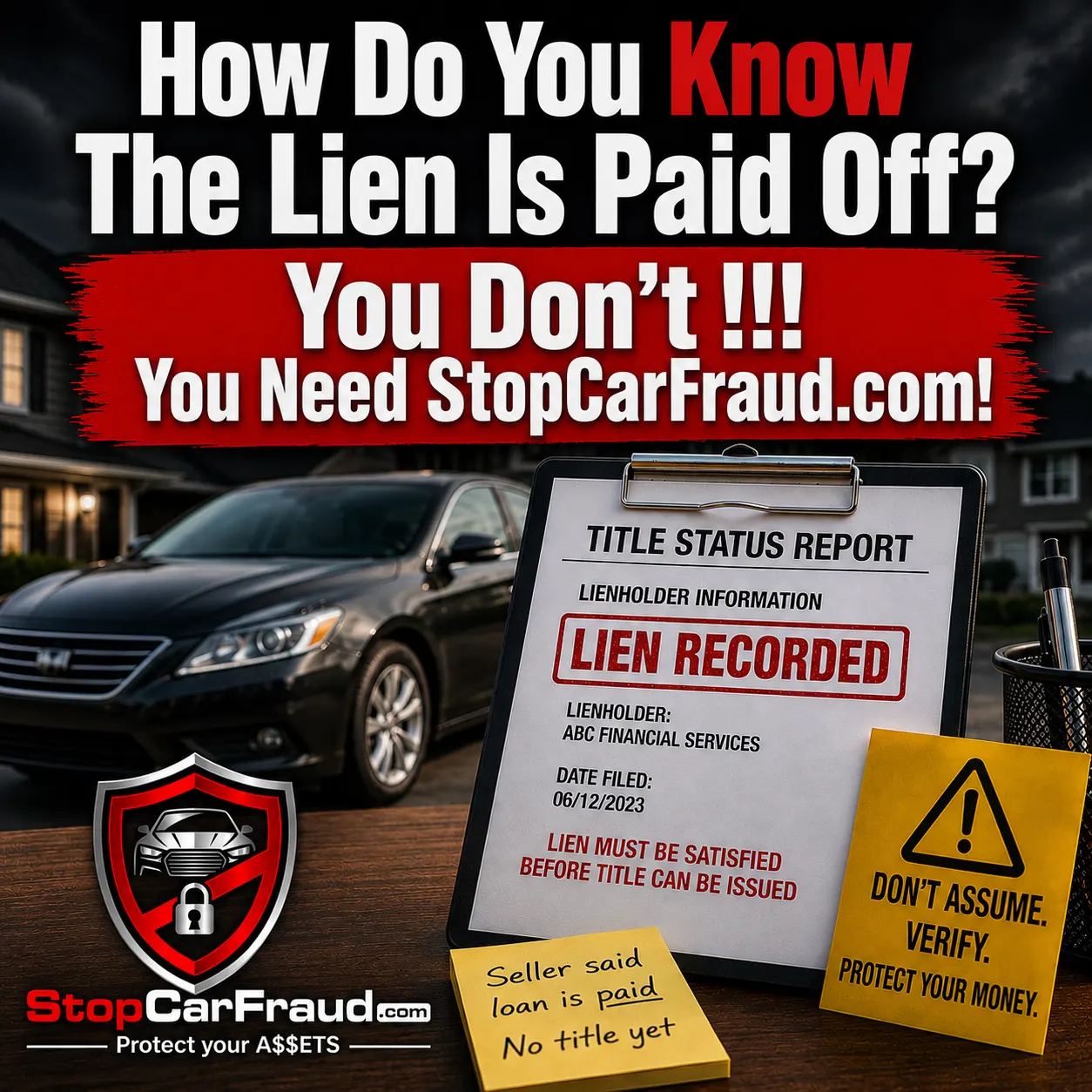
You found the vehicle. The price was right. The seller seemed legitimate. You paid for it, took possession and drove home thinking the transaction was finished. Then you discovered something the seller conveniently forgot to mention:
There is still a lien on the vehicle.
Congratulations. You may have just paid someone thousands of dollars for a vehicle they didn't have the unrestricted ability to sell.
Hidden liens are one of the reasons StopCarFraud repeatedly warns buyers that possession of a vehicle is not the same thing as having clean ownership. A vehicle can look perfect sitting in your driveway while its title history is an absolute disaster.
How Does a Hidden-Lien Problem Happen?
A lien generally exists because a creditor has a financial interest in the vehicle. The obvious example is an auto loan. Until the underlying obligation is satisfied and the lienholder's interest is properly removed, that interest doesn't disappear simply because the owner decides to sell the car.
Yet buyers routinely hear some version of:
- "The title is coming."
- "I already paid it off."
- "The bank hasn't updated the system yet."
- "Just give me the money and I'll take care of it."
Those explanations might have innocent explanations. They also might be the beginning of a nightmare. The dangerous assumption is believing that paying the person standing in front of you automatically means you're buying a vehicle free and clear. It doesn't.
HIDDEN-LIEN WARNING SIGNS
| WHAT YOU'RE TOLD | WHAT YOU SHOULD DO |
|---|---|
| "The loan is already paid." | Independently verify the lien status. |
| "I don't have the title yet." | Don't assume the title will magically appear after payment. |
| "Just pay me and I'll pay the bank." | Understand exactly how the lien will be satisfied before releasing funds. |
| "The DMV is just behind." | Verify the current title record rather than relying on the explanation. |
| "I promise there's nothing owed." | A promise isn't a title search. |
| Seller pressures you to close today | Slow down. Urgency benefits the seller, not your bank account. |
The Vehicle Can Be Real and the Deal Can Still Be Bad
That's what makes this type of transaction particularly dangerous. This doesn't necessarily involve a fake vehicle, counterfeit keys or someone wearing sunglasses and meeting you behind a warehouse.
- The seller may actually own the vehicle.
- The vehicle may actually be sitting in their driveway.
- Their driver's license may actually match their name.
None of those facts automatically prove the vehicle is free of liens.
A recorded lien can create serious problems when you attempt to obtain clear title. Depending on the circumstances and jurisdiction, resolving the mess may require additional documentation, cooperation from the lienholder or seller, or even legal action, and suddenly that incredible $25,000 deal isn't looking so incredible.
Verify Before the Money Moves
Before purchasing a privately owned vehicle, determine who legally owns it, whether a lien is recorded against it and what must happen to deliver clear ownership to you.
If money is still owed, don't improvise the payoff process based on instructions from the seller. Verify the creditor independently and understand how the lien and title will be handled.
Most importantly, don't allow excitement about the vehicle to overpower common sense. There will always be another car. Recovering thousands of dollars from someone who already has your money can be considerably harder.
DON'T BUY SOMEONE ELSE'S FINANCIAL PROBLEM.
If something about the vehicle's lien, title or ownership doesn't make sense, stop the transaction before your money changes hands.
If you are unsure whether a vehicle has a legitimate lien, whether the lien has actually been satisfied, or whether the transaction is safe, contact StopCarFraud.com now:
Protect your money. Protect your vehicle. Protect your A$$ETS.