
Read This For Instructions
A seller tells you the vehicle is paid off. The title looks legitimate. Maybe they even hand you a lien release showing that the bank has been paid.
Everything looks fine. That is precisely when you need to stop assuming and start verifying. Vehicle fraud does not always involve an obviously stolen car or a fake title printed in somebody's basement. Fraudulent transactions can involve legitimate vehicles, real lenders and paperwork convincing enough to fool an unsuspecting buyer. A lien problem discovered after you have paid for the vehicle can quickly become your very expensive problem.
Before completing a private vehicle transaction, StopCarFraud recommends purchasing a vehicle report and having the information independently reviewed.
Here is how to do it.
Step 1: Get the VIN and Verify It
Before purchasing a report, obtain the complete 17-digit Vehicle Identification Number. Compare the VIN on the vehicle with the title, registration, bill of sale and any lien-release documents the seller provides. Do not simply copy the VIN from an online advertisement or text message. You want to research the vehicle sitting in front of you — not the vehicle someone claims they are selling.
Step 2: Purchase a Vehicle Report
Two places consumers can currently purchase vehicle-history reports are ClearVin.com and
TitleCheck.us.
ClearVin — approximately $17.99 for a single report
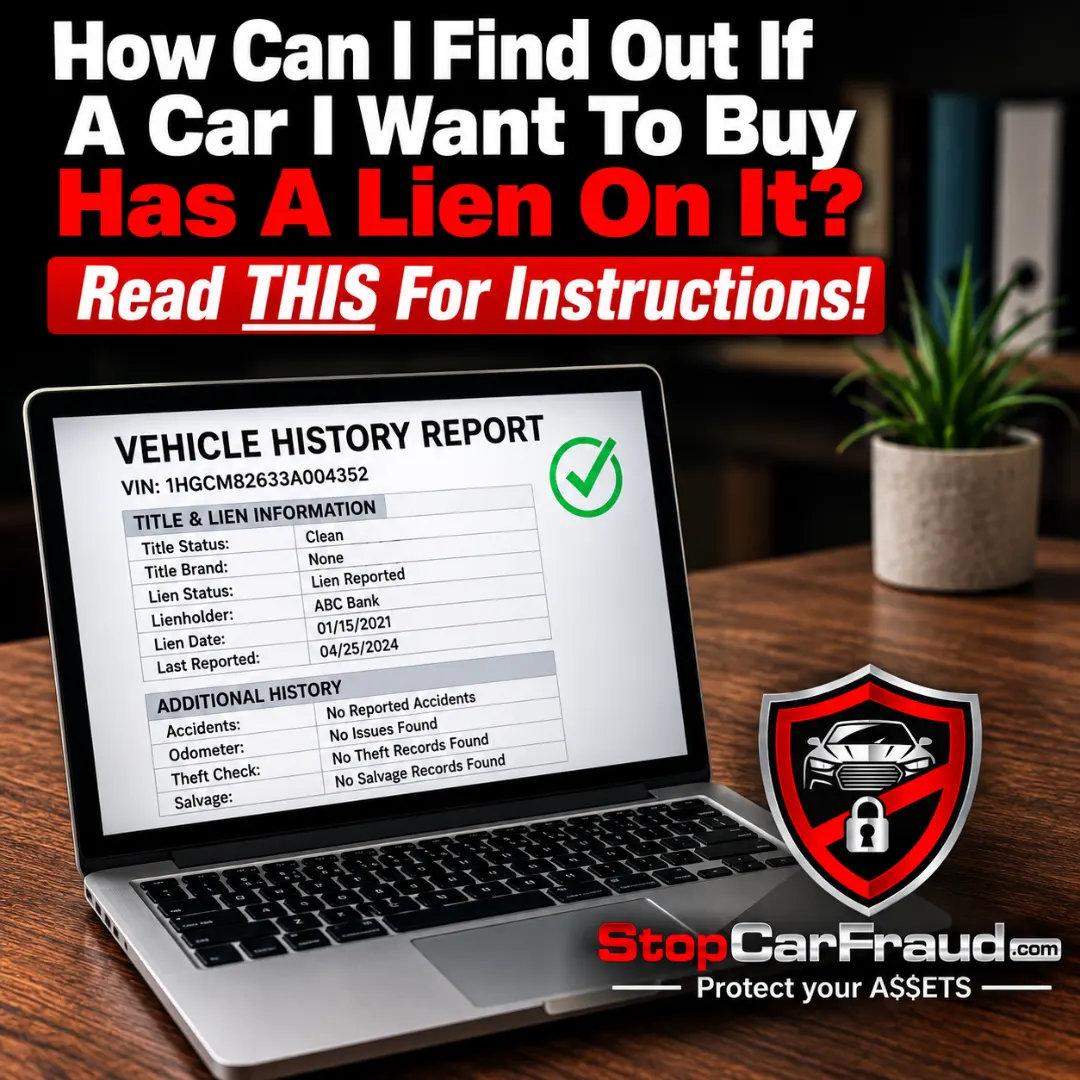
ClearVin reports can include DMV title history, ownership history, NMVTIS title-brand information, junk and salvage records, insurance total-loss information, theft records and, importantly for this type of transaction, lien and impound information when available.
TitleCheck.us — $9.98 for a single report
TitleCheck is operated by Auto Data Direct and provides an NMVTIS title-history report. It can provide current and previous title states, title issue dates, odometer information, title brands and junk, salvage and insurance total-loss records.
Neither report should be treated as an absolute guarantee that a vehicle is lien-free or fraud-free. Information available can vary by vehicle and reporting source.
Step 3: Compare the Report to the Seller's Story
Now start comparing. Does the title history make sense? Does the state match? Is there lien information? Are there unexpected title changes? Does the timeline agree with what the seller has told you? If the seller claims a lien was recently satisfied, ask for the lien-release documentation. Then compare everything.
A discrepancy does not automatically mean fraud, but it absolutely means stop and investigate before paying.
Step 4: Never Assume a Lien Release Is Real
This is where buyers can get burned.
A lien-release letter can contain a legitimate bank's name, logo, address and other convincing information and still require verification.
Today's fraud does not always look amateurish. A document only has to look legitimate long enough to convince someone to release thousands of dollars.
That piece of paper deserves scrutiny.
Step 5: Send Your Report and Documents to StopCarFraud
Once you have purchased the report, send the StopCarFraud team the report along with the title, lien release and other relevant transaction documents.
We will review the available lien and title information, compare documents, identify inconsistencies and examine the transaction for warning signs that deserve further investigation. Think of the purchased report as the beginning of your due diligence — not the end of it.
Step 6: Verify BEFORE You Pay
This is the most important step. Do not discover the lien problem after the seller has your money. Do not
accept "the bank hasn't updated it yet" without investigating. And do not let someone rush you through a
transaction because another buyer is supposedly waiting with cash.
Get the VIN. Buy the report. Check the paperwork. Have StopCarFraud review it. Then make your
decision.
A $10 or $20 report and some additional due diligence are insignificant compared with the potential cost of buying a vehicle you cannot obtain a clear title to.
If you are unsure about a lien release, title, vehicle report or vehicle transaction, contact StopCarFraud.com at info@stopcarfraud.com.
Don't find the fraud after you buy the car. Find it before you buy the problem.